
Wikimedia Commons / Public domain, via Wikimedia Commons
Water Oak: complete guide
Quercus nigra
¿Quieres ver Water Oak: complete guide en tu jardín?
1 minuto, sin tarjeta de crédito
Overview
Quercus nigra, commonly known as Water oak or Possum oak, is a North American deciduous tree distinguished by its moisture tolerance. This tree belongs to the Fagaceae family and grows readily in wet soils where many other trees struggle. The Water oak reaches heights of 10 to 20 meters and forms a dense crown suitable for landscape design.
This tree is ideal for those with wet or poorly draining soil. The Water oak provides year-round interest with distinctive summer appearance and dramatic autumn color.
Appearance and Bloom
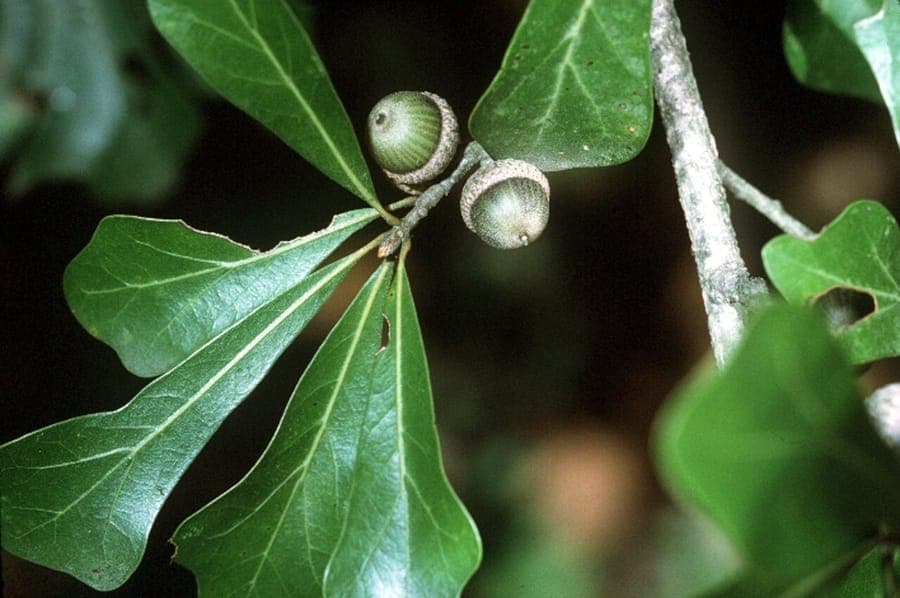
The Water oak features unusual, narrowly lobed leaves that sometimes may be entirely unlobed. Leaves are typically 5-10 cm long and have a matte green surface. In autumn, they turn brown to reddish-brown.
Flowers are typical for oaks, small and inconspicuous. Male flowers grow in hanging catkins. Female flowers remain very small. Acorns are relatively small, approximately 1 cm in diameter, growing in shallow cups.
Ideal Location
Quercus nigra thrives in full sun to partial shade with at least 4-6 hours of direct sunlight daily. The tree can grow well in many light situations. This makes it suitable for gaps beneath other trees.
Plant in wet soils where many other trees would fail. This makes it ideal for swamp forests and wet lowlands.
Soil
The Water oak prefers moist to wet, acidic soils. This is one of the few oaks that readily grows in stagnantly wet soil. The tree also tolerates periodic flooding.
The tree can also grow in dry soil, though moisture-retentive soils are preferred. Avoid highly alkaline soil.
Diseño gratis
¿Quieres ver Water Oak: complete guide en tu jardín? Crea un diseño gratis ahora.
Watering
The Water oak requires no extra water under normal conditions since the tree grows in wet soil. Conversely, this tree tolerates regular waterlogging better than most trees.
During dry periods, water regularly until the tree becomes well-established, typically 1 to 2 years.
Pruning
The Water oak requires minimal pruning. Remove only dead or damaged branches. Pruning can occur during dormancy. Avoid severe pruning as it may lead to fungal problems.
The tree naturally grows in an attractive, compact form.
Maintenance Calendar
Maintaining Quercus nigra is minimal. This tree, after establishment, maintains itself reasonably well. Inspect seasonally for diseases or pests. Enjoy magnificent autumn colors.
Fertilization is rarely needed for mature trees.
Winter Hardiness
Quercus nigra is winter-hardy and suitable for hardiness zones 6 to 9. The tree tolerates temperatures to approximately -25 degrees Celsius.
Companion Planting
The Water oak grows well with other moisture-loving plants. Combine with Nyssa sylvatica (Tupelo) or other native wetland plants for a natural marsh garden landscape.
Closing
The Water oak is a valuable resource for those with wet soil conditions. With moisture tolerance and minimal maintenance requirements, this is a tree that will thrive where others struggle. Plant today and transform a wet spot into a full, healthy tree.
Find Quercus nigra at specialty retailers: Intratuin (Netherlands) and Gamma (Belgium).
¿Quieres ver Water Oak: complete guide en tu jardín? Crea un diseño gratis ahora.
Sube una foto, elige un estilo y obtén un diseño fotorrealista con lista de plantas en menos de un minuto.
Más de 10.000 jardines diseñados
Sin tarjeta de crédito


Plantas similares
Lucombe oak: complete guide
Quercus crenata
Lucombe oak (Quercus crenata): a majestic semi-evergreen giant with corky bark, perfect for large gardens, parks, and country estates.
Blue oak: complete guide
Quercus douglasii
Discover the blue oak, a drought-tolerant Californian shade tree with striking blue-green foliage, ideal for large, climate-resilient gardens.
Quercus montana: complete guide
Quercus montana
Quercus montana, the chestnut oak, is a rugged American shade tree with deeply furrowed bark and large acorns, well suited to dry, rocky, spacious gardens.