
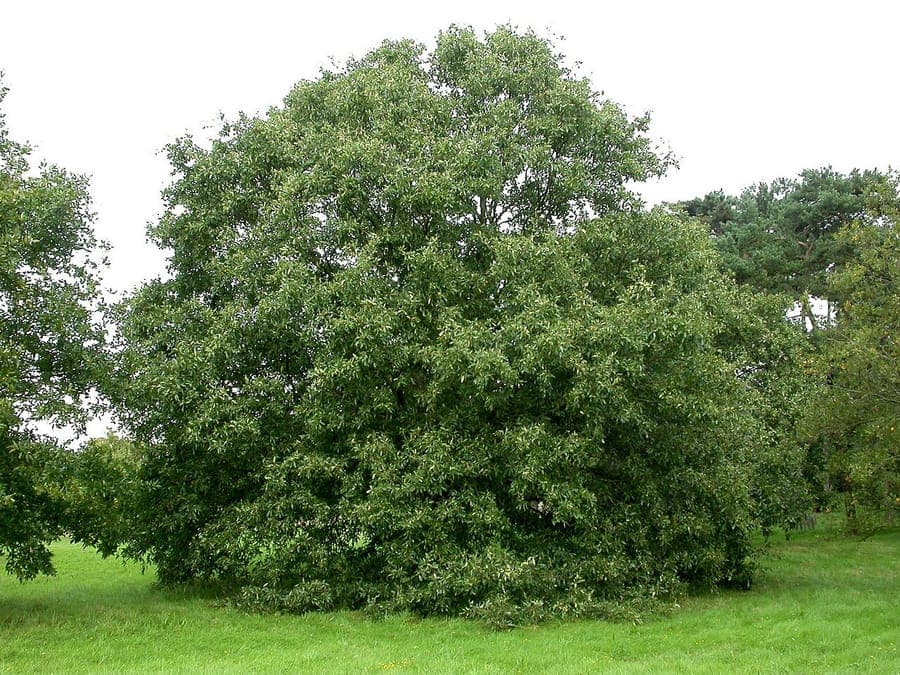
A. Abrahami / CC BY-SA 3.0, via Wikimedia Commons
Lebanon oak: complete guide
Quercus libani
¿Quieres ver Lebanon oak: complete guide en tu jardín?
1 minuto, sin tarjeta de crédito
Overview
The Lebanon oak (Quercus libani) is an impressive species native to mountainous regions of the Middle East, including Lebanon, Syria, Turkey, and Iran. This oak is renowned for its robust character and ability to thrive in challenging conditions.
The Lebanon oak reaches an impressive height of 20 to 25 meters with a broad, majestic crown. It is particularly valuable as a landscape specimen tree. Its exceptional winter hardiness and tolerance for mountainous climates make it excellent for temperate to continental zones.
Appearance and bloom
The Lebanon oak distinguishes itself with large, deeply lobed leaves featuring prominent venation. Leaves are typically 10 to 20 centimeters long, more slender than many oak species, with characteristic sharp lobes and glossy surfaces.
Male flowers appear as yellow catkins in spring. Female flowers are more discrete but produce distinctive acorns with characteristic cups adorned with prominent scales.
Fall coloration can be variable but often displays attractive yellow to brown tones. The bark is dark gray, becoming increasingly furrowed with age.
Ideal location
The Lebanon oak thrives in full sun with unrestricted light exposure. The species is highly light-demanding and performs poorly in shade.
This oak is perfectly suited to windswept, elevated locations, reflecting its mountain origins. It is also extremely tolerant of cold winters and snow.
Avoid heavily shaded areas. The tree performs best with good air circulation around its crown.
Soil
The Lebanon oak grows on varied soil types, from calcareous (alkaline) to acidic. Preference is for well-drained substrates. In its natural habitat, it grows in rocky mountain terrain, suggesting excellent tolerance for rocky, sometimes nutrient-poor soils.
Heavy clay soils should be amended with grit or sand to improve drainage. Waterlogging is not well tolerated.
Diseño gratis
¿Quieres ver Lebanon oak: complete guide en tu jardín? Crea un diseño gratis ahora.
Watering
Once established, the Lebanon oak is extremely drought-tolerant thanks to its deep root system. Young trees require regular water during the establishment year.
Avoid waterlogging, especially in winter. Excessive moisture can precipitate fungal diseases.
Pruning
The Lebanon oak generally requires minimal pruning. The natural crown form is attractive and balanced. Remove dead or damaged branches as encountered.
With young trees, selective pruning can help establish a strong central leader.
Maintenance calendar
January-February: inspect winter damage, prune as needed March-May: growing season, water during dry periods June-August: continued growth, minimal intervention September-October: fall colors, dormancy preparation November-December: leaf drop, cleanup
Winter hardiness
The Lebanon oak is hardy to USDA zone 6b (-23 degrees Celsius). This represents exceptional cold hardiness suitable for continental Europe and North America. It withstands snow and severe frosts.
Companion plants
The Lebanon oak partners well with other Mediterranean or Eastern species. Consider other Quercus species, cedars, pines, and various shrubs.
Closing
The Lebanon oak is a fascinating and robust choice for those seeking a specimen tree with genuine winter hardiness. With its large leaves and majestic form, it makes a striking focal point in any landscape. Once established, it requires minimal maintenance and provides decades of visual interest.
For sourcing, consult specialized tree nurseries. GardenWorld.app can help integrate this remarkable oak into your garden plan. GardenWorld.app also offers guidance for combining with other hardy specimens.
¿Quieres ver Lebanon oak: complete guide en tu jardín? Crea un diseño gratis ahora.
Sube una foto, elige un estilo y obtén un diseño fotorrealista con lista de plantas en menos de un minuto.
Más de 10.000 jardines diseñados
Sin tarjeta de crédito


Plantas similares
Lucombe oak: complete guide
Quercus crenata
Lucombe oak (Quercus crenata): a majestic semi-evergreen giant with corky bark, perfect for large gardens, parks, and country estates.
Blue oak: complete guide
Quercus douglasii
Discover the blue oak, a drought-tolerant Californian shade tree with striking blue-green foliage, ideal for large, climate-resilient gardens.
Quercus montana: complete guide
Quercus montana
Quercus montana, the chestnut oak, is a rugged American shade tree with deeply furrowed bark and large acorns, well suited to dry, rocky, spacious gardens.