
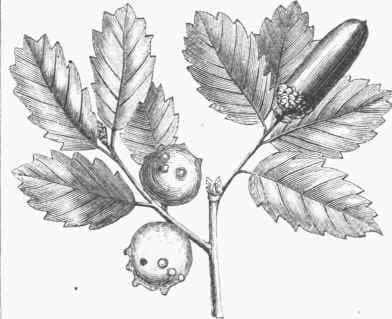
George Ripley And Charles A. Dana / Public domain, via Wikimedia Commons
Aleppo Oak: complete guide
Quercus infectoria
¿Quieres ver Aleppo Oak: complete guide en tu jardín?
1 minuto, sin tarjeta de crédito
Overview
Aleppo oak (Quercus infectoria) is a Mediterranean oak native to the Levantine region and adjacent areas where it has thrived for millennia in harsh conditions. It's a multi-purpose tree renowned for extraordinary drought tolerance and ability to grow in poor, rocky soils. In warm, dry regions it's an ideal landscape choice. With its weathered appearance and small to medium size, it fits well in contemporary Mediterranean gardens and arid landscapes.
Appearance & foliage
Aleppo oak grows as a low to medium tree, typically 5-10 meters tall (occasionally to 15 meters in ideal conditions), with a spreading, somewhat irregular crown. Leaves are small to medium, roughly 3-8 cm long, dull green, and rather stiff in texture. They are evergreen to semi-evergreen depending on local climate - in very cold winters all leaves may drop, especially in young trees.
The bark is rough, gray-brown, adding mature character. Acorns are small (roughly 1-1.5 cm), green to brownish. Historically these acorns produced galls (abnormal growths caused by insect parasites), from which ink was made - explaining the species name "infectoria" (infecting).
Ideal location
Aleppo oak excels in warm, dry, exposed locations. Plant in full sun (minimum 6 hours daily). This tree tolerates heat stress exceptionally well and thrives in very exposed, windy sites where other trees struggle. In cold climates (below USDA zone 8) it may be frost-tender, especially when young, requiring shelter.
It's perfect for Mediterranean gardens, xeriscape designs (water-wise landscapes), and harsh hillside locations. Growth is moderate, especially in lean soils, so patience is required.
Soil
Aleppo oak excels in very lean, poor, dry soils. Calcareous (lime-rich) soil is actually favorable - this distinguishes it from many oaks. pH 6.0-8.0 is acceptable. Drainage is critical; waterlogging causes root rot. Sandy loam, rocky, even eroded slopes suit it fine.
Don't amend the soil heavily; this actually may promote softer, less hardy growth. Plant directly into existing well-draining soil. If drainage is poor, this is not the tree for that site.
Diseño gratis
¿Quieres ver Aleppo Oak: complete guide en tu jardín? Crea un diseño gratis ahora.
Watering
This tree is very drought-tolerant once established. Young trees (first two seasons) need regular moisture until deep rooting forms. Water every 7-10 days during the growing season (May-September) if rainfall is less than 25 mm per week. Once established (after 2-3 seasons), supplemental water is needed only in exceptional droughts.
Mulch around the base (5 cm, kept 30 cm from stem) conserves moisture and moderates soil temperature. In extreme heat spells, occasional deep irrigation helps but is rarely necessary after year 3.
Pruning
Pruning is minimal. Aleppo oak naturally develops a pleasing form. Remove only dead, damaged, or obviously weak branches in early spring (March-April). For young trees, light structural pruning improves shape. Avoid heavy cutting.
If the crown becomes too dense, carefully remove whole branches from the base to create a more open silhouette. But generally it requires little intervention.
Maintenance calendar
April-May: Inspect for winter damage. Light pruning if needed. Begin watering if rainfall is scarce.
June-July: Continue watering during dry spells. Check for insect damage (especially gall-forming midges).
August-September: Taper watering as rain returns. No feeding.
October-November: Enjoy the evergreen foliage. No maintenance needed.
December-March: Protect young growth from snow-break and ice. In very cold zones, provide screening.
Winter hardiness
Aleppo oak is hardy to approximately USDA zone 8 (down to -12 degrees Celsius / 10 F). In colder climates it may be damaged or killed. Young trees benefit from protection against southwest-exposed walls or in sheltered microclimates. Mature specimens are tougher than young trees.
In temperate climates (Benelux, Britain) this can be problematic without shelter. Best suited to Mediterranean regions, warm southern Europe, and climates resembling southern Portugal/Spain.
Companion plants
Aleppo oak pairs beautifully with:
- Pinus pinea (Italian stone pine)
- Olea europaea (Olive tree)
- Rosmarinus officinalis (Rosemary)
- Lavandula angustifolia (English lavender)
- Cistus (Rock rose)
- Juniperus (Juniper) species
- Quercus suber (Cork oak) - similar companion
Closing
The Aleppo oak is a valuable tree for warm regions with dry summers. For gardeners in Mediterranean climates or warmer temperate zones, it offers a unique combination of resilience, drought tolerance, and Mediterranean character. Once established, it demands little attention, making it ideal for low-maintenance landscapes where other trees falter. It's a living emblem of Mediterranean hardiness and beauty.
¿Quieres ver Aleppo Oak: complete guide en tu jardín? Crea un diseño gratis ahora.
Sube una foto, elige un estilo y obtén un diseño fotorrealista con lista de plantas en menos de un minuto.
Más de 10.000 jardines diseñados
Sin tarjeta de crédito


Plantas similares
Lucombe oak: complete guide
Quercus crenata
Lucombe oak (Quercus crenata): a majestic semi-evergreen giant with corky bark, perfect for large gardens, parks, and country estates.
Blue oak: complete guide
Quercus douglasii
Discover the blue oak, a drought-tolerant Californian shade tree with striking blue-green foliage, ideal for large, climate-resilient gardens.
Quercus montana: complete guide
Quercus montana
Quercus montana, the chestnut oak, is a rugged American shade tree with deeply furrowed bark and large acorns, well suited to dry, rocky, spacious gardens.