
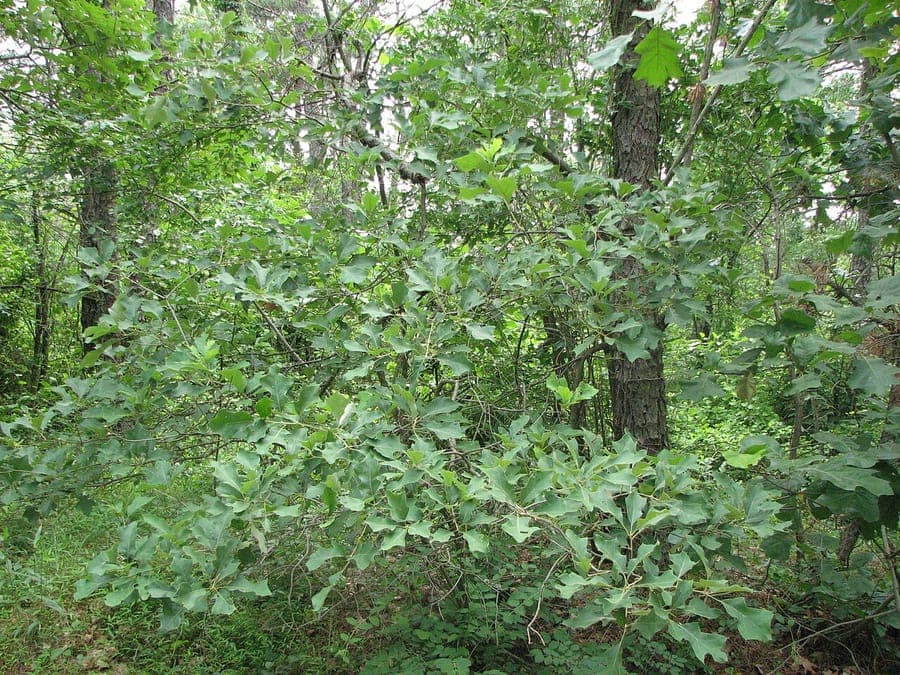
Choess / CC BY-SA 3.0, via Wikimedia Commons
Bear oak: complete guide
Quercus ilicifolia
¿Quieres ver Bear oak: complete guide en tu jardín?
1 minuto, sin tarjeta de crédito
Overview
Bear oak (Quercus ilicifolia), also known as scrub oak, is a fascinating native shrub from the eastern United States and Canada. This compact oak is renowned for its unique holly-like foliage and remarkable ability to thrive in challenging conditions. With its dark green leaves and characteristic growth habit, bear oak offers an excellent choice for gardens seeking both visual appeal and ecological value.
This species is native to southeastern Ontario through the Appalachian region to North Carolina and Virginia, where it inhabits sandy and rocky areas. Bear oak is not only ornamentally attractive but also valuable for wildlife, particularly bird species that depend on acorn production.
Appearance and Bloom
Bear oak distinguishes itself through small, stiff leaves that strongly resemble holly foliage. These characteristic holly-like leaves give the plant its unique landscape identity. The foliage is dark green and maintains good color throughout the growing season.
The plant grows as a compact, densely branched shrub, typically reaching 1-3 meters in height. The flowers are inconspicuous, as with most oaks, but are followed by small acorns that provide food for numerous bird and mammal species. The bark is dark brown to gray and develops characteristic texture as the plant matures.
Ideal Location
Bear oak thrives in full sun or light shade conditions. This plant is highly adaptable and grows exceptionally well in sandy, dry soils where many other plants struggle. It also performs well in rocky conditions, making it an ideal choice for steep slopes and erosion-prone areas.
The plant tolerates strong winds and open exposures well. In the garden, it can be used as a privacy screen, erosion control, or as part of a native plant border.
Soil
Bear oak is undemanding regarding soil composition and grows even in poor, sandy soils. This makes it an excellent choice for marginal garden areas. The plant prefers soil with a pH between neutral and slightly acidic. Ensure good drainage, as this plant dislikes waterlogging.
Once established, bear oak requires minimal fertilizing. It can fix nitrogen through symbiosis with soil organisms, enhancing its ability to thrive in nutrient-poor soils.
Diseño gratis
¿Quieres ver Bear oak: complete guide en tu jardín? Crea un diseño gratis ahora.
Watering
After establishment, bear oak is highly drought-tolerant. During the first growing year, water regularly to encourage deep rooting. This is particularly important during dry summers. Once fully established (after 2-3 years), the plant requires significantly less water.
Ensure the soil drains well. Waterlogging can lead to root rot. In very dry climates, supplementary irrigation in August and September can be beneficial.
Pruning
Bear oak requires minimal pruning. The plant grows naturally in a compact, dense form. Pruning is best done in late winter before leaf buds break. Remove dead or damaged branches and cut back crossing twigs.
To encourage fuller growth, judicious pruning can help. Avoid drastic cutting, which can disrupt the natural form.
Maintenance Calendar
Spring: Check for winter damage, remove dead wood, refresh mulch around the base.
Summer: Water during dry periods, check for pests.
Fall: Enjoy the fall color, collect acorns for seeding or leave for wildlife.
Winter: Pruning can be done in late winter.
Winter Hardiness
Bear oak is highly winter-hardy and can withstand temperatures down to -30 degrees Celsius. This makes it suitable for cold climates across Northern and Central Europe. The plant requires no special winter protection in most temperate climates.
Companion Plants
Bear oak combines well with other drought-tolerant native plants. Suitable companion plants include:
- Smaller willows and similar trees
- Heath and heather plants
- Sandy soil flora
- Other native shrubs for mixed borders
These combinations create ecologically valuable garden landscapes that attract insects and birds.
Closing
Bear oak is an exceptional choice for gardens seeking hardiness and ecological value. With its characteristic holly-like leaves, tolerance for difficult conditions, and value for wildlife, this native North American oak offers many benefits. Whether you're creating a native plant garden or simply seeking a reliable, drought-tolerant shrub, bear oak deserves a place in your garden plan.
Find bear oak online at major retailers. Visit gardenworld.app for more plant recommendations.
Enjoy growing this remarkable native plant in your garden!
¿Quieres ver Bear oak: complete guide en tu jardín? Crea un diseño gratis ahora.
Sube una foto, elige un estilo y obtén un diseño fotorrealista con lista de plantas en menos de un minuto.
Más de 10.000 jardines diseñados
Sin tarjeta de crédito


Plantas similares
Lucombe oak: complete guide
Quercus crenata
Lucombe oak (Quercus crenata): a majestic semi-evergreen giant with corky bark, perfect for large gardens, parks, and country estates.
Blue oak: complete guide
Quercus douglasii
Discover the blue oak, a drought-tolerant Californian shade tree with striking blue-green foliage, ideal for large, climate-resilient gardens.
Quercus montana: complete guide
Quercus montana
Quercus montana, the chestnut oak, is a rugged American shade tree with deeply furrowed bark and large acorns, well suited to dry, rocky, spacious gardens.