
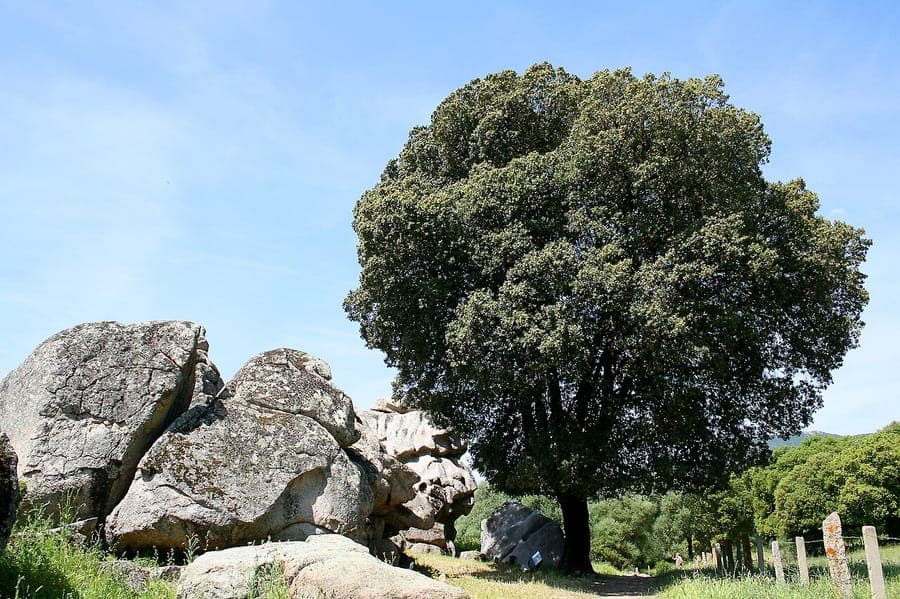
Jean-Pol GRANDMONT / CC BY 3.0, via Wikimedia Commons
Evergreen Oak: complete guide to this elegant Mediterranean tree
Quercus ilex
¿Quieres ver Evergreen Oak: complete guide to this elegant Mediterranean tree en tu jardín?
1 minuto, sin tarjeta de crédito
Overview
Evergreen Oak, scientifically termed Quercus ilex, represents an elegant Mediterranean tree gaining popularity in Northern European gardens due to its grey-green foliage crown and compact growth habit. This Fagaceae family member remains evergreen throughout the year. Reaching 15-20 m in natural Mediterranean habitats, garden specimens typically achieve 8-12 m height with reliably dense, elegant crowning. Endemic to South France, Spain, and Mediterranean regions, modern cultivars establish successfully in temperate Northern European climates.
Appearance & bloom cycle
Evergreen Oak displays small, glossy, dark to grey-green leaves approximately 2-5 cm long. Leaf margins vary: juvenile foliage sometimes exhibits slight serration, whilst mature leaves typically appear smooth with progressive greying. The crown proves densely-clothed, forming attractive oval to rounded silhouette. Spring (April-May) flowering occurs, producing small, inconspicuous flowers. Subsequently, characteristic acorns develop (approximately 2 cm length) within deeply-wrinkled cups, proving attractive to various bird species. Year-round foliage retention contributes substantial winter garden structure.
Ideal location
Sunlight proves essential for Evergreen Oak: minimum 6-7 hours direct daily sunshine remains necessary for optimal growth and form. Partial shade yields slower, less compact development. Wind protection, particularly for young specimens, proves advantageous. South to southwest wall positions prove ideal. Once established, the tree tolerates coastal winds reasonably well. Under severe climates (substantial wind, extreme cold) this tree faces challenges.
Soil requirements
Evergreen Oak thrives optimally in well-drained soil ranging sandy to light clay composition. pH between 6.5 and 8.0 (neutral through alkaline) proves ideal. Poor, dry soils receive excellent tolerance - actually prefer such conditions over rich or waterlogged substrates. Potential waterlogging situations demand raised planting beds. The tree accepts calcareous soils excellently. Heavy, compacted clay without drainage proves unsuitable. This tree proves relatively undemanding when drainage remains adequate.
Diseño gratis
¿Quieres ver Evergreen Oak: complete guide to this elegant Mediterranean tree en tu jardín? Crea un diseño gratis ahora.
Watering
Regular moisture proves essential during inaugural growing season. Water weekly during dry periods maintaining moist (though non-saturated) soil conditions. After two years establishment, supplemental watering becomes unnecessary under normal rainfall patterns. During extreme dry years, judicious watering stimulates continued growth. Excessive moisture, particularly during winter, proves counterproductive and may encourage disease. Once established, this tree exhibits exceptional drought tolerance.
Pruning
Pruning remains non-essential for health. First-year interventions involve removing damaged or weak-growing branches only. Subsequently maintain minimal pruning: remove solely dead wood and branches obstructing pathways. Evergreen Oak heals cut wounds sluggishly, so heavy pruning proves inadvisable. For form refinement, gentle June pruning remains acceptable. Excessive pruning compromises this tree's natural beauty.
Maintenance calendar
March: verify support staking, remove dead wood. April-May: flowering and active growth - provide water during dry spells. June: optional light pruning for form refinement. July-September: observe growth, ensure adequate drainage. October-February: minimal maintenance; tree dormancy.
Winter hardiness
Evergreen Oak tolerates approximately -15°C minimum without serious damage. This necessitates sheltered locations (windward side of buildings, protected borders) throughout Northern Europe. Severe winters may kill branch-tips, though trees typically survive. Southern regions experience better overwinterings without protection. Position this tree cautiously in northern locations.
Companion plants
The dense, dark crown serves excellently as background planting. Positioned frontward, more colourful, smaller species like lavender, rosemary, and fellow Mediterranean-region favourites thrive acceptably. Shade beneath mature specimens proves excessively dense for underplanting. The tree derives primary value from year-round evergreen structure.
Conclusion
Evergreen Oak offers elegant Mediterranean character to larger, sunny, sheltered gardens - particularly suitable for southern regions. With minimal maintenance requirements and impressive year-round presence, this appeals to gardeners seeking enduring character. When designing sun-exposed, sheltered gardens using resources like gardenworld.app, you'll discover this tree repeatedly appearing in design suggestions, particularly where Mediterranean ambiance suits requirements. Northern placement demands careful location selection. Source from specialist nurseries confirming winter-hardiness for your specific region.
¿Quieres ver Evergreen Oak: complete guide to this elegant Mediterranean tree en tu jardín? Crea un diseño gratis ahora.
Sube una foto, elige un estilo y obtén un diseño fotorrealista con lista de plantas en menos de un minuto.
Más de 10.000 jardines diseñados
Sin tarjeta de crédito


Plantas similares
Lucombe oak: complete guide
Quercus crenata
Lucombe oak (Quercus crenata): a majestic semi-evergreen giant with corky bark, perfect for large gardens, parks, and country estates.
Blue oak: complete guide
Quercus douglasii
Discover the blue oak, a drought-tolerant Californian shade tree with striking blue-green foliage, ideal for large, climate-resilient gardens.
Quercus montana: complete guide
Quercus montana
Quercus montana, the chestnut oak, is a rugged American shade tree with deeply furrowed bark and large acorns, well suited to dry, rocky, spacious gardens.