
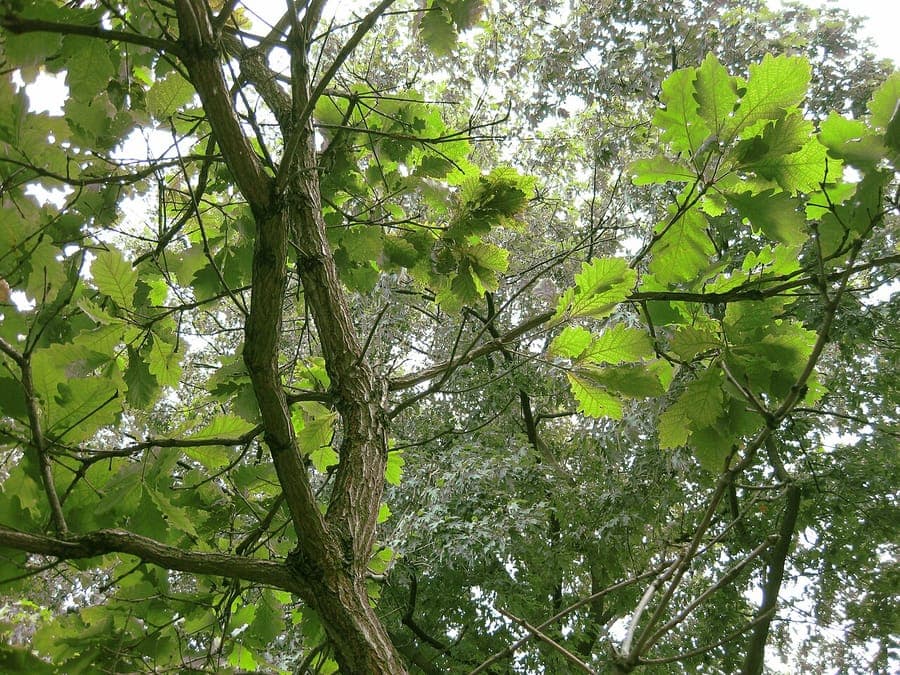
User:Salvor / Public domain, via Wikimedia Commons
Daimyo Oak: complete guide
Quercus dentata
¿Quieres ver Daimyo Oak: complete guide en tu jardín?
1 minuto, sin tarjeta de crédito
Overview
Quercus dentata, commonly known as Daimyo oak or Japanese emperor oak, is a magnificent deciduous tree native to East Asia. This species belongs to the Fagaceae family and is renowned for its strikingly large, deeply toothed leaves that turn a beautiful golden-brown in autumn. The tree reaches heights of 15 to 25 meters and develops a broad, rounded crown ideal for landscape design.
The Daimyo oak is a popular choice for parks and larger gardens in temperate climates. It grows well across various hardiness zones and provides year-round visual interest through its distinctive foliage and impressive silhouette.
Appearance and Bloom
The most distinctive feature of Quercus dentata is its remarkable foliage. Leaves can reach up to 20 cm in length and display deep, irregular teeth along the edges, explaining the botanical name. Spring growth emerges reddish or bronze-tinted before maturing to green. Autumn color transformation produces stunning golden-yellow to brown hues.
Flowers are inconspicuous, as typical for oaks. Male catkins hang gracefully from branches, while female flowers remain small and understated. Acorns are relatively large, approximately 2-3 cm long, with shallow cups featuring characteristic scales.
Ideal Location
Quercus dentata thrives in full sun with at least 6 to 8 hours of direct sunlight daily. The tree is remarkably tolerant and can adapt to partial shade, though foliage color intensifies in full sun exposure.
Provide adequate space for crown development, positioning at least 10 meters from buildings and other large trees to ensure optimal air circulation.
Soil
The Daimyo oak performs best in well-drained, fertile soil. This tree demonstrates exceptional tolerance regarding soil type, adapting to acidic, neutral, and slightly alkaline conditions. An optimal pH range of 6.0 to 7.5 supports healthy growth.
Amend heavy clay soils with compost or leaf mold to improve drainage and moisture retention. Avoid waterlogged conditions that may lead to fungal diseases and root rot.
Diseño gratis
¿Quieres ver Daimyo Oak: complete guide en tu jardín? Crea un diseño gratis ahora.
Watering
After planting, provide regular water until the tree establishes, typically requiring two years. Once established, Quercus dentata exhibits exceptional drought tolerance, requiring supplemental water only during prolonged dry periods or intense summer heat.
Water deeply but infrequently, allowing moisture to penetrate deeply. This practice encourages deep root systems better equipped to handle drought stress.
Pruning
Quercus dentata requires minimal pruning. Remove only dead, damaged, or diseased branches during dormancy (November through March). Work carefully to preserve the tree's natural form.
If size management becomes necessary, gently trim branches in early spring. Avoid severe pruning, as this may promote fungal infections.
Maintenance Calendar
Maintaining Quercus dentata is straightforward. Spring: inspect for diseases and pests. Summer: monitor moisture requirements. Autumn: appreciate stunning fall colors. Winter: remove dead branches during dormancy.
Every three to four years, apply balanced fertilizer, especially for young trees. Mature specimens typically require no supplemental feeding.
Winter Hardiness
Quercus dentata is exceptionally hardy, suitable for hardiness zones 5 to 8. The tree tolerates temperatures as low as -30degC, making it appropriate for most European regions. In harsh climates, protect young trees with mulch around the base.
Companion Planting
The Daimyo oak grows well alongside other Asian tree species. Combine with Acer palmatum (Japanese maple) for harmonious contrast. Underplant with shade-tolerant species like Hosta or Helleborus for low-level visual interest.
Closing
Quercus dentata represents an impressive choice for gardeners with space for a large, characterful tree. With minimal maintenance requirements and stunning year-round appearance, this Asian oak enriches any larger garden. Plant this remarkable tree today and enjoy its natural beauty for generations to come.
Find Quercus dentata at specialty retailers: Intratuin (Netherlands) and Gamma (Belgium).
¿Quieres ver Daimyo Oak: complete guide en tu jardín? Crea un diseño gratis ahora.
Sube una foto, elige un estilo y obtén un diseño fotorrealista con lista de plantas en menos de un minuto.
Más de 10.000 jardines diseñados
Sin tarjeta de crédito


Plantas similares
Lucombe oak: complete guide
Quercus crenata
Lucombe oak (Quercus crenata): a majestic semi-evergreen giant with corky bark, perfect for large gardens, parks, and country estates.
Blue oak: complete guide
Quercus douglasii
Discover the blue oak, a drought-tolerant Californian shade tree with striking blue-green foliage, ideal for large, climate-resilient gardens.
Quercus montana: complete guide
Quercus montana
Quercus montana, the chestnut oak, is a rugged American shade tree with deeply furrowed bark and large acorns, well suited to dry, rocky, spacious gardens.