
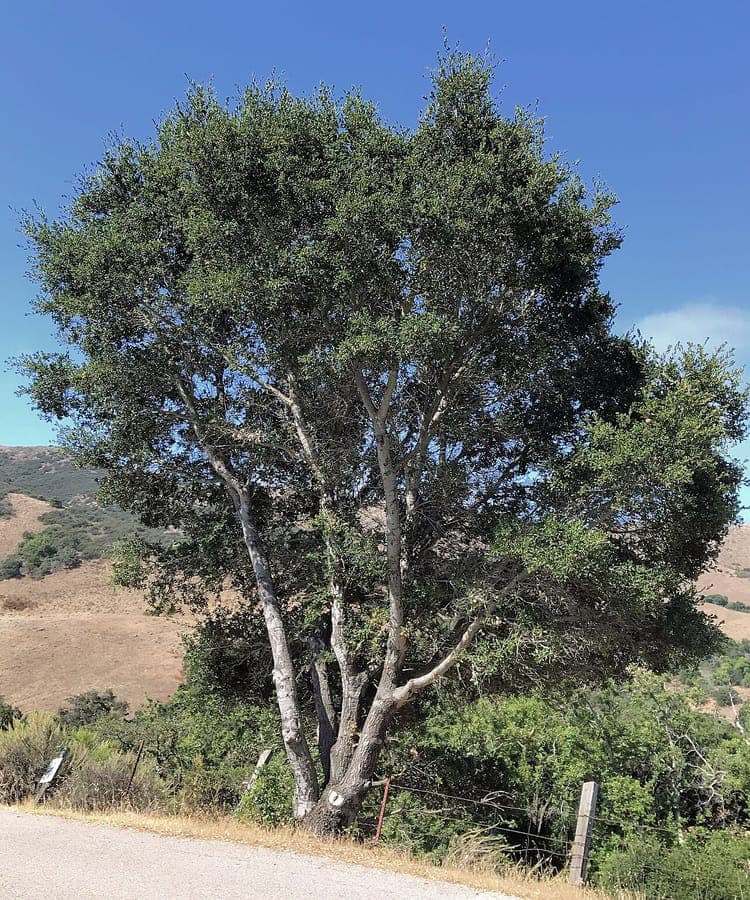
WeirdNAnnoyed / CC BY-SA 4.0, via Wikimedia Commons
California live oak: complete guide
Quercus agrifolia
¿Quieres ver California live oak: complete guide en tu jardín?
1 minuto, sin tarjeta de crédito
Overview
The California live oak, scientifically known as Quercus agrifolia, is an impressive evergreen oak native to California and northwestern Mexico. This tree is celebrated for its slow growth rate, robust character and unique semi-persistent foliage that shifts colour throughout the year. In gardens outside its native climate, the California live oak demands careful placement and support during establishment.
The tree can reach 10-15 meters in height and develops a broad, grey-brown crown. Due to its slow growth and elegant appearance, the California live oak is increasingly appreciated in Mediterranean and drought-tolerant gardens across Europe.
Appearance and bloom
The leaves of Quercus agrifolia are relatively small to medium-sized (3-6 cm), grey-green to dark green and feature a notably glossy upper surface. The leaf margins are slightly wavy and dense, giving the tree a compact, fine texture. The bark is dark grey to black with deep fissures.
Flowers appear in spring (April-May) and are distinctly subtle. Male catkins dangle downward and appear yellowish; female flowers are far less conspicuous. Following pollination, small distinctive acorns develop: approximately 1-1.5 cm long, olive-brown and highly characteristic of this species.
The bloom is not showy, but together with subtle leaf colour shifts creates a very elegant seasonal rhythm.
Ideal location
The California live oak thrives in sunny positions receiving at least 6-8 hours of direct sunlight daily. In warmer regions, light shade during the hottest hours can be beneficial, but generally: the more sun, the stronger and more compact the tree becomes.
This tree is sensitive to strong winds in early years, so choose a sheltered location or provide wind protection. The tree also fits well in dry Mediterranean gardens or as a specimen tree in larger gardens.
Soil
The California live oak has no special soil preferences provided drainage is good. On heavy clay soils it performs less well; sandy to loamy soils with pH 5.5-7.5 are ideal. When planting, add grit or coarse sand to improve drainage.
The root system of the California live oak is deeply penetrating, so dig the planting hole at least 60-80 cm deep. Compost or organic material can be added, but use restraint: moderation is better than excess.
Diseño gratis
¿Quieres ver California live oak: complete guide en tu jardín? Crea un diseño gratis ahora.
Watering
Regular moisture supply is essential during the first and second growing year. Water 1-2 times per week depending on weather conditions and soil moisture. A 5-10 cm mulch layer (straw, tree bark) helps retain moisture.
Once the tree is established (after 3-4 years), the California live oak becomes highly drought-tolerant and requires only occasional water during extended dry periods. Mature trees need virtually no artificial watering.
In very wet winters, ensure good drainage to prevent root rot.
Pruning
The California live oak grows slowly and requires minimal structural pruning. In the first year, you can remove weak or damaged branches and help the tree develop a central stem.
On mature trees, carefully remove dead wood and excessive branches that disrupt form. Avoid heavy pruning as the tree recovers slowly. Prune preferably in late winter or early spring.
Maintenance calendar
January-February: Check for frost or snow damage. Apply natural fertiliser or compost around the base. March-April: Prune where necessary. Monitor for pests. May-September: Regular moisture supply during dry periods. Check mulch layer. October-December: Reduce watering as the season cools. Remove fallen leaves and acorns.
Winter hardiness
The California live oak has moderate winter hardiness (down to about -5 to -8 degrees Celsius). In many European regions, winter protection will be needed in the first years: tree wrap, hessian bags around the stem, or shelter from harsh wind and winter sun are useful.
Once the tree is well-established (after 3-4 years), it tolerates most continental winters well, provided the site is not completely exposed to wind gusts.
Companion plants
The California live oak pairs well with other drought-loving Mediterranean plants:
- Lavender (Lavandula)
- Rosemary (Rosmarinus)
- Oleander (Nerium oleander)
- Dryandra species and other Australian shrubs
- Low grasses such as Stipa
Combine also with stone and dry mulch for an authentic Mediterranean feel.
Closing
The California live oak is a superb choice for those who appreciate slow-growing, characterful trees. With patience, attention during establishment and the right location, it grows into a valuable addition to any garden. The tree can live more than a hundred years and becomes more beautiful with age.
Want to plant a California live oak? Find a sunny, sheltered location, ensure good drainage and exercise patience. The investment is definitely worthwhile. We recommend sourcing through quality nurseries for reliable specimen trees.
On gardenworld.app you will find more inspiration for Mediterranean garden designs and plant choices.
On gardenworld.app, build your own Mediterranean garden plan tailored to your needs.
¿Quieres ver California live oak: complete guide en tu jardín? Crea un diseño gratis ahora.
Sube una foto, elige un estilo y obtén un diseño fotorrealista con lista de plantas en menos de un minuto.
Más de 10.000 jardines diseñados
Sin tarjeta de crédito


Plantas similares
Lucombe oak: complete guide
Quercus crenata
Lucombe oak (Quercus crenata): a majestic semi-evergreen giant with corky bark, perfect for large gardens, parks, and country estates.
Blue oak: complete guide
Quercus douglasii
Discover the blue oak, a drought-tolerant Californian shade tree with striking blue-green foliage, ideal for large, climate-resilient gardens.
Quercus montana: complete guide
Quercus montana
Quercus montana, the chestnut oak, is a rugged American shade tree with deeply furrowed bark and large acorns, well suited to dry, rocky, spacious gardens.