
Wikimedia Commons / CC BY-SA 3.0, via Wikimedia Commons
Willow-leaf Pear: complete guide
Pyrus salicifolia
¿Quieres ver Willow-leaf Pear: complete guide en tu jardín?
1 minuto, sin tarjeta de crédito
Overview
The willow-leaf pear, scientifically known as Pyrus salicifolia, is a stunning ornamental tree native to Turkey and Iran. This elegant decorative shrub belongs to the Rosaceae family and is renowned for its distinctive silvery foliage and white flowers. Gardeners worldwide appreciate this tree for its unique appearance and easy cultivation.
The willow-leaf pear grows slowly to medium size and develops a graceful, attractive crown. This tree combines aesthetic beauty with practical garden value, making it ideal for both modern and classical garden designs.
Appearance and bloom
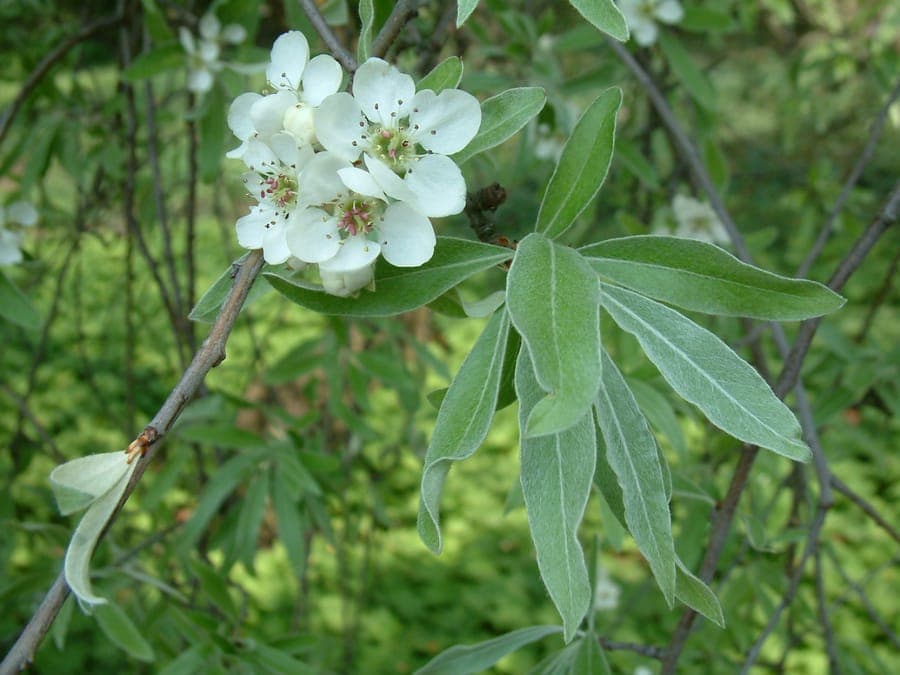
The leaves of Pyrus salicifolia are narrow, elongated, and silvery-grey, strongly resembling willow leaves. This characteristic foliage gives the tree its popular name. The leaves have a fine texture that reflects light, creating an elegant silvery effect in the garden.
In spring, usually April through May, numerous small white flowers appear in clusters along the branches. These delicate blooms are highly attractive to pollinators and provide a beautiful visual spectacle. After flowering, small brownish-green pears form, though these are generally inedible.
Leaf drop occurs in autumn, typically October to November, after which the bare branches retain their own decorative value.
Ideal location
This tree thrives best in a sunny location receiving at least six hours of direct sunlight daily. Full sun promotes dense foliage and abundant flowering. The tree can also grow in light shade, but flowering and silvery effect will be less pronounced.
Protect from strong winds that can damage the fine branch structure. A location with light shelter is ideal.
Soil
Pyrus salicifolia is not fussy about soil type. The tree grows well in both acidic and neutral to slightly alkaline soil (pH 6 to 8). However, well-draining soil is essential, as waterlogging damages the roots.
Sandy or lean saline soil is better tolerated than heavy clay soils. Adding compost or garden peat when planting improves drainage and gives the tree a strong start.
Watering
Young trees need regular moisture, especially during dry periods. Water thoroughly in the first growing season to encourage deep roots. Once established, the tree is fairly drought-tolerant and can manage long periods without supplemental water.
In very dry summers, additional watering is helpful. Avoid waterlogging by ensuring the soil drains well. Mulching around the tree helps retain moisture and regulate temperature.
Diseño gratis
¿Quieres ver Willow-leaf Pear: complete guide en tu jardín? Crea un diseño gratis ahora.
Pruning
The willow-leaf pear grows slowly and requires minimal pruning. In the first and second years, light formative pruning can be applied to create a nice crown structure. Remove dead, damaged, or crossing branches.
Prune lightly after flowering, usually in June. This keeps the tree compact and encourages dense growth. Heavy pruning is not necessary and can damage the tree's appearance.
Maintenance calendar
Spring (March-April): Check for winter damage, apply a thin layer of compost around the root zone, perform formative pruning on young trees.
Summer (June-July): Enjoy the rich silvery foliage, water during drought, remove any unwanted shoots.
Autumn (September-October): Enjoy the leaf drop and interior crown structure, prevent sharp leaf movements by wind.
Winter (November-February): Bare tree retains decorative value, opportunity for structural pruning on major branches.
Winter hardiness
The willow-leaf pear is hardy to USDA zone 4 (-30 degrees Celsius). This makes it suitable for planting throughout nearly all of Northern Europe. In very harsh winter climates, protection from winter storms may be useful.
Young trees may need extra protection in the first year. A layer of mulch around the base helps protect roots from freezing.
Companion plants
The willow-leaf pear combines well with other Mediterranean plants and flowering shrubs:
- Lavender (Lavandula) - complementary silvery foliage
- Santoline (Santolina) - grey-green foliage
- Pink and red roses - beautiful contrast
- Sunflowers (Helianthus) - natural preference
- Cardinal flowers (Lobelia) - color contrast
These combinations create cohesive garden designs with interesting textures and colors.
Closing
The willow-leaf pear is an elegant choice for gardeners seeking a beautiful ornamental tree with minimal maintenance requirements. With its silvery foliage, delicate flowers, and off-season decorative value, this tree adds valuable interest to any garden.
At your local garden retailers, find quality specimens of Pyrus salicifolia. Ask for advice on gardenworld.app for personalized garden designs. Discover how this beautiful tree can fit into your specific garden plan on gardenworld.app.
¿Quieres ver Willow-leaf Pear: complete guide en tu jardín? Crea un diseño gratis ahora.
Sube una foto, elige un estilo y obtén un diseño fotorrealista con lista de plantas en menos de un minuto.
Más de 10.000 jardines diseñados
Sin tarjeta de crédito


Plantas similares
Siberian crab apple: complete guide
Malus x robusta
Complete guide to the Siberian crab apple (Malus x robusta): location, soil, pruning, winter hardiness and the best companion plants for your garden.
Chinese flowering crabapple (Malus x spectabilis): complete guide
Malus x spectabilis
Meet the Chinese flowering crabapple (Malus x spectabilis): a classic spring bloomer with carmine buds and pink blossom.
Potentilla crassinervia: complete guide
Potentilla crassinervia
Potentilla crassinervia, the Corsican cinquefoil, grows wild on Corsica and Sardinia's peaks. Discover how to grow this hardy alpine rock garden gem.