
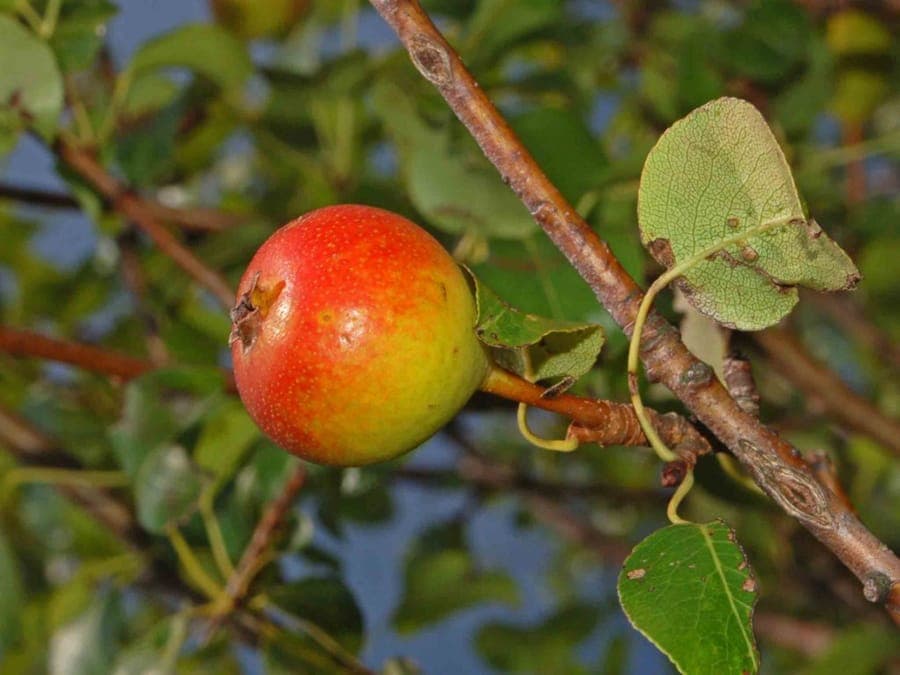
Hectonichus / CC BY-SA 3.0, via Wikimedia Commons
Wild pear: complete guide
Pyrus pyraster
¿Quieres ver Wild pear: complete guide en tu jardín?
1 minuto, sin tarjeta de crédito
Overview
The wild pear (Pyrus pyraster) is the natural ancestor of cultivated pears and of great importance for bees and birds. This resilient tree grows throughout Europe and is extremely valuable for wildlife. Small but valuable fruit provides nourishment for many animal species.
Appearance & bloom
Wild pears grow 5-15 meters tall with spreading crowns. In spring, numerous white flowers appear in clusters, very attractive to pollinators. Fruit are small, round, greenish-brown colored. Leaves are oval and glossy. This is not a showy tree but ecologically very significant.
Ideal location
Wild pears thrive in full sun to part shade. They are highly adapted to varied conditions. Plant in a location where trees have room to develop naturally. They do well in gardens where insects are welcome and valued.
Soil
Wild pears are undemanding regarding soil type. They grow in almost all soil types, even poor or marginal soils. Good drainage is better, but they accept suboptimal conditions well. This makes them ideal for naturalistic plantings.
Watering
Once established, wild pears are very drought-tolerant. Young trees need some regular water initially. Once roots are established, water only during extreme drought. This helps them become robust and self-sufficient.
Diseño gratis
¿Quieres ver Wild pear: complete guide en tu jardín? Crea un diseño gratis ahora.
Pruning
Wild pears need little pruning. Remove dead branches and crossing limbs. Form pruning is unnecessary unless space is limited. They actually grow better if left mostly alone and allowed to develop naturally.
Maintenance calendar
Spring: check growth, remove dead wood. Summer: enjoy bee and bird visits. Fall: harvest seeds for new trees. Winter: assess structure and form.
Winter hardiness
Wild pears are extremely hardy and grow throughout Europe. They defy frost, wind, and storms with ease. This makes them ideal for traditional hedgerows and natural habitats.
Companion plants
Wild pears grow well with other native trees and shrubs. Underplant with hazel, rowan, or hawthorn for additional wildlife food. Grouping with other natives supports local ecosystems beautifully.
Closing
The wild pear is a valuable tree for ecological gardens. Their flowers feed bees, their fruit feed birds. This is not a tree for large edible fruit but for great natural value. Plant for tradition and biodiversity.
For native plants and wildlife gardening: Visit gardenworld.app/en for ecological design advice. Discover personalized garden recommendations.
¿Quieres ver Wild pear: complete guide en tu jardín? Crea un diseño gratis ahora.
Sube una foto, elige un estilo y obtén un diseño fotorrealista con lista de plantas en menos de un minuto.
Más de 10.000 jardines diseñados
Sin tarjeta de crédito


Plantas similares
Siberian crab apple: complete guide
Malus x robusta
Complete guide to the Siberian crab apple (Malus x robusta): location, soil, pruning, winter hardiness and the best companion plants for your garden.
Chinese flowering crabapple (Malus x spectabilis): complete guide
Malus x spectabilis
Meet the Chinese flowering crabapple (Malus x spectabilis): a classic spring bloomer with carmine buds and pink blossom.
Potentilla crassinervia: complete guide
Potentilla crassinervia
Potentilla crassinervia, the Corsican cinquefoil, grows wild on Corsica and Sardinia's peaks. Discover how to grow this hardy alpine rock garden gem.