
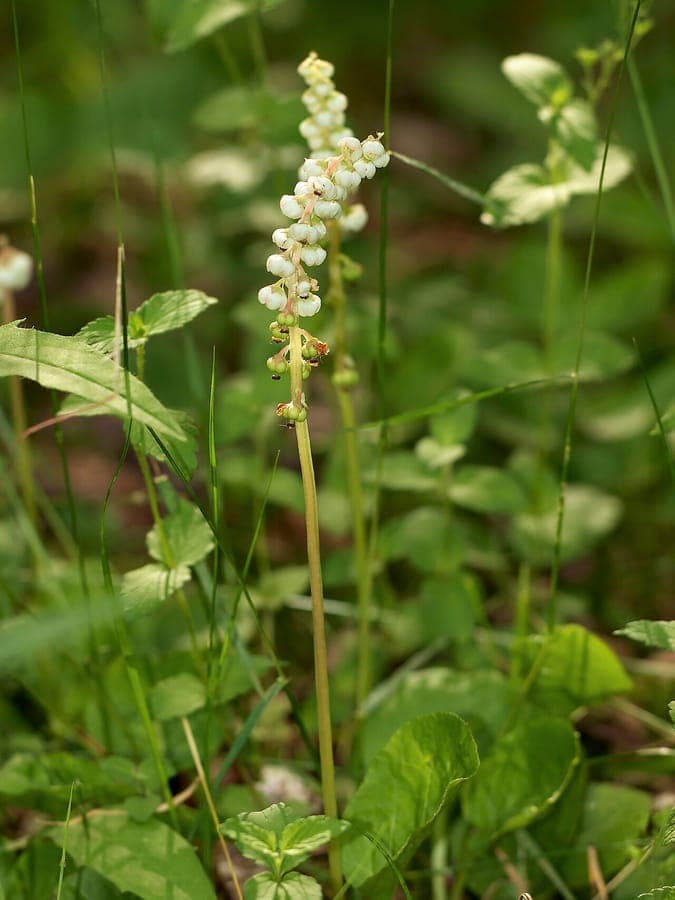
Jörg Hempel / CC BY-SA 3.0 de, via Wikimedia Commons
Lesser wintergreen: complete guide
Pyrola minor
¿Quieres ver Lesser wintergreen: complete guide en tu jardín?
1 minuto, sin tarjeta de crédito
Overview
Lesser wintergreen (Pyrola minor) is a delicate, low-growing perennial of the Ericaceae family, distinguished by its notably compact stature. This alpine plant grows naturally in woodland and montane regions across Europe and North America, thriving in cool, shaded forest environments. Gardeners appreciate it for its modest proportions and willingness to flourish in difficult corners.
Appearance and bloom
Pyrola minor typically reaches 10-20 centimeters in height, making it among the most compact wintergreens. Basal rosettes of glossy, dark-green leaves remain attractive year-round. Flowers appear June through August in upright racemes containing 4-8 delicate blooms, characteristically pink-tinged white. Flowers are gently fragrant, offering subtle sensory appeal.
Ideal location
Lesser wintergreen thrives in shade to partial shade conditions. In nature, it inhabits woodland edges and open forest floors receiving dappled light. Plant specimens near tall trees, beneath shrubs, or on rock-edged borders. The plant appreciates locations with adequate humidity and protection from harsh winds.
Soil
Like all Pyrola species, lesser wintergreen requires acidic, humus-rich soil with pH between 5.5 and 6.5. It prospers in substrate resembling forest earth with high organic content and excellent drainage. Waterlogging causes root damage, making well-draining soils essential. Mycorrhizal association is beneficial for growth and nutrient uptake.
Diseño gratis
¿Quieres ver Lesser wintergreen: complete guide en tu jardín? Crea un diseño gratis ahora.
Watering
Lesser wintergreen prefers consistently moist (not waterlogged) conditions. Water regularly and carefully, especially during dry periods. The plant thrives with constantly moist soil rather than alternating wet-dry cycles. Rainwater is optimal. Reduce watering in winter while preventing complete desiccation.
Pruning
Pruning is unnecessary for this species. Pyrola minor naturally maintains compact form. Remove only dead foliage and spent flower stems after blooming to maintain cleanliness and vigor.
Maintenance calendar
Spring (March-April): Verify soil humus content and amend as needed. Growing season (May-August): Maintain consistent moisture and enjoy blooms. Autumn (September-October): Gradually reduce watering and remove dead material. Winter (November-February): Provide minimal care while protecting from extremes.
Winter hardiness
Lesser wintergreen is extremely cold-hardy, tolerating temperatures to -40 degrees Celsius, making it suitable for harsh alpine regions. Persistent foliage provides year-round interest. Additional mulch may benefit gardens in extreme mountain zones.
Companion plants
Lesser wintergreen pairs well with: other Pyrola species, alpine ferns, dwarf heaths, saxifrages, sedums, and shade-loving alpine plants sharing similar soil requirements.
Closing thoughts
Pyrola minor represents an excellent choice for alpine and woodland enthusiasts with limited space. Compact growth habit and delicate flowers deliver significant interest with minimal maintenance. Find plants at specialized nurseries. Check Intratuin or Gamma for alpine plant selections. Discover design inspiration at gardenworld.app for shade and alpine garden planning.
¿Quieres ver Lesser wintergreen: complete guide en tu jardín? Crea un diseño gratis ahora.
Sube una foto, elige un estilo y obtén un diseño fotorrealista con lista de plantas en menos de un minuto.
Más de 10.000 jardines diseñados
Sin tarjeta de crédito


Plantas similares
Green-flower wintergreen: complete guide
Pyrola chlorantha
Discover Pyrola chlorantha, a subtle shade-loving wildflower with delicate green flowers. Care tips, habitat preferences, and cultivation for this woodland gem.
Round-leaf wintergreen: complete guide
Pyrola rotundifolia
Discover Pyrola rotundifolia featuring distinctive round glossy leaves and beautiful white flowers. Ideal for moist shaded sites in garden landscapes.