
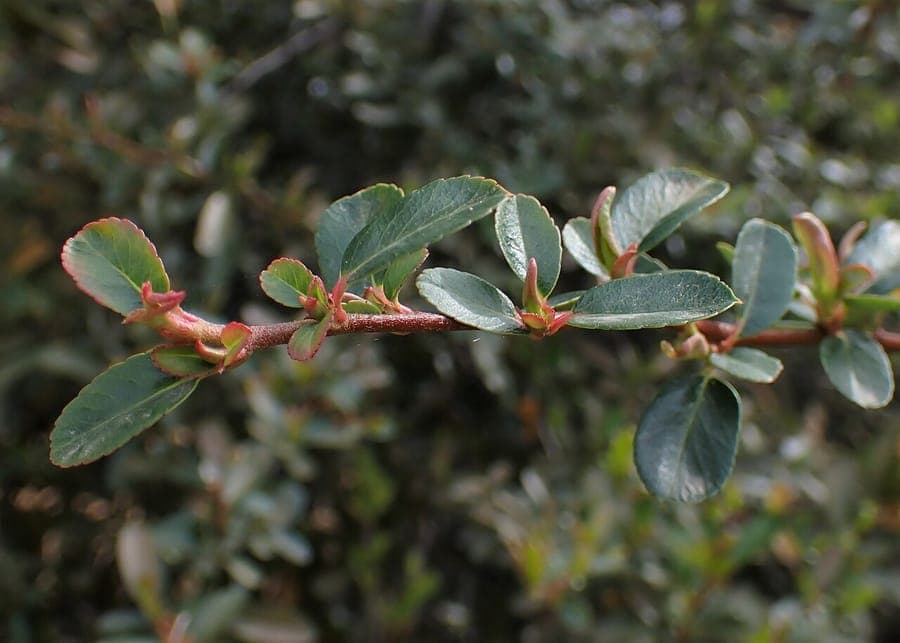
Krzysztof Ziarnek, Kenraiz / CC BY-SA 4.0, via Wikimedia Commons
Asian Firethorn: complete guide
Pyracantha rogersiana
¿Quieres ver Asian Firethorn: complete guide en tu jardín?
1 minuto, sin tarjeta de crédito
Overview
Pyracantha rogersiana, commonly known as Asian Firethorn, is an evergreen ornamental shrub renowned for its spectacular masses of orange to red-orange berries and delicate white spring flowers. This species from Asian mountain slopes naturally grows on rocky outcrops and now thrives in gardens worldwide. Growing 3-4 meters tall, it readily trains against walls and frameworks. Hardy in USDA zones 6-10.
Appearance and Bloom
Asian Firethorn is a densely foliaged evergreen shrub with narrow, dark green glossy leaves creating year-round visual interest. In May-June, abundant small white flowers appear in dense clusters, releasing a delicate fragrance and attracting numerous pollinators. Following bloom, small round fruits develop, starting green, then transitioning through July-September to brilliant orange or deep red-orange. These striking clusters persist well into winter, remaining after other plants' foliage has fallen. Mature height: 3-4 meters; spread: 2-3 meters. Stems are thorny, so handle with care.
Ideal Location
Asian Firethorn thrives in full sun (6+ hours direct sunlight daily) for optimal flower production and berry color. Against walls and stone structures, it flourishes especially well, benefiting from reflected heat. While it tolerates half-shade, flowering and berry production diminish significantly. Protect from harsh north and northwest winds. South or southwest-facing wall positions are ideal. Good air circulation prevents fungal diseases.
Soil Requirements
Pyracantha tolerates diverse soil types but prefers well-drained, neutral to slightly acidic soil (pH 6.0-7.5). Heavy clay soils should be amended with coarse sand and compost. Remarkably, it tolerates poor soils better than many ornamental shrubs. Waterlogging at any cost must be avoided, as it leads to root rot and disease. Loose, well-draining soil 40 cm deep is ideal for vigorous establishment.
Diseño gratis
¿Quieres ver Asian Firethorn: complete guide en tu jardín? Crea un diseño gratis ahora.
Watering
Once established, Pyracantha is quite drought-tolerant. Young plants require regular water during the first growing season (approximately 20-25 liters weekly during heat stress). After establishment, the plant survives extended dry periods, especially in temperate zones. In very arid climates, mulch around the base helps conserve moisture. Excessive watering promotes disease and reduces fruiting.
Pruning
Pyracantha can be pruned aggressively, especially when trained formally against walls (espalier). Prune after flowering (July-August) to preserve berry production for autumn display. For wall-trained specimens, cut back in November to maintain framework form. Light winter pruning shapes plants without compromising next season's fruiting. Handle with care: thorns are sharp and numerous. Wear gloves.
Maintenance Calendar
MAY-JUNE: Peak flowering; avoid feeding. JULY-SEPTEMBER: Fruit maturation; light formative pruning. OCTOBER-NOVEMBER: Fall inspection; formal pruning of wall-trained plants. DECEMBER-MARCH: Winter dormancy; remove dead wood. APRIL: Spring growth resumes; basic training. Monitor annually for powdery mildew and fire blight.
Winter Hardiness
Pyracantha rogersiana is hardy to USDA zones 6-10 (approximately -20C/-4F). In marginal hardiness areas (zones 5-6), placement against south or southeast-facing walls provides protection. In severe winters, foliage may suffer or be lost, but stems and roots remain intact. Well-established plants recover rapidly in spring.
Companion Plants
Combine with late-flowering herbaceous plants: ivy (Hedera helix), small boxwoods (Buxus), forsythia for early spring contrast. For clustered berry display, plant multiple Pyracantha specimens for cumulative impact. Underplanting is not recommended due to sharp thorns. Wall combinations with Clematis add bloom-season color.
Closing
Asian Firethorn is a spectacular, practical addition to any temperate garden. With white flowers and long-lasting orange berries, it delivers visual impact from autumn through winter. Highly suitable for wall-training and formal hedges. Available at garden centres worldwide. Invest in this wildlife magnet!
¿Quieres ver Asian Firethorn: complete guide en tu jardín? Crea un diseño gratis ahora.
Sube una foto, elige un estilo y obtén un diseño fotorrealista con lista de plantas en menos de un minuto.
Más de 10.000 jardines diseñados
Sin tarjeta de crédito


Plantas similares
Siberian crab apple: complete guide
Malus x robusta
Complete guide to the Siberian crab apple (Malus x robusta): location, soil, pruning, winter hardiness and the best companion plants for your garden.
Chinese flowering crabapple (Malus x spectabilis): complete guide
Malus x spectabilis
Meet the Chinese flowering crabapple (Malus x spectabilis): a classic spring bloomer with carmine buds and pink blossom.
Potentilla crassinervia: complete guide
Potentilla crassinervia
Potentilla crassinervia, the Corsican cinquefoil, grows wild on Corsica and Sardinia's peaks. Discover how to grow this hardy alpine rock garden gem.