
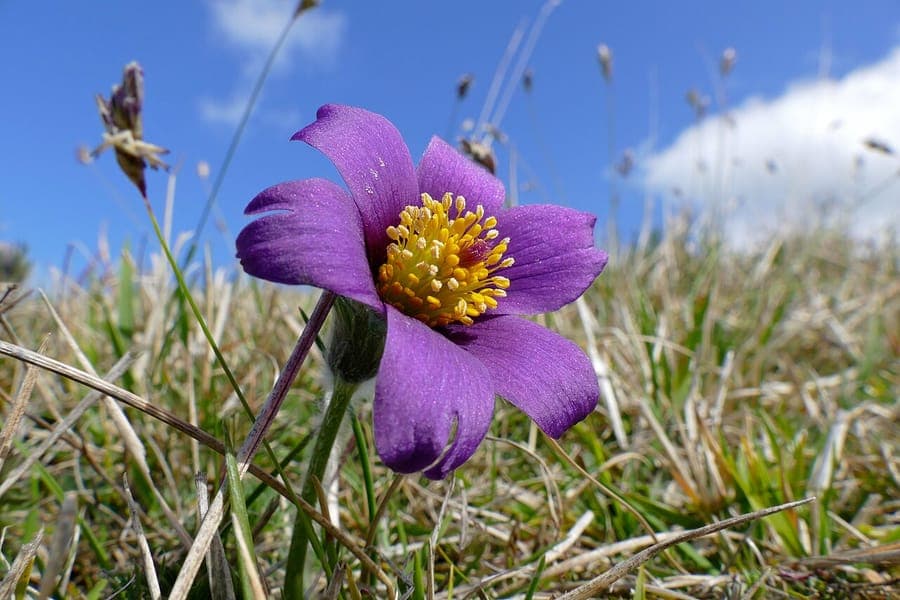
Bernard DUPONT from FRANCE / CC BY-SA 2.0, via Wikimedia Commons
European Pasqueflower: complete guide
Pulsatilla vulgaris
¿Quieres ver European Pasqueflower: complete guide en tu jardín?
1 minuto, sin tarjeta de crédito
European Pasqueflower (Pulsatilla vulgaris) is a captivating spring-blooming perennial famous for its delicate, hairy leaves and enchanting purple flowers. This woodland classic deserves a place in every gardener's collection. The plant offers easy care requirements and reliable performance year after year.
Overview
European Pasqueflower is a long-lived perennial from the Ranunculaceae family. This striking plant has gained renewed popularity thanks to its distinctive appearance and low-maintenance nature. With silky seed plumes and elegant blossoms, Pasqueflower creates magnificent focal points in borders and rock gardens.
Appearance and bloom
The plant develops finely cut, feathery foliage that appears hairy in spring. Blooming occurs from March to April, producing beautiful purple to violet flowers. After flowering, distinctive silvery seed plumes form, adding extended ornamental interest throughout summer and autumn.
Ideal location
Plant Pasqueflower in full sun to light shade locations. The plant thrives in well-drained, dry soil. Good drainage is essential to prevent root rot during wet seasons. Position in borders or rock gardens where deep roots can develop freely without waterlogging.
Soil requirements
Use well-draining, lean soil without heavy clay content. Pasqueflower grows best in alkaline or neutral soils. Add sand and gravel to heavy soils to improve drainage. Fungal diseases develop quickly in waterlogged conditions.
Diseño gratis
¿Quieres ver European Pasqueflower: complete guide en tu jardín? Crea un diseño gratis ahora.
Watering
European Pasqueflower tolerates drought better than excessive moisture. Water only during extended dry periods. In typical years, supplemental watering is unnecessary. After blooming, the plant benefits from drier conditions.
Pruning
Remove spent flowers immediately after blooming. This encourages seed formation for natural self-seeding. Allow seed plumes to persist for ornamental value. Avoid cutting healthy foliage, which may stress the plant.
Maintenance calendar
February: Water carefully if soil is completely dry. March-April: Plant blooms beautifully. May-June: Seed plumes develop ornamentally. July-August: Plant rests, minimal attention required.
Winter hardiness
European Pasqueflower is extremely hardy throughout Northern Europe. The plant survives temperatures well below minus 15 degrees Celsius. Foliage persists partially through winter months, providing structure to borders.
Companion plants
Complementary partners include sedums, lavender, and ornamental grasses. These combinations create sunny, well-drained planting schemes. Avoid moisture-loving plants that promote root rot. Bergenia and Helleborus work well in partial shade situations.
Closing thoughts
European Pasqueflower is an exceptional plant for every gardener. Find quality plants at local garden centers. For more spring garden ideas, visit gardenworld.app today. Gardenworld.app helps you design complete garden schemes with seasonal interest throughout the year.
¿Quieres ver European Pasqueflower: complete guide en tu jardín? Crea un diseño gratis ahora.
Sube una foto, elige un estilo y obtén un diseño fotorrealista con lista de plantas en menos de un minuto.
Más de 10.000 jardines diseñados
Sin tarjeta de crédito


Plantas similares
Drummond's anemone: complete guide
Anemone drummondii
Discover Drummond's anemone (Anemone drummondii): a silvery-grey mountain plant for cool rock gardens and alpine troughs.
Korean clematis: complete guide
Clematis serratifolia
Clematis serratifolia is a hardy climber with fragrant yellow bell flowers in August-September. Pruning group 3, location and care tips.
Aquilegia brevistyla: complete guide
Aquilegia brevistyla
Discover Aquilegia brevistyla, the elegant North American columbine. Growing tips, shade tolerance, and design ideas for woodland and shadowed gardens.