
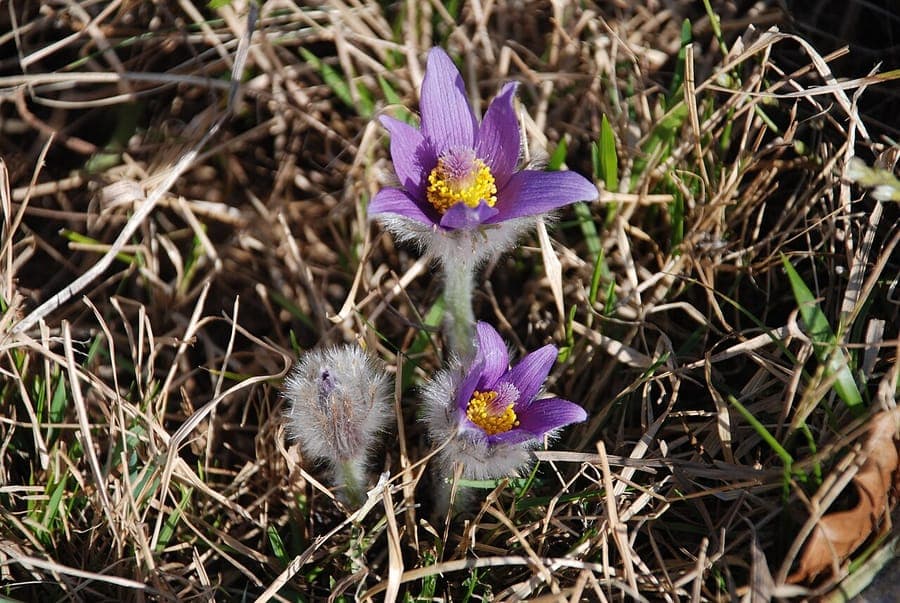
Eleassar / CC BY-SA 3.0, via Wikimedia Commons
Greater Pasque Flower (Pulsatilla grandis): complete guide
Pulsatilla grandis
¿Quieres ver Greater Pasque Flower (Pulsatilla grandis): complete guide en tu jardín?
1 minuto, sin tarjeta de crédito
Overview
Pulsatilla grandis, known as Greater Pasque Flower, is an enchanting spring bloomer from the Ranunculaceae family (buttercup family). This plant naturally occurs in central Europe from Austria to Ukraine. With its purple flowers and characteristic hairy seed plumes, Pulsatilla grandis represents a valuable specimen for naturalistic gardens.
The plant is particularly interesting for its early spring flowering and the spectacular seed capsules that form after blooming. This makes it a plant of season-long interest.
Appearance and bloom
Pulsatilla grandis forms a rounded, mounded plant of approximately 20-30 centimeters height with fine, feathery leaves that expand after flowering. The entire plant is covered with fine hairs, giving it a silvery sheen.
Flowers are large, approximately 3-5 centimeters in diameter, deep purple to violet with yellow stamens in the center. The flower petals are elongated and give the bloom characteristic form. Flowering occurs from March through May, before leaves fully expand.
Following bloom, spectacular, feathery seed plumes develop that remain visible for weeks. These seed plumes are decorative and serve as seed dispersal mechanism. Seed dispersal occurs via wind (anemochory).
Ideal location
Pulsatilla grandis thrives best in full sun on open, dry sites. The plant requires at least six to eight hours of direct sunlight daily for optimal growth and flowering.
The plant is suitable for rock gardens, dry borders, and grassy slopes. Avoid shady locations where the plant may experience etiolation. The plant cannot tolerate winter water stagnation and requires well-draining soils.
The plant is extremely wind-resistant due to its low, compact growth and strong root system.
Soil
Pulsatilla grandis grows on virtually all well-draining soils provided drainage is excellent. The plant tolerates even very poor, rocky or stony soils. Preference lies with well-draining, acidic to neutral soils.
Heavy clay soils are unsuitable for Pulsatilla grandis and must be drastically improved with sand and gravel. A layer of gravel or small stones beneath the plant aids drainage and prevents root rot.
The plant is extremely sensitive to waterlogging and will perish in persistently wet conditions, particularly in winter.
Diseño gratis
¿Quieres ver Greater Pasque Flower (Pulsatilla grandis): complete guide en tu jardín? Crea un diseño gratis ahora.
Watering
Once established, Pulsatilla grandis tolerates drought well and requires minimal supplemental water. However, during the first growing season regular watering must occur until good root development is achieved.
In container cultivation, careful watering must be practiced. Allow the substrate to nearly dry completely between waterings. Overwatering is the most common cause of plant death.
In Mediterranean summers, the plant can survive without supplemental watering.
Pruning
Pulsatilla grandis requires no pruning. Leave the seed plumes on the plant until they naturally drop; this adds decorative interest to the garden aspect.
Remove only dead leaf material in autumn. The plant cleans itself and requires little intervention.
Maintenance calendar
March-April: Observe flowering; enjoy spectacular blooms.
May-June: Monitor seed plumes; support tall seed formations if needed.
July-September: Minimal care; no watering except in extreme drought.
October-November: Clean up dead foliage; prepare for winter.
December-February: Rest period; no active maintenance.
Winter hardiness
Pulsatilla grandis is extremely winter hardy, tolerating temperatures to -25 degrees Celsius or below. This makes it suitable for virtually all European regions.
However, the plant is sensitive to early frosts following warm spring spells, which may damage flowers.
Companion planting
Pulsatilla grandis combines beautifully with other early spring bloomers such as Adonis vernalis, Helleborus, or Erythronium. For lower companions, use Sedum, Sempervivum, or other succulents.
In rock gardens, combine with other stone-lovers such as saxifrages or alpine slipper orchids.
In grassland-like plantings, combine with wild grasses and other meadow flowers.
Closing
Pulsatilla grandis is an enchanting spring bloomer offering elegant flowers and decorative seed plumes. For those seeking low-maintenance, early bloomers, this represents an excellent choice.
Seeds and plants are available through specialized garden centers and wildflower suppliers. For garden design with spring bloomers, visit gardenworld.app for recommendations.
With proper care, Pulsatilla grandis will provide years of early spring splendor in your garden.
¿Quieres ver Greater Pasque Flower (Pulsatilla grandis): complete guide en tu jardín? Crea un diseño gratis ahora.
Sube una foto, elige un estilo y obtén un diseño fotorrealista con lista de plantas en menos de un minuto.
Más de 10.000 jardines diseñados
Sin tarjeta de crédito


Plantas similares
Drummond's anemone: complete guide
Anemone drummondii
Discover Drummond's anemone (Anemone drummondii): a silvery-grey mountain plant for cool rock gardens and alpine troughs.
Korean clematis: complete guide
Clematis serratifolia
Clematis serratifolia is a hardy climber with fragrant yellow bell flowers in August-September. Pruning group 3, location and care tips.
Aquilegia brevistyla: complete guide
Aquilegia brevistyla
Discover Aquilegia brevistyla, the elegant North American columbine. Growing tips, shade tolerance, and design ideas for woodland and shadowed gardens.