
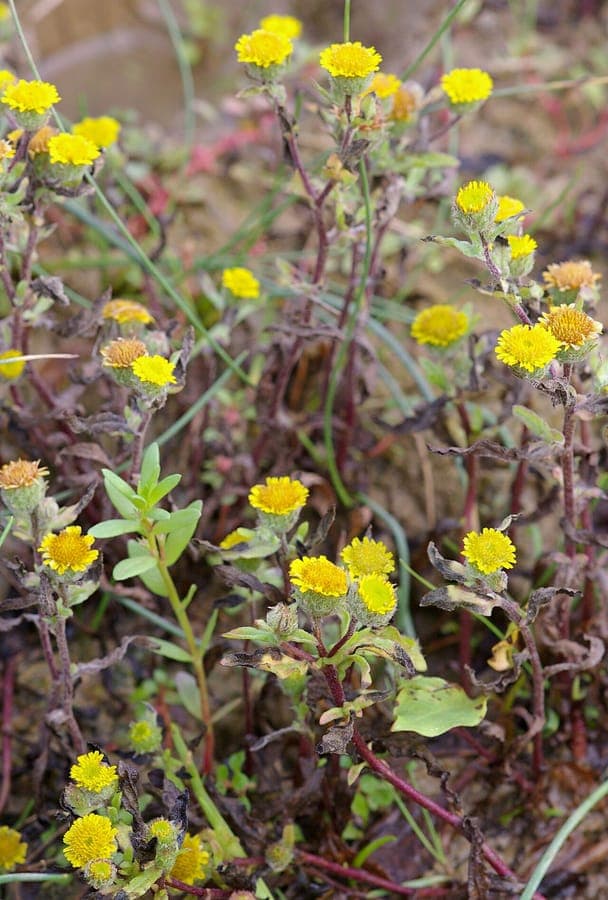
Christian Fischer / CC BY-SA 3.0, via Wikimedia Commons
Pulicaria vulgaris: complete guide
Pulicaria vulgaris
¿Quieres ver Pulicaria vulgaris: complete guide en tu jardín?
1 minuto, sin tarjeta de crédito
Overview
Pulicaria vulgaris, commonly called lesser fleabane or small fleabane, is a more compact variant of its larger family relative. Naturally distributed across Europe to West Siberia and North Africa, this modest asteraceae plant makes an excellent low-growing flowering accent for moist garden locations. With delicate, golden-yellow flowers and compact growth habit, it offers elegance without dominance.
This plant is renowned for its preference for moist to wet growing conditions and forms an essential component of natural waterside plantings. It attracts numerous insects and birds, providing valuable ecological benefits to the garden ecosystem.
Appearance and Bloom
Pulicaria vulgaris develops as a compact, dense shrublet reaching only 20-50 centimeters tall. This makes it a far more subtle plant than its larger relative P. dysenterica. Small, green, lightly hairy leaves give the plant interesting texture and delicate appearance.
Flowering from August through September is exceptionally abundant. Numerous small, golden-yellow flowers cover the plant in dense clustering panicles. Each flower measures only 1-2 centimeters across, yet collectively they create a cheerful, sunny effect. Flowers attract bees and other pollinators enthusiastically. After flowering, fine feathered seeds develop.
Ideal Location
Pulicaria vulgaris performs optimally in sunny to partially shaded locations. Full sun (6+ hours direct daily sunlight) produces peak flowering, but the plant also flowers reasonably well in light shade. This versatility makes it suitable for diverse garden positions.
The plant excels in moist borders, along canal and ditch margins, in wildlife gardens, and in low-growing groupings with other small asteraceae species. It integrates beautifully with low-growing underplanting in moist situations.
Soil
Pulicaria vulgaris strongly prefers moist to wet soils. Ideal are soils with moderate to very high moisture content. A pH between 6.5 and 7.0 works well. Soil fertility is less critical; standard garden soil suffices.
Under dry conditions, this plant fails. It grows best where water persists regularly. In normal gardens, create deliberate wetland effects or grow it in moisture-rich pots.
Diseño gratis
¿Quieres ver Pulicaria vulgaris: complete guide en tu jardín? Crea un diseño gratis ahora.
Watering
Pulicaria vulgaris requires consistently moist growing media. In naturally moist soils, supplemental watering is barely necessary. Only extreme drought would necessitate additional water.
In containers, maintain constantly moist compost. Never allow soil to dry completely. During dry periods, daily watering may be necessary.
Pruning
Pulicaria vulgaris requires minimal pruning. The plant naturally assumes a neat, compact form. After flowering, dead flower heads can be removed for neater appearance. In spring (April-May), remove excess dead material.
Regular removal of faded flowers throughout the season encourages extended flowering and repeated blooming until frost.
Maintenance Calendar
April-May: Remove dead winter material. Plant begins active growth. No fertilizing in moist locations.
June-July: Active growth phase. Moisture maintenance essential. Weed control as needed.
August-September: Maximum flowering. Remove spent flowers for extended blooming.
October-March: Plant dormant. Seeds remain for bird food. No maintenance required.
Winter Hardiness
Pulicaria vulgaris survives climate zone 5 (-20 degrees Celsius) reliably. Throughout the Netherlands, Belgium, France, and Germany, the plant overwinters without protection. Frost poses no problem.
Companion Plants
Pulicaria vulgaris combines beautifully with other compact moisture-lovers:
- Mentha aquatica (water mint) - similar height with aromatic foliage
- Scutellaria galericulata (helmet flower) - purple-blue flowers with matching moisture needs
- Lycopus europaeus (gypsywort) - similar size and moisture preference
- Carex riparia (greater pond sedge) - interesting grass form beside yellow flowers
- Geum rivale (water avens) - smaller pink flowers
Conclusion
Pulicaria vulgaris offers a perfect choice for gardeners needing to fill moist locations without large structural elements. With its compact growth habit, consistent golden-yellow flowering, and minimal maintenance requirements, it forms a valuable component of wildlife gardens and ecological groupings. This lesser fleabane certainly deserves attention in moist garden areas.
¿Quieres ver Pulicaria vulgaris: complete guide en tu jardín? Crea un diseño gratis ahora.
Sube una foto, elige un estilo y obtén un diseño fotorrealista con lista de plantas en menos de un minuto.
Más de 10.000 jardines diseñados
Sin tarjeta de crédito


Plantas similares
Calendula stellata: complete guide
Calendula stellata
Complete guide to Calendula stellata, the star-flowered marigold from Sicily: location, soil, watering and companion planting tips.
Korean chrysanthemum: complete guide
Chrysanthemum x rubellum
Chrysanthemum x rubellum is a hardy autumn perennial with single pink to copper flowers from August to November. Care and combinations.
Helianthus divaricatus: complete guide
Helianthus divaricatus
Helianthus divaricatus is a North American woodland sunflower with yellow summer blooms, ideal for naturalistic borders and shady edges.