
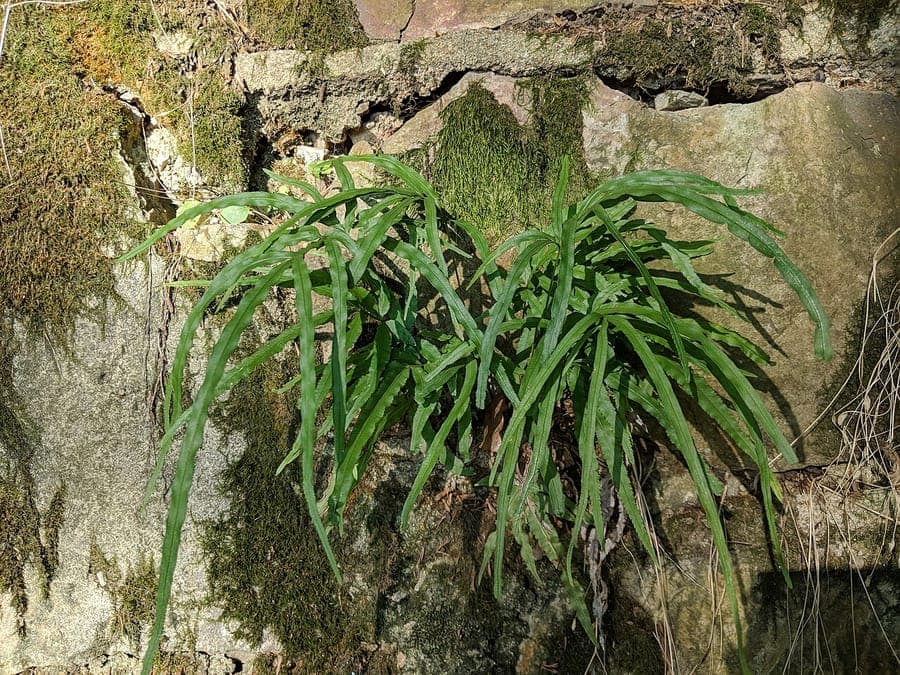
Sun Jiao (Interaccoonale) / CC BY 4.0, via Wikimedia Commons
Chinese Brake: complete guide
Pteris multifida
¿Quieres ver Chinese Brake: complete guide en tu jardín?
1 minuto, sin tarjeta de crédito
Overview
Chinese Brake, scientifically known as Pteris multifida, is an elegant tropical fern originating from the broad region of China, Japan, Korea and Vietnam. This species has now spread worldwide as a houseplant - many homes are familiar with it without knowing its name. With its fine, feathery fronds and attractive growth habit, Pteris multifida offers a worthwhile addition to interiors.
The fern belongs to the Pteridaceae family and has been scientifically known since 1804. The common names "Chinese brake" or "spider fern" refer to the spider-web-like appearance of the fronds. For houseplant collectors, this is a classic choice - elegant, relatively easy to grow, and highly decorative.
Appearance and Growth
Pteris multifida grows into an elegant, upright plant of 30 to 60 centimeters tall in typical houseplant situations. The plant has no central trunks, but grows directly from the soil with multiple fronds. These fronds are thin, green to brownish, and rather springy.
The fronds are the main visual feature. They are doubly to triply divided, with extremely small leaflets creating a fine, feathery impression. The entire frond can reach 20 to 40 centimeters long, and the delicate structure gives the plant an airy, elegant appearance. The color is bright to dark green depending on light conditions.
Unique to many Pteris species is that some leaflets are broad and undivided, while others are very finely divided - this is called "polymorphic" fronds and is one of the plant's beauties. This provides texture variation that explains why ferns are so valuable in interior design.
The plant grows very slowly and will only grow 5 to 10 centimeters annually in typical homes.
Ideal Location
Pteris multifida thrives in indirect light situations. This is actually an advantage because you can place the plant in corners, offices or other dimmer rooms. Minimum 2 to 3 hours indirect light daily suffices. In bright sunlight (direct window light), the plant can become bleached and damaged-looking.
For placement: position the plant where air moves, but not directly in an air-conditioner jet. A windowsill without direct sun is perfect. A bathroom with window is also excellent - ferns appreciate the humidity from showers and baths.
Temperature should be stable. Pteris multifida thrives between 16 and 30 degrees Celsius, but prefers warmth around 20-25 degrees optimally. Avoid cold (below 12 degrees) and major temperature fluctuations.
Soil
The right potting soil is essential for Pteris multifida's wellbeing. Use light, air-draining potting soil. Many gardeners use a mix of:
- 50% standard potting soil
- 30% coco fiber or coco-husk
- 20% perlite or sand
This mix ensures good drainage while retaining moisture. Ferns cannot tolerate water excess but also dislike drying out. The soil should never completely dry.
Ensure many drainage holes in the pot - at least 4 to 6 large holes. Don't use saucers with water collection unless careful. Better: place the pot on an elevated angle so water can drain.
Every two years in autumn, refresh the potting soil partially (top 5 cm). This prevents salt buildup and provides fresh nutrition.
Diseño gratis
¿Quieres ver Chinese Brake: complete guide en tu jardín? Crea un diseño gratis ahora.
Watering
Watering is the main challenge with Pteris multifida. The plant requires consistently moist (not wet) soil. Check every two days: feel your finger in the soil - it should feel moist, not soggy.
In summer (May to October), water regularly, probably two to three times weekly depending on room temperature and humidity. In winter, water slightly less frequently, but the soil should never completely dry out.
Rainwater is ideal. Heavy tap water can cause salt buildup. Many indoor gardeners use aged water (24 hours old) or rainwater.
Beyond watering: Pteris multifida loves high humidity. Spraying fronds daily (in summer) helps enormously. Place the pot on a saucer with water and stones above it (so pot doesn't touch water directly) creates a humid microenvironment. Regular misting is essential in dry winter living rooms.
Pruning and Maintenance
Pteris multifida doesn't really need pruning. However, remove old, yellowed fronds carefully by cutting them at the base. This gives the plant a neater appearance and stimulates new frond growth.
If the plant becomes very large and you want it smaller, you can carefully remove older fronds. Cut them off just above the soil line. The plant will produce new fronds.
When you repot the plant, check for insects - especially spider mites can attack Pteris. Seeing yellow specs on fronds and fine webbing? Take action immediately. Spray with mild insecticide or use biological control.
Maintenance Calendar
March-April: Growing season begins. Increase watering. Start weekly misting. Repot if plant larger than 40cm.
May-August: Full growth cycle. Water two to three times weekly. Mist regularly. Fertilize with plant label formula 1-2x per month.
September-October: Growth slows. Watering normalizes. Misting slightly less frequent.
November-February: Winter rest. Minimal watering (soil can be slightly drier). Lower temperatures (16-18 degrees is fine).
Winter Hardiness
Pteris multifida is not an outdoor plant and cannot tolerate frost. Keep the plant always indoors. Even a few degrees above freezing can be fatal. In a typical heated living room, it thrives year-round.
In winter: place the plant away from hot heating pipes, as dry heat is disastrous. A location with temperature 16-22 degrees is ideal.
Avoid major temperature swings. Moving plant from warm room to cold foyer can cause frond damage.
Companion Plants
Pteris multifida looks beautiful with other houseplant ferns:
- Nephrolepis (Boston fern) - also green and elegant
- Adiantum (maidenhair fern) - even finer foliage
- Platycerium (staghorn fern) - larger format, different shape
- Areca palm - for height and contrast
- Monstera - large, tropical, complementary size
Mixing ferns in a room creates a jungle-like collection that is worthwhile.
Final Thoughts
Pteris multifida is not a difficult plant, but requires consistency. "Water occasionally" doesn't work - regular moisture care is essential. But with proper conditions (indirect light, stable temperature, regular misting), your plant will remain beautiful for years.
This is a plant for the patient gardener who realizes that elegance and simplicity can go together. Enjoy your houseplant!
Looking for Chinese Brake? Many plant nurseries and garden centers stock it. Online suppliers also offer it. Buy from a reputable nursery - healthy plants grow better.
On gardenworld.app you'll find more tips for houseplants and tropical collections. Visit for inspiration!
¿Quieres ver Chinese Brake: complete guide en tu jardín? Crea un diseño gratis ahora.
Sube una foto, elige un estilo y obtén un diseño fotorrealista con lista de plantas en menos de un minuto.
Más de 10.000 jardines diseñados
Sin tarjeta de crédito


Plantas similares
American rockbrake: complete guide
Cryptogramma acrostichoides
Full guide to American rockbrake fern: ideal location, soil, watering, winter hardiness and garden companions for shady rock gardens.
Longleaf brake fern: complete guide
Pteris longifolia
Everything about Pteris longifolia: ideal location, soil, watering, winter care and companion plants for this tropical fern.
Rough Maidenhair Fern: complete guide
Adiantum hispidulum
Discover the Rough Maidenhair Fern, an elegant, low-growing fern from tropical regions with delicate fine-textured foliage. Perfect for humid, shaded locations and humid indoor environments.