
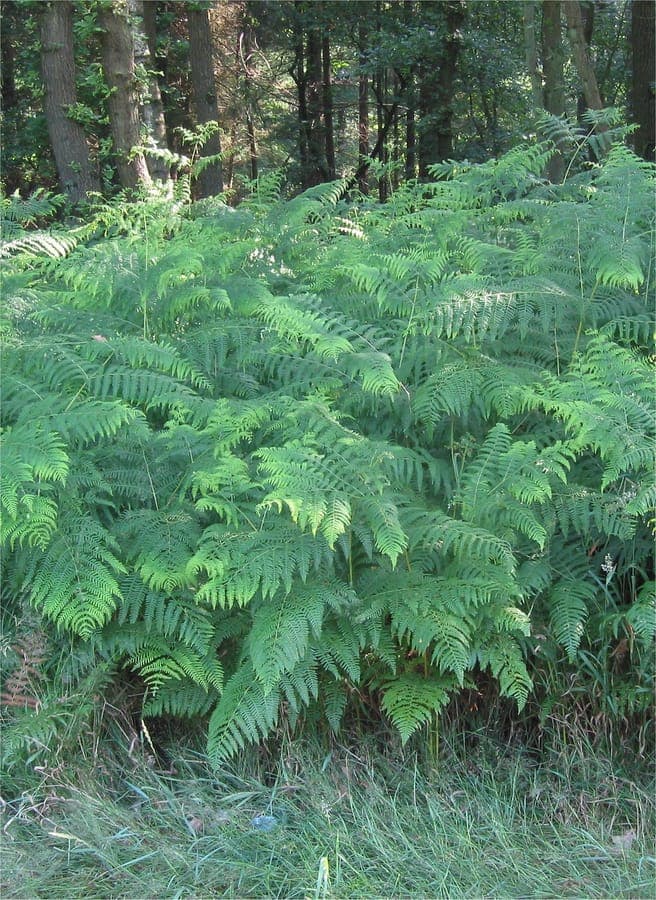
Rasbak / CC BY-SA 3.0, via Wikimedia Commons
Bracken fern: complete guide
Pteridium aquilinum
¿Quieres ver Bracken fern: complete guide en tu jardín?
1 minuto, sin tarjeta de crédito
Bracken (Pteridium aquilinum), also known as bracken fern, is a common, fast-growing fern with large, elegantly feathery fronds. This European wildplant is widely valued for rapid growth and ability to colonize shaded, marginal areas. With majestic fronds and natural elegance, Pteridium aquilinum is perfect for wild, nature-oriented gardens.
Overview
Pteridium aquilinum, known as bracken or bracken fern, is one of Europe's most common ferns. This fern grows 50-200 centimeters high depending on growing conditions and spreads via underground rhizomes. The name refers to the eagle-like shape of the feathery frond. Pteridium is widely distributed across Europe, North Africa, and Asia, with introduced populations in Americas and Australia.
This fern is known for rapid growth, invasive behavior, and ability to colonize marginal areas. In gardens it is valued for quick, natural coverage and texture. It attracts birds and provides important fodder for mammals.
Appearance and Reproduction
The fronds are very large, to 250 centimeters high, highly divided with triangular overall outline. The fronds grow singly from rhizomes, creating an open, airy feeling. Frond color is bright green in spring, deeper green in summer, golden-brown in autumn.
Bracken reproduces via spores rather than seeds. Spores form on underside of fronds in late summer. Spores develop rapidly in favorable conditions, allowing rapid spread. This fern requires no flowers or seeds to reproduce.
Ideal Location
Pteridium aquilinum grows best in shade to semi-shade locations, though it also grows in full sun. Semi-shade under trees creates ideal conditions with filtered light. This fern can tolerate dense shade where little else grows.
Use bracken for wild corners, under trees, marginal sites, and neglected areas. It is ideal for woodland gardens and naturalistic screens. In smaller gardens control growth with barriers or container cultivation.
Soil
Bracken grows in diverse soils but prefers acidic, well-drained soil (pH 4.5-6.5). Plant tolerates very poor, sandy soils perfectly and grows in unfavorable conditions where little else survives. In heavy soils add sand and organic matter for drainage.
At planting, water thoroughly and mulch with 5 centimeters of organic covering. This fern requires little feeding; in fact it grows faster in poor soils. Drainage is less critical than for most ferns, as this plant is very drought-tolerant.
Diseño gratis
¿Quieres ver Bracken fern: complete guide en tu jardín? Crea un diseño gratis ahora.
Watering
Once established, Pteridium aquilinum is very drought-tolerant and requires minimal water. This fern grows in marginal, dry sites where little else survives. Water young plants during first growing season until roots go deep.
The ability to tolerate dry conditions makes bracken ideal for neglected gardens and marginal areas. Even in very dry years it grows with minimal care. This is a valuable plant for water-conserving gardens.
Pruning
Bracken requires minimal pruning. This fern grows naturally in full, open forms. Remove only dead fronds in spring when new growth begins. In winter fronds die back to ground, so pruning in December-January.
To control growth, dig and remove rhizomes at edges. This prevents invasive behavior and keeps plant concentrated. Annual pruning helps keep plant compact in smaller gardens.
Maintenance Calendar
March-April: Check new growth; remove dead fronds. No feeding needed. May-June: Enjoy rapid growth. Water only if very dry. July-August: Check spore formation under fronds. Enjoy fall stages. September-October: Fronds turn golden; no pruning needed. November-February: Fronds die back to ground. Minimal maintenance.
Winter Hardiness
Pteridium aquilinum is very hardy to -30C or lower, thus suitable for all temperate regions. In winter fronds disappear to ground but rhizomes survive severe frost. Plants recover fully in spring.
Use winter foliage loss to your advantage: maintain appearance by pruning in February before new growth.
Companion Plants
Combine bracken with other shade ferns like Polystichum or Dryopteris. Plant with groundcover ferns. Associate with native flowering wildflowers like foxglove or bluebell. For woodland gardens, pairing with young trees and shrubs.
In modern gardens, bracken provides texture contrast with strong structure. Group different ferns for layers of texture and color.
Closing Thoughts
Pteridium aquilinum transforms marginal areas into texture-rich, shaded sanctuaries. This wild fern grows where little else survives and requires minimal care. Ideal for designers seeking rapid, natural coverage. Experienced gardeners value the drought tolerance and invasive control opportunities. Beginners appreciate low maintenance and fast growth. Source plant material from wild collections or local garden centers. Visit gardenworld.app for more advice on ferns and wild gardens. Discover how bracken can transform your marginal spaces. More inspiration at gardenworld.app for wild garden design.
¿Quieres ver Bracken fern: complete guide en tu jardín? Crea un diseño gratis ahora.
Sube una foto, elige un estilo y obtén un diseño fotorrealista con lista de plantas en menos de un minuto.
Más de 10.000 jardines diseñados
Sin tarjeta de crédito


Plantas similares
Acer pycnanthum: complete guide
Acer pycnanthum
Acer pycnanthum, the Japanese swamp maple, is a fast-growing tree with early red flowers and brilliant autumn color, ideal for damp garden settings.
Freeman maple: complete guide
Acer × freemanii
Everything about the Freeman maple (Acer x freemanii): a fast-growing shade tree with spectacular autumn colour for large gardens.
Silver vine: complete guide
Actinidia polygama
Discover silver vine (Actinidia polygama): a hardy climbing plant with silvery foliage, loved by gardeners and cats alike.