
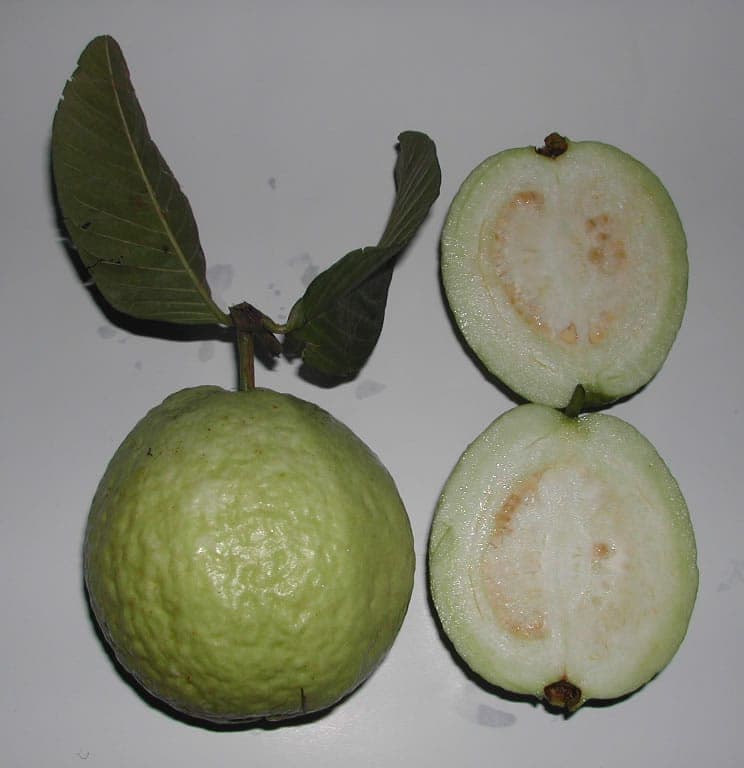
Wikimedia Commons / CC BY-SA 3.0, via Wikimedia Commons
Guava: complete guide
Psidium guajava
¿Quieres ver Guava: complete guide en tu jardín?
1 minuto, sin tarjeta de crédito
Overview
The guava (Psidium guajava) is a tropical fruit tree from South America that has spread throughout tropical and subtropical regions. This versatile tree produces delicious, vitamin C-rich fruits that can be enjoyed fresh or processed. With proper care, guavas thrive even in temperate warm areas.
Appearance & bloom
Guava trees grow 3-10 meters tall with dense, widely branched canopies. The leaves are lance-shaped with a rough texture. White flowers appear in clusters and bloom for extended periods, ensuring abundant harvests. The fragrant flowers attract bees and create displays of small white blossoms simultaneously.
Ideal location
Guavas grow best in warm, sunny locations with at least 6-8 hours of direct sunlight daily. They love heat and benefit from south-facing walls or greenhouse protection. In temperate zones, young trees need winter protection. Cover with burlap or fleece in cold months.
Soil
Guavas are undemanding but prefer fertile, well-draining soil. A pH of 6.0-6.8 is ideal. Add compost or aged manure when planting. Heavy clay soils improve with sand and organic matter to prevent waterlogging and root problems.
Watering
Young guava trees need regular water, especially during dry periods. Established trees are drought-tolerant. Water deeply and infrequently; let the top 5 cm dry between waterings. Overwatering causes issues. Reduce watering for potted trees in winter months.
Diseño gratis
¿Quieres ver Guava: complete guide en tu jardín? Crea un diseño gratis ahora.
Pruning
Guava trees respond well to pruning for shape and form. Remove dead or weak branches and maintain an open structure. Prune after harvest to help regeneration. Young trees benefit from top pruning to encourage branching and fuller growth.
Maintenance calendar
Spring: check for pests, shape prune. Summer: fertilize, water during drought. Fall: harvest fruit, boost potassium. Winter: minimal care, frost protection in vulnerable areas.
Winter hardiness
Guavas are frost-sensitive and die at temperatures below 5°C. In cooler climates, overwinter indoors at minimum 15°C. In warmer regions, established trees survive light frost to -2°C.
Companion plants
Pair guavas with other tropical fruits like mango or avocado. Underplant with heat-loving herbs such as rosemary or basil. They thrive alongside drought-tolerant perennials and flowering shrubs.
Closing
Guavas are fantastic tropical fruit trees that deliver delicious harvests. With proper location, soil prep, and basic care, they flourish in many climates. Their resilience and productivity make them excellent for gardeners seeking tropical appeal.
For retailers: Find tropical fruit plants at garden centers across regions. Visit gardenworld.app/en for personalized garden design advice that includes tropical plants. Learn more at gardenworld.app/en/plants for comprehensive growing information.
¿Quieres ver Guava: complete guide en tu jardín? Crea un diseño gratis ahora.
Sube una foto, elige un estilo y obtén un diseño fotorrealista con lista de plantas en menos de un minuto.
Más de 10.000 jardines diseñados
Sin tarjeta de crédito


Plantas similares
Flooded gum (Eucalyptus grandis): complete guide
Eucalyptus grandis
Everything about the flooded gum: fast growth, impressive stature and silvery bark. How to plant and care for this eucalyptus in your garden.
Yellow gum (Eucalyptus leucoxylon): complete guide
Eucalyptus leucoxylon
Everything about the yellow gum: showy flowers in winter, compact form and drought tolerance. How to grow and care for this eucalyptus in your garden.
Sydney blue gum (Eucalyptus saligna): complete guide
Eucalyptus saligna
Everything about the Sydney blue gum: extraordinary growth rate, beautiful grey-blue bark and impressive stature. How to plant and care for this eucalyptus.