
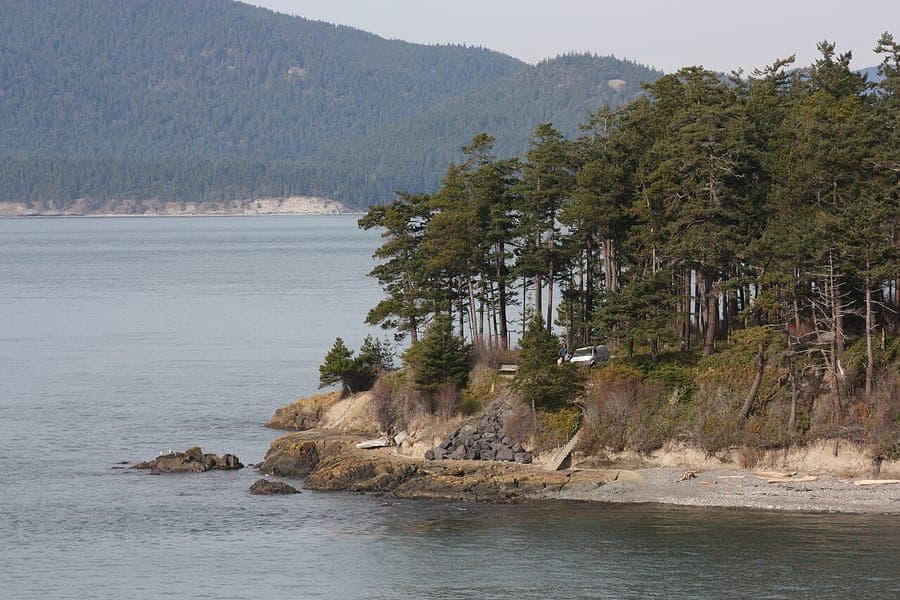
Walter Siegmund (talk) / CC BY-SA 3.0, via Wikimedia Commons
Douglas-fir: complete guide
Pseudotsuga menziesii
¿Quieres ver Douglas-fir: complete guide en tu jardín?
1 minuto, sin tarjeta de crédito
Douglas-fir (Pseudotsuga menziesii), also known as coast Douglas-fir, is a majestic evergreen native to western North America. This magnificent tree reaches impressive heights and delivers decades of beauty in temperate gardens. With dense green needles and elegant conical form, Pseudotsuga menziesii is an exceptional choice for large landscapes and windbreaks.
Overview
Pseudotsuga menziesii is a large conifer reaching 40-80 meters in natural habitats, though garden specimens typically grow 15-25 meters. This species originates from Southeast Alaska to Mexico and thrives in well-drained montane forest environments. The name honors David Douglas, the botanist who discovered this species. Douglas-fir holds commercial importance for timber and is valuable in landscape design.
In Europe, this conifer grows exceptionally well in temperate climates, especially in higher elevation areas with adequate moisture. The species is widely cultivated in Belgium, France, and Germany for both ornamental and practical purposes.
Appearance and Bloom
The trunk is straight and cylindrical with deeply fissured, reddish-brown bark. Needles are flat, 2-3 centimeters long, glossy yellow-green with two whitish lines on the underside. Needles remain 3-4 years on branches, ensuring continuous dense foliage.
Douglas-fir produces inconspicuous male and female cones. Seeds ripen in brown cones with characteristic three-pointed bracts. The cones are 7-10 centimeters long and provide ornamental value in late autumn and winter months.
Ideal Location
Pseudotsuga menziesii grows best in open, sunny locations with minimum 6-8 hours direct sunlight. Semi-shade is tolerated but full shade significantly slows growth. A location with protection from extreme winds is beneficial, though this tree possesses considerable wind resistance.
North-facing exposure in exposed gardens helps prevent frost damage. In smaller gardens, select dwarf varieties reaching 5-10 meters. For windbreaks, plant in groups with 2-3 meter spacing between trees.
Soil
Douglas-fir thrives in fertile, well-draining soil with pH between 5 and 7.5. Heavy clay soil should be improved with sand and organic matter. Acidic soils (pH below 5.5) are unfavorable. Deep soil of minimum 60-80 centimeters helps develop strong root systems.
At planting, dig deeply and add complete soil mixture. Provide 5-7 centimeter mulch after planting to aid moisture retention and temperature regulation. In heavy soils, improve drainage with raised planting beds.
Diseño gratis
¿Quieres ver Douglas-fir: complete guide en tu jardín? Crea un diseño gratis ahora.
Watering
Young trees require regular watering until established (first 2-3 years). Water during dry periods, minimum 1-2 times weekly, especially summer months. Once established, mature trees are relatively drought-tolerant, though they benefit from consistent moisture.
Heavy winter rains in temperate regions usually provide sufficient water. In dry years, water especially young specimens. Ensure water does not stagnate at root zone, as this can cause disease.
Pruning
Douglas-fir requires minimal pruning. This conifer naturally develops beautiful conical form without intervention. Remove only dead, diseased, or damaged branches, especially after severe storms. Prune in early spring before new growth begins.
To maintain dense foliage, slightly thin sides in May-June during growing season. For columnar or narrow forms, prune strategically during growth period. Avoid aggressive pruning as this can leave permanent scars on trunks.
Maintenance Calendar
March: Inspect frost damage; remove severe branches. Refresh mulch layer. April-May: Begin feeding with slow-release fertilizer. Check watering needs if dry. June-July: Water regularly. Monitor for pests and diseases. August-September: Continue watering in dry periods. Feeding concludes. October-November: Fall growth; minimal maintenance required. December-February: Winter period; only essential pruning work.
Winter Hardiness
Pseudotsuga menziesii is very hardy to approximately -20 to -25C, suitable for all temperate regions. This conifer tolerates cold winters well. Young trees in very cold inland areas may need frost protection during the first winter.
Frost crack on sides may occur during severe frost periods, but trees recover normally. Avoid late spring feeding which encourages tender growth vulnerable to frost.
Companion Plants
Combine Douglas-fir with other conifers like spruce, pine, or thuja for mixed coniferous forest effect. Group with beech, oak, or maple for mixed woodland setting. At base, plant shade-tolerant groundcovers like ivy or winter evergreens.
For windbreaks, combine with holly, elder, or other shrubs for multi-layered defense. In alpine gardens, Douglas-fir pairs with other mountain taxa for authentic alpine forest style.
Closing Thoughts
Pseudotsuga menziesii offers spectacular vertical impact and permanent evergreen structure. Ideal for large properties, windbreaks, and large-scale landscapes where natural forest effect is desired. This tree thrives in temperate climates and resists harsh weather. Experienced gardeners value this conifer for its low maintenance requirements and experienced gardeners value the timeless elegance. Order today from local nurseries. Visit gardenworld.app for more information on conifers and large-scale trees. Discover how Douglas-fir can enhance your landscape design. More inspiration at gardenworld.app for professional garden design.
¿Quieres ver Douglas-fir: complete guide en tu jardín? Crea un diseño gratis ahora.
Sube una foto, elige un estilo y obtén un diseño fotorrealista con lista de plantas en menos de un minuto.
Más de 10.000 jardines diseñados
Sin tarjeta de crédito


Plantas similares
Abies delavayi: complete guide
Abies delavayi
Delavayi fir is an elegant, medium-sized coniferous tree from the Pinaceae family with dark green needles. This Asian evergreen is perfect for alpine gardens and large landscapes.
Taiwan fir: complete guide
Abies kawakamii
Discover the magnificent Taiwan fir, a rare evergreen conifer from Taiwan's mountain regions. Learn growth requirements, care tips, and why this beautiful tree is perfect for collectors of unique garden specimens.
Farges fir: complete guide
Abies fargesii
Discover the majestic Farges fir, an impressive conifer from China's mountains with elegant foliage and columnar form. Ideal for large gardens.