
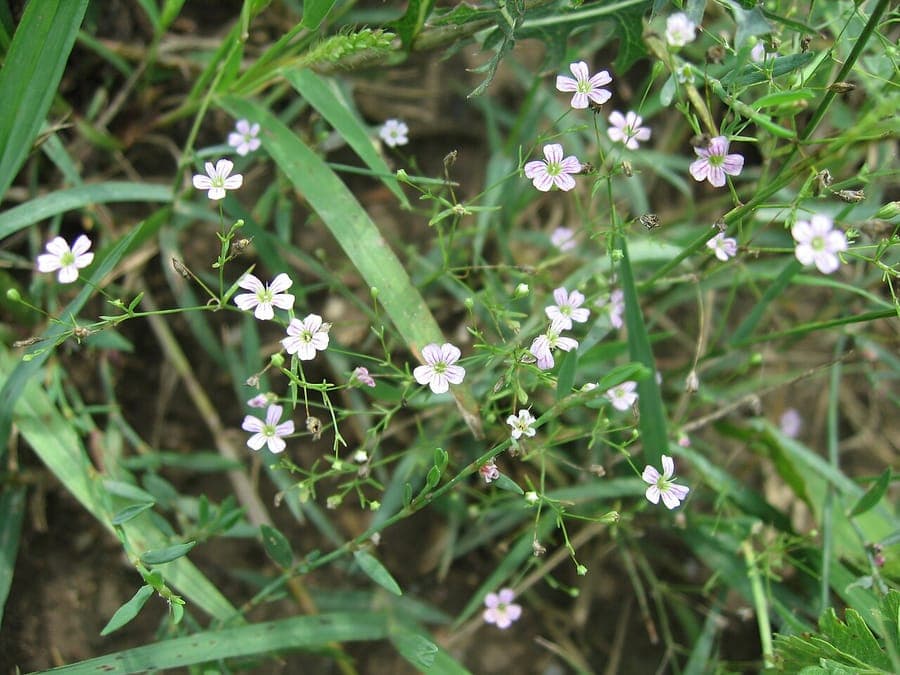
la la means I love you / CC BY-SA 3.0, via Wikimedia Commons
Psammophiliella muralis: complete guide
Psammophiliella muralis
¿Quieres ver Psammophiliella muralis: complete guide en tu jardín?
1 minuto, sin tarjeta de crédito
Overview
Psammophiliella muralis, also known as wall gypsophila, low baby's-breath or cushion baby's-breath, is a lovely, compact alpine plant from the Caryophyllaceae family. This plant is native to Europe and the western Himalayas and is known for its silky small white flowers and very low, wide growth habit.
The plant grows low, usually not taller than 10 to 20 centimeters, but forms wide, dense mats. During the summer season, numerous fine white or light pink flowers appear on thin stems. The flowers are very delicate and attract small butterflies and bees.
This is an ideal plant for rock gardens, alpine troughs, crevices between stones or as a ground cover in well-drained gardens. The plant is winter hardy and very suitable for cold climates.
Appearance and bloom
Psammophiliella muralis forms dense, low mats of very fine, gray-green foliage. The leaves are very small, linear and soft. The overall appearance is very fine and elegant.
Flowering occurs from May to September and is very abundant. The flowers are white to very light pink, approximately 5 millimeters across, and stand on very thin, delicate flowering stems. The flowering profusion makes this plant full of value for rock gardens.
After flowering come very small seed pods. The plant often self-seeds, creating natural populations in rock gardens.
Ideal location
Psammophiliella muralis thrives best in a sunny to partially shaded spot. Ensure at least 4 to 6 hours of sunlight per day. Good illumination ensures rich flowering.
Choose a spot where the plant is sharply drained, as this plant dislikes wet feet. Rock gardens, alpine troughs, wall crevices and dry slopes are ideal.
The plant is very suitable for small gardens and containers. In larger gardens you can use it as a ground cover in sandy, well-drained zones.
Soil
Psammophiliella muralis requires sharply drained soil. Sand, gravel, or stone chips mixed with some peat or leaf mold is ideal. The plant does not demand fertile soil.
In the garden you can use alpine soil or mix your own: sand, fine gravel, and organic matter in ratio 3:2:1. The pH can be acidic to neutral.
Poor drainage and heavy soils are the main enemies of this plant. Always ensure adequate drainage.
Diseño gratis
¿Quieres ver Psammophiliella muralis: complete guide en tu jardín? Crea un diseño gratis ahora.
Watering
Once planted, water until established, then minimally. The plant tolerates drought well. In extremely dry periods you can water lightly.
Ensure water does not stagnate around the leaves. This can cause rot. If you grow in pots, let them dry between waterings.
In wet winters with heavy rainfall, you can improve drainage by adding quantities of gravel to the base zone.
Pruning
Pruning is almost unnecessary. After flowering you can remove withered flower stems for a neater appearance, but this is optional.
If the plant becomes too dense and untidy, you can carefully remove old parts, but this rarely occurs.
Maintenance Calendar
Spring: Check for frost damage. Growth starts. No fertilizing needed.
Summer: Enjoy flowering from May to September. Ensure drainage. Remove withered flowers if desired.
Autumn: Plant seeds. No special care.
Winter: Check for frost damage. Protect against wet feet.
Winter hardiness
Psammophiliella muralis is very winter hardy down to -20 degrees Celsius or below. The plant grows mainly in cold, mountainous areas and tolerates snow well.
The greatest risk in winter is wet soil and frost damage from ice. Ensure good drainage.
Companion plants
In alpine gardens, Psammophiliella muralis fits well with other low ground covers such as sedums, saxifrage and phlox subulata. These combinations create lovely, long-lasting displays.
In rock gardens plant it between stones and rocks. In pots plant it with other alpine species.
Closing thoughts
Psammophiliella muralis is a charming alpine plant that adds much value to rock gardens, alpine troughs and drier gardens. With its fine texture and delicate flowers, it is a gem for the gardening enthusiast. With good drainage, the plant will bloom for years to come.
Available from specialized alpine nurseries and some garden centers.
¿Quieres ver Psammophiliella muralis: complete guide en tu jardín? Crea un diseño gratis ahora.
Sube una foto, elige un estilo y obtén un diseño fotorrealista con lista de plantas en menos de un minuto.
Más de 10.000 jardines diseñados
Sin tarjeta de crédito


Plantas similares
Dianthus karami: complete guide
Dianthus karami
Dianthus karami is a rare Lebanese mountain pink with fringed pink blooms on limestone cliffs, ideal for rock gardens and troughs.
Sicilian pink: complete guide
Dianthus siculus
Discover Dianthus siculus, an elegant purple bloomer from Sicily. Cultivation, June-September flowering and garden combinations.
Alpine mouse-ear chickweed: complete guide
Cerastium pedunculatum
Full growing guide for Cerastium pedunculatum: ideal location, soil, watering, winter hardiness, and companion plants for rock gardens.