
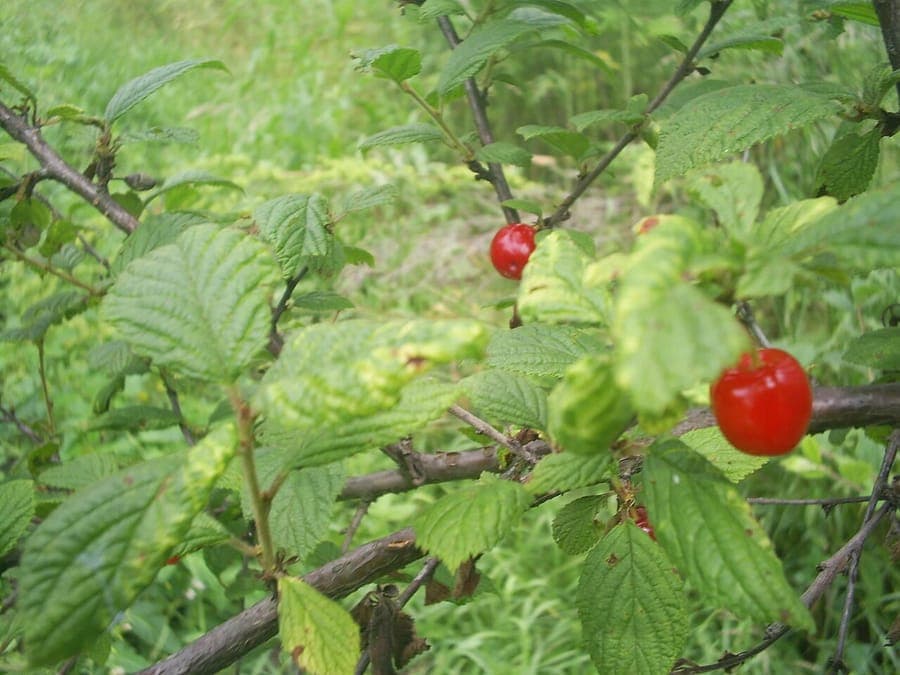
Ruslan V.Albitsky aka pauk / CC BY-SA 2.5, via Wikimedia Commons
Prunus tomentosa: complete guide
Prunus tomentosa
¿Quieres ver Prunus tomentosa: complete guide en tu jardín?
1 minuto, sin tarjeta de crédito
Overview
Prunus tomentosa, better known as Korean cherry, Nanking cherry or Manchurian cherry, is a compact, fruit-bearing tree of 2 to 3 meters tall originating from the Far East. This tree from the Rosaceae family is very popular in various gardens because it is not only decorative with its summer white flowers but also produces edible red fruits.
The Korean cherry grows compactly and forms a wide, rounded crown. In spring, abundant white flowers appear that are pollinated by insects. After flowering, in June to July numerous red stone fruits follow that ripen to 8 to 10 millimeters in size. These fruits have a pleasant sweet-sour taste and can be eaten fresh or processed into jam and juice.
This is an excellent choice for those seeking a small fruit tree for the backyard. The tree is very winter hardy and suitable for temperate and cold climates.
Appearance and bloom
The Korean cherry is a compact shrubby tree. The trunk is smooth, gray-brown in color. The leaves are oblong, finely toothed and soft-haired (hence the name tomentosa - hairy). The foliage is dark green and invites bird activity.
The flowering is one of the most beautiful aspects. From April to May, numerous small white flowers appear that cluster densely along the branches. These flowers have a subtle, pleasant fragrance and attract bees and other pollinators.
After flowering, numerous red stone fruits follow, the size of a cherry. These ripen between June and July and take on a glossy, attractive red color. The fruits hang in clusters on the branches, making the tree very ornamental. They can be eaten directly from the tree and have a sweet-sour taste that many people find appealing.
Ideal location
The Korean cherry thrives best in a sunny location. Ensure at least 5 to 6 hours of sunlight per day. Maximum sun ensures rich flower and fruit set.
Choose a location that is protected from strong wind. Although hardy, strong winds can damage the softer wood. A spot close to other shrubs or against garden walls can help.
Ensure adequate air circulation around the tree to prevent moisture problems and disease. Do not plant in poorly draining low spots.
Soil
The Korean cherry is not fussy about soil type and grows in many different soils. The ideal soil is, however, well-draining, moderately fertile, with a pH of 5.7 to 7.2.
Good drainage is important because wet soils can cause root rot. Mixing sand, gravel or organic matter helps in heavy soils. In very poor soils, you can add compost annually.
The tree can tolerate sandy, clay and loamy soils as long as drainage is good. Regular fertilizing helps maintain crop strength.
Diseño gratis
¿Quieres ver Prunus tomentosa: complete guide en tu jardín? Crea un diseño gratis ahora.
Watering
After planting, water regularly until the root system is well established. This typically takes 1 to 2 growing seasons.
Once well established, the Korean cherry is fairly drought tolerant. Watering during dry periods, however, helps promote fruiting. In extreme drought or during fruiting, regular watering may be needed.
A mulch layer of 5 to 10 centimeters of organic material helps reduce moisture loss and protect roots.
Pruning
The Korean cherry requires moderate pruning. In the juvenile stage, prune for shape to develop a strong, compact crown. Remove crossing branches and some dense stems.
After flowering, you can remove old, tired-looking fruiting branches to stimulate new blooming. Also remove dead branches.
Heavy pruning is not advised. The tree recovers slowly from major cuts. Regular, gentle pruning is better than sporadic heavy pruning.
Maintenance Calendar
Winter: Check for frost damage. Perform light pruning cycles. Protect young trees with mulch.
Spring: Perform fertilizing. Enjoy the blooming. Start regular watering.
Summer: Harvest fruits in June-July. Provide water during dry periods. Monitor plant for disease.
Autumn: Prepare tree for winter. Collect fallen leaves. Adjust mulch.
Winter: Protect against extreme frost.
Winter hardiness
The Korean cherry is very winter hardy. The tree tolerates temperatures down to -25 to -30 degrees Celsius. This makes it suitable for virtually all temperate and cold climates.
Young trees should be protected with a layer of mulch during their first winter. This protects shallow roots from frost damage.
Companion plants
The Korean cherry combines well with other compact fruits such as Ribes (blackberry) and berry shrubs. Underneath you can plant shade-tolerant ground covers such as vinca.
For flower color around the tree, add small flowering ground covers. The tree itself attracts insects and birds.
Closing thoughts
Prunus tomentosa is a valuable addition to home gardens that must be both decorative and food-productive. With its early flowering, compact growth and edible fruits, this tree offers many advantages. With good care and placement, the tree will provide pleasure and food for years to come.
Available at major UK garden centers and nurseries.
¿Quieres ver Prunus tomentosa: complete guide en tu jardín? Crea un diseño gratis ahora.
Sube una foto, elige un estilo y obtén un diseño fotorrealista con lista de plantas en menos de un minuto.
Más de 10.000 jardines diseñados
Sin tarjeta de crédito


Plantas similares
Siberian crab apple: complete guide
Malus x robusta
Complete guide to the Siberian crab apple (Malus x robusta): location, soil, pruning, winter hardiness and the best companion plants for your garden.
Chinese flowering crabapple (Malus x spectabilis): complete guide
Malus x spectabilis
Meet the Chinese flowering crabapple (Malus x spectabilis): a classic spring bloomer with carmine buds and pink blossom.
Potentilla crassinervia: complete guide
Potentilla crassinervia
Potentilla crassinervia, the Corsican cinquefoil, grows wild on Corsica and Sardinia's peaks. Discover how to grow this hardy alpine rock garden gem.