
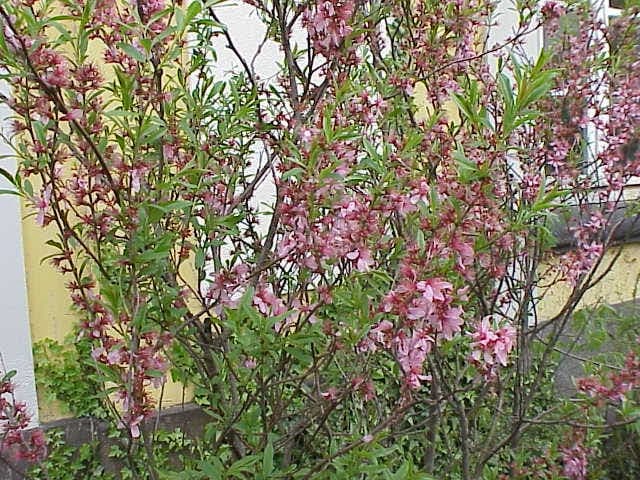
Kurt Stüber [1] / CC BY-SA 3.0, via Wikimedia Commons
Russian Almond: complete guide
Prunus tenella
¿Quieres ver Russian Almond: complete guide en tu jardín?
1 minuto, sin tarjeta de crédito
Prunus tenella, commonly known as Russian Almond or Dwarf Russian Almond, is a charming, early-flowering shrub native to Central and Eastern Europe. This compact shrub reaches only 1-2 meters tall and is renowned for its profuse pink flowers in March-April, before leaves fully emerge. This makes it one of the season's earliest bloomers. Russian Almond is exceptionally cold hardy and very suitable for northern gardens.
Overview
Prunus tenella belongs to the Rosaceae family and is found wild from Central Europe to Xinjiang. This is a deciduous dwarf shrub growing naturally to 1-1.5 meters high. The shrub is known for its very early bloom and strong fragrance. After flowering, small fruits with characteristic narrow wings develop. The plant is extremely cold hardy and tolerates low-maintenance conditions well.
Appearance and Bloom
Russian Almond grows to a dense, rounded shrub of approximately 1-2 meters high and equally wide. The leaves are lanceolate with fine serrations. In March through April, before leaves fully emerge, an abundance of dark pink to reddish-pink flowers covers the branches. The flowers are approximately 1.5 centimeters across and highly fragrant. This early bloom attracts numerous pollinators. After flowering, small round fruits follow.
Ideal Location
Russian Almond thrives in full sun with at least 6 hours of direct sunlight. The plant also tolerates partial shade but flowers more profusely in sun. Plant this shrub in well-drained locations. The plant tolerates windy conditions well. Protect from harsh west winds that may damage flowers. A location with morning sun warmth is ideal.
Soil
Russian Almond is not particular about soil. Both acidic and neutral soils are well tolerated. The plant grows on poor to moderately fertile soils. Well-drained, loamy soil is ideal. Avoid long-term waterlogging. The plant accepts even poor, sandy soils. pH range of 5.5-7.5 is suitable.
Diseño gratis
¿Quieres ver Russian Almond: complete guide en tu jardín? Crea un diseño gratis ahora.
Watering
Once established, Russian Almond is remarkably drought-tolerant. Newly planted shrubs require regular watering during the first growing season. After establishment, supplemental watering is rarely needed, except during extreme droughts. Water preference is moderate moisture. Avoid waterlogging or wet soil.
Pruning
Russian Almond requires minimal pruning. The plant forms a natural compact shape. After flowering, overgrown branches may be removed. Remove dead or damaged wood. You may lightly prune the plant in late May to maintain shape. Little pruning is needed. Prune best just after flowering.
Maintenance Calendar
January-February: Inspect for frost damage, remove dead twigs March-April: Peak flowering phase, enjoy early blooms May-June: Growth, light shaping if needed July-August: Normal growth, minimal maintenance September-October: Winter preparation, no pruning November-December: Dormant, protect from extreme cold
Winter Hardiness
Russian Almond is exceptionally cold hardy, tolerating temperatures to -30 degrees Celsius without damage. This makes it ideal for all northern regions. No special winter protection is needed. Early flowers may be damaged by late night frosts, but this is rarely problematic. The plant recovers well from frost damage.
Companion Plants
Russian Almond combines beautifully with other early bloomers. Pair with snowdrops, crocuses, and other bulbs beneath the shrub. Low-growing green groundcovers create nice contrast. Later-flowering Magnolias can grow nearby. Also creates lovely combinations with Forsythia or Chaenomeles. In groups of three trees, it creates spectacular effects.
Closing
Prunus tenella is an excellent choice for gardens needing early-season bloom. The combination of intense pink flowers, strong fragrance, and exceptional cold hardiness makes this an essential spring addition. Available at quality garden centers. For small gardens, borders, and as an accent plant, this is a perfect choice.
¿Quieres ver Russian Almond: complete guide en tu jardín? Crea un diseño gratis ahora.
Sube una foto, elige un estilo y obtén un diseño fotorrealista con lista de plantas en menos de un minuto.
Más de 10.000 jardines diseñados
Sin tarjeta de crédito


Plantas similares
Siberian crab apple: complete guide
Malus x robusta
Complete guide to the Siberian crab apple (Malus x robusta): location, soil, pruning, winter hardiness and the best companion plants for your garden.
Chinese flowering crabapple (Malus x spectabilis): complete guide
Malus x spectabilis
Meet the Chinese flowering crabapple (Malus x spectabilis): a classic spring bloomer with carmine buds and pink blossom.
Potentilla crassinervia: complete guide
Potentilla crassinervia
Potentilla crassinervia, the Corsican cinquefoil, grows wild on Corsica and Sardinia's peaks. Discover how to grow this hardy alpine rock garden gem.