
Wikimedia Commons / CC BY-SA 3.0, via Wikimedia Commons
Black Cherry: complete guide to this fast-growing North American tree
Prunus serotina
¿Quieres ver Black Cherry: complete guide to this fast-growing North American tree en tu jardín?
1 minuto, sin tarjeta de crédito
Overview
Black Cherry, scientifically termed Prunus serotina, represents a fast-growing North American tree perfectly suited to larger gardens requiring rapid height and volume achievement. This Rosaceae family member reaches natural maturity at 25 m height, though garden specimens typically achieve 12-15 m. The tree earns recognition for autumn foliage transformation, voluminous white spring blossom display, and seductive black berries that birds eagerly consume. Throughout Northern Europe including Britain, this tree flourishes without demanding specialized attention.
Appearance & bloom cycle
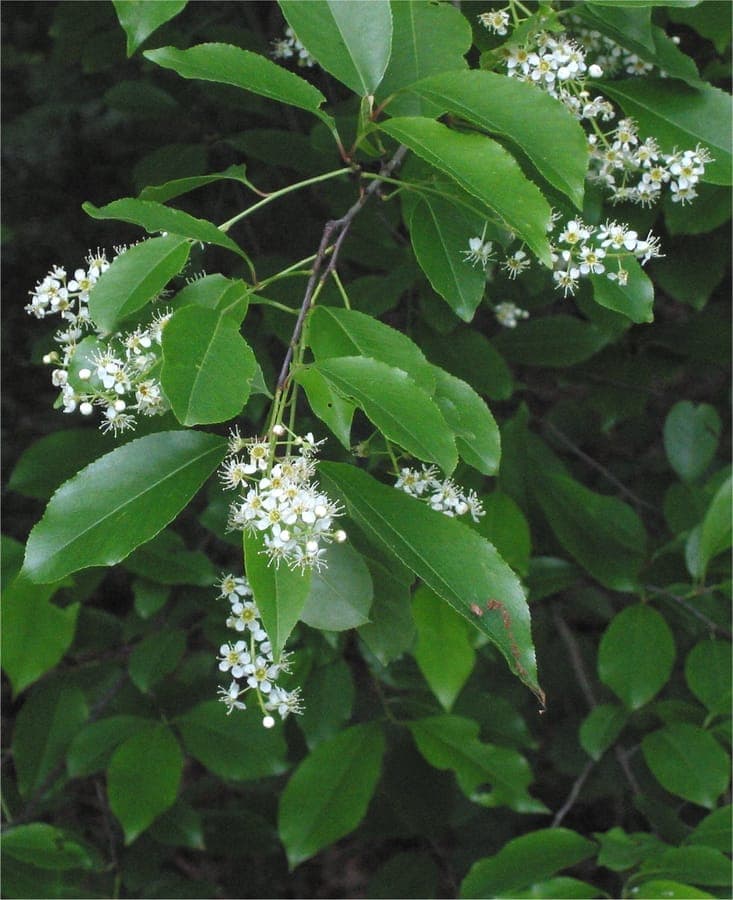
Black Cherry displays elongated, finely-serrated foliage spanning 6-12 cm, deep green coloration. Autumn transforms these leaves spectacularly into orange-red through brown tones, dependent upon weather conditions. Flowers emerge May in elongated, pendant inflorescences (racemes) approximately 10-12 cm length, containing numerous delicate white florets. These fragrant blossoms attract bee populations. Following bloom, black fruits (approximately 8-10 mm diameter) develop, ripening August through October. Birds - particularly thrushes and blackbirds - consume these berries readily.
Ideal location
Black Cherry thrives optimally in sunny position featuring minimum 6 hours direct daily sunshine, though partial shade suits (albeit with marginally slower growth). Full sun remains essential for optimal autumn colouration. This tree proves non-selective regarding wind exposure, flourishing under substantial wind stress. This renders it suitable for exposed gardens. Wind-protected situations support accelerated growth with symmetrical crowning.
Soil requirements
Black Cherry accepts virtually any soil composition: sand, clay, loam, provided reasonable drainage exists. Optimal pH spans 5.5 to 7.5 (slightly acidic through neutral). Extremely impoverished sandy soils will retard growth, whilst richer compositions stimulate accelerated development. The tree also thrives acceptably in lightly compacted clay. More critical than soil type is adequate planting pit (minimum 1.5 times root-ball diameter) and inaugural-year drainage.
Diseño gratis
¿Quieres ver Black Cherry: complete guide to this fast-growing North American tree en tu jardín? Crea un diseño gratis ahora.
Watering
Regular moisture proves essential during inaugural growing season. Young specimens require consistent moisture (though not waterlogged) status. Water application particularly during May-September dryness periods. After three years establishment, supplemental watering becomes unnecessary under normal rainfall patterns, even throughout dry summers. During extreme desiccation, judicious watering stimulates continued growth. Excessive winter moisture proves detrimental, potentially causing root rot.
Pruning
Pruning remains non-essential yet potentially beneficial. First-year interventions involve removing damaged or crossing branches only. Subsequently maintain minimal pruning schedules: remove solely dead wood and excessively low-hanging branches obstructing passage. Heavy pruning wounds prove problematic for this species, healing sluggishly. Form refinement benefits from light late-summer pruning rather than spring interventions.
Maintenance calendar
March: verify support staking and ties, remove dead wood. May: flowering period - enjoy! June-August: water regularly during dry spells. October: observe autumn display. November: optional light pruning, remove damaged branches. December-February: winter dormancy; no interventions required.
Winter hardiness
Black Cherry proves winter-hardy to minimum -20°C without difficulty. This presents no challenges throughout Britain or Northern Europe, even in more northerly regions. This tree survives thoroughly and resumes normal spring growth.
Companion plants
Underplanting Black Cherry remains inadvisable due to dense shade cast by mature specimens. However, during juvenile phases, low-growing perennials such as Ajuga or Waldsteinia coexist acceptably. As understorey vegetation, shade-tolerant shrubs like Hedera (ivy) prove compatible. The tree itself operates as landscape focal point.
Conclusion
Black Cherry represents ideal choice if rapid large-tree establishment suits your requirements with minimal maintenance demands. Its accelerated growth, attractive spring blossom, and valuable autumn colouration provide substantial landscape benefits. When designing larger gardens using resources like gardenworld.app, you'll discover this tree repeatedly appearing in design suggestions, particularly where height and volume prove important. For bird-friendly gardens this offers exceptional value. Source specimens from specialist tree nurseries offering professional planting guidance.
¿Quieres ver Black Cherry: complete guide to this fast-growing North American tree en tu jardín? Crea un diseño gratis ahora.
Sube una foto, elige un estilo y obtén un diseño fotorrealista con lista de plantas en menos de un minuto.
Más de 10.000 jardines diseñados
Sin tarjeta de crédito


Plantas similares
Siberian crab apple: complete guide
Malus x robusta
Complete guide to the Siberian crab apple (Malus x robusta): location, soil, pruning, winter hardiness and the best companion plants for your garden.
Chinese flowering crabapple (Malus x spectabilis): complete guide
Malus x spectabilis
Meet the Chinese flowering crabapple (Malus x spectabilis): a classic spring bloomer with carmine buds and pink blossom.
Potentilla crassinervia: complete guide
Potentilla crassinervia
Potentilla crassinervia, the Corsican cinquefoil, grows wild on Corsica and Sardinia's peaks. Discover how to grow this hardy alpine rock garden gem.