
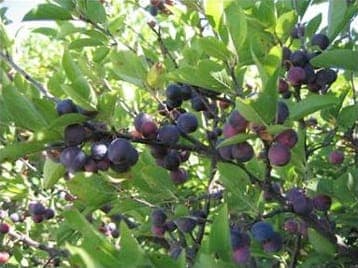
Wikimedia Commons / Public domain, via Wikimedia Commons
Beach Plum: complete guide
Prunus maritima
¿Quieres ver Beach Plum: complete guide en tu jardín?
1 minuto, sin tarjeta de crédito
Overview
The Beach Plum (Prunus maritima) is a hardy North American shrub from the Rosaceae family, native along coasts from New England to Virginia. This resilient, multi-stemmed shrub is celebrated for its steadfast growth in salty, windy coastal conditions, its delicate white spring blooms, and its edible purplish fruit ripening in late summer. At 1-2 meters tall with equal spread, it's an ideal specimen for coastal gardens, coastal stabilization, and sustainable landscape habitats.
Appearance and Bloom
The Beach Plum grows as a multi-stemmed shrub with a low, spreading form, perfect for coastal windbreaks. Its foliage is lanceolate, finely green, and remains attractive throughout summer. In May, numerous white or pink-tinged flowers appear in small clusters, highly attractive to bees. The flowers have pleasant fragrance. Following bloom, oval fruits form from purple to nearly black, approximately 1-2 cm large, ripening August through September. The fruit is tart-sweet, edible fresh or in jam.
Ideal Location
The Beach Plum thrives optimally in full sun, requiring 6-8 hours direct daily sunlight. It tolerates moderate shade but produces fewer fruit. A very windy, salty coastal spot is actually ideal for this species - its natural habitat. Protection from severe inland salt-spray is unnecessary; it evolved for this.
Soil
The Beach Plum accepts virtually all soil types, including sandy, salty, and loamy soils. It tolerates pH of 5.5-7.5. Well-drained soil is preferred, but it also accepts moderately moist soils. Once established, this shrub requires no special nutrients and grows in marginal soils where other shrubs fail.
Diseño gratis
¿Quieres ver Beach Plum: complete guide en tu jardín? Crea un diseño gratis ahora.
Watering
Once established, the Beach Plum is exceptionally drought-tolerant. Water regularly in the first year. Thereafter, water only during prolonged drought. The shrub is adapted to coastal rainfall and salt-spray, not standard irrigation. Avoid excessive watering, which can cause root issues.
Pruning
Minimal pruning required. Remove dead or damaged branches in early spring. Light formative pruning may occur in June following bloom. Aggressive pruning can inhibit fruiting. A natural, spreading form is usually recommended, not formal topping.
Maintenance Calendar
MAY: Bloom begins. MAY-JUNE: Peak bloom period, fruit-set follows. JUNE-AUGUST: Fruits develop, darken. AUGUST-SEPTEMBER: Fruits ripen, harvest possible. OCTOBER-APRIL: Winter dormancy, very minimal maintenance.
Winter Hardiness
The Beach Plum is extremely cold-hardy, suitable for USDA zones 4-8. It tolerates winters to -25 degrees Celsius. However, its true advantage is salt-tolerance and wind-resilience in coastal conditions.
Companion Plants
Combine with other coastal-adapted species: Bigleaf Hydrangea (Hydrangea macrophylla subsp. serrata), Blackberry (Rubus fruticosus), Bayberry (Myrica pennsylvanica). These combinations create resilient coastal stabilization and wildlife food sources for birds and pollinators.
Conclusion
The Beach Plum is an invaluable plant for coastal gardens, erosion control, and sustainable landscaping. With its salt-tolerance, edible fruit, and beautiful spring blooms, it's a multi-benefit shrub. Find native plant suppliers cultivating Beach Plum, or inquire at garden centers for North American coastal species. Explore more at gardenworld.app/en for regional native sourcing.
¿Quieres ver Beach Plum: complete guide en tu jardín? Crea un diseño gratis ahora.
Sube una foto, elige un estilo y obtén un diseño fotorrealista con lista de plantas en menos de un minuto.
Más de 10.000 jardines diseñados
Sin tarjeta de crédito


Plantas similares
Siberian crab apple: complete guide
Malus x robusta
Complete guide to the Siberian crab apple (Malus x robusta): location, soil, pruning, winter hardiness and the best companion plants for your garden.
Chinese flowering crabapple (Malus x spectabilis): complete guide
Malus x spectabilis
Meet the Chinese flowering crabapple (Malus x spectabilis): a classic spring bloomer with carmine buds and pink blossom.
Potentilla crassinervia: complete guide
Potentilla crassinervia
Potentilla crassinervia, the Corsican cinquefoil, grows wild on Corsica and Sardinia's peaks. Discover how to grow this hardy alpine rock garden gem.