
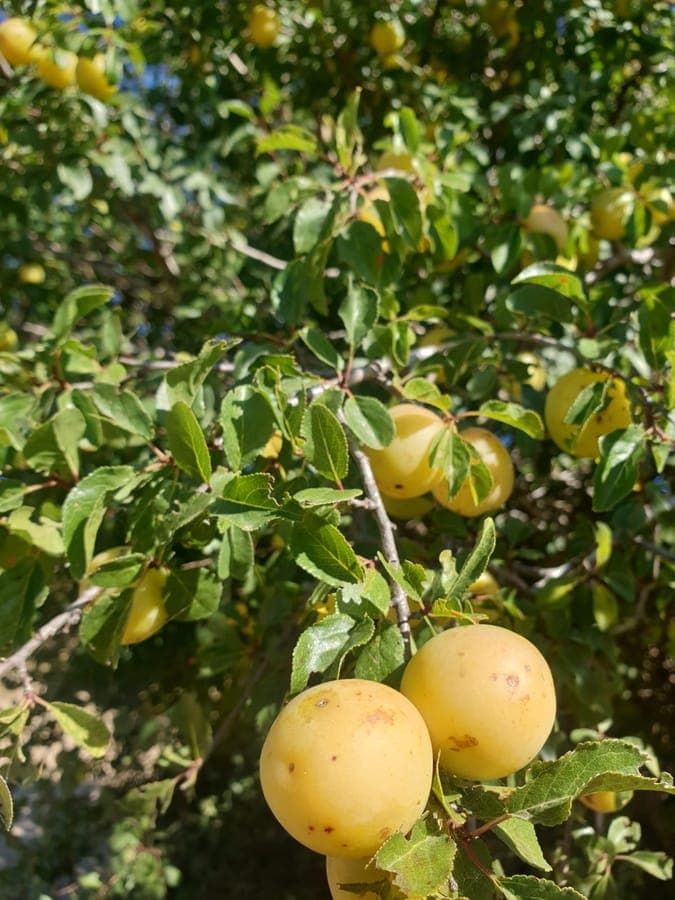
Beppeveltri / CC BY-SA 4.0, via Wikimedia Commons
Italian plum: complete guide
Prunus cocomilia
¿Quieres ver Italian plum: complete guide en tu jardín?
1 minuto, sin tarjeta de crédito
Overview
Italian plum (Prunus cocomilia), also called bear plum, is a Mediterranean fruit tree native to Southeast Europe, from Italy to Turkey. This deciduous, compact tree naturally inhabits dry mountain slopes and foothill terrain. With its delicate white spring flowers and russet, tasty summer fruits, this Mediterranean jewel delivers both beauty and harvest.
Appearance and bloom
Italian plum forms a narrow-crowned tree with grey, fissured bark and lance-shaped, blue-green foliage. The tree reaches 4-6 meters height at maturity. From April through May, soft white, two-toned flowers appear, attracting bees. Fruits ripen in July-August to russet-brown, oval plums 2-3 centimeters in size, with yellow-orange flesh inside.
Ideal location
Italian plum thrives best in full sunlight with protection from strong winds. Plant in south-facing exposure where possible. This tree is perfect for Mediterranean climates and sheltered south-gardens in temperate zones. Grows tall and broad; allow space.
Soil
Prepare well-draining, sandy soil. Italian plum tolerates poor soils better than rich. Acidic to neutral pH (5.5-7) is preferred. Add gravel for better drainage on heavy clay.
Diseño gratis
¿Quieres ver Italian plum: complete guide en tu jardín? Crea un diseño gratis ahora.
Watering
Water regularly in growth start-period. After establishment, extremely drought-tolerant. In dry climates provide regular summer water, but never waterlog. Reduce winter watering.
Pruning
Shape young tree for strong structure. Mature trees need minimal pruning; remove only dead wood, crossing branches, and disease. Prune in late winter for next-season bloom.
Maintenance calendar
- February-March: prune; thin shoots
- April-May: bloom period
- June-July: minor fruit-thinning if needed
- August: harvest fruits
- September-October: winter preparation
- November-January: winter dormancy; no action
Winter hardiness
Italian plum is hardy (zones 5-9) to minus 15 degrees Celsius. In cold climates, north-side protection recommended. Flowers can suffer early spring frost damage in uncertain zones.
Companion plants
Combine with other Mediterranean plants: green olive, almond tree, wild lavender, rosemary, and holm oak.
In conclusion
Italian plum is a Mediterranean statement-maker for sunny, sheltered gardens. With drought tolerance and fruit production, it delivers authentic Mediterranean expertise. Find young trees at garden centers across Europe.
Want to explore more fruit trees? Visit gardenworld.app/en for garden inspiration!
¿Quieres ver Italian plum: complete guide en tu jardín? Crea un diseño gratis ahora.
Sube una foto, elige un estilo y obtén un diseño fotorrealista con lista de plantas en menos de un minuto.
Más de 10.000 jardines diseñados
Sin tarjeta de crédito


Plantas similares
Siberian crab apple: complete guide
Malus x robusta
Complete guide to the Siberian crab apple (Malus x robusta): location, soil, pruning, winter hardiness and the best companion plants for your garden.
Chinese flowering crabapple (Malus x spectabilis): complete guide
Malus x spectabilis
Meet the Chinese flowering crabapple (Malus x spectabilis): a classic spring bloomer with carmine buds and pink blossom.
Potentilla crassinervia: complete guide
Potentilla crassinervia
Potentilla crassinervia, the Corsican cinquefoil, grows wild on Corsica and Sardinia's peaks. Discover how to grow this hardy alpine rock garden gem.