
Wikimedia Commons / CC BY-SA 3.0, via Wikimedia Commons
Formosan cherry: complete guide
Prunus campanulata
¿Quieres ver Formosan cherry: complete guide en tu jardín?
1 minuto, sin tarjeta de crédito
Overview
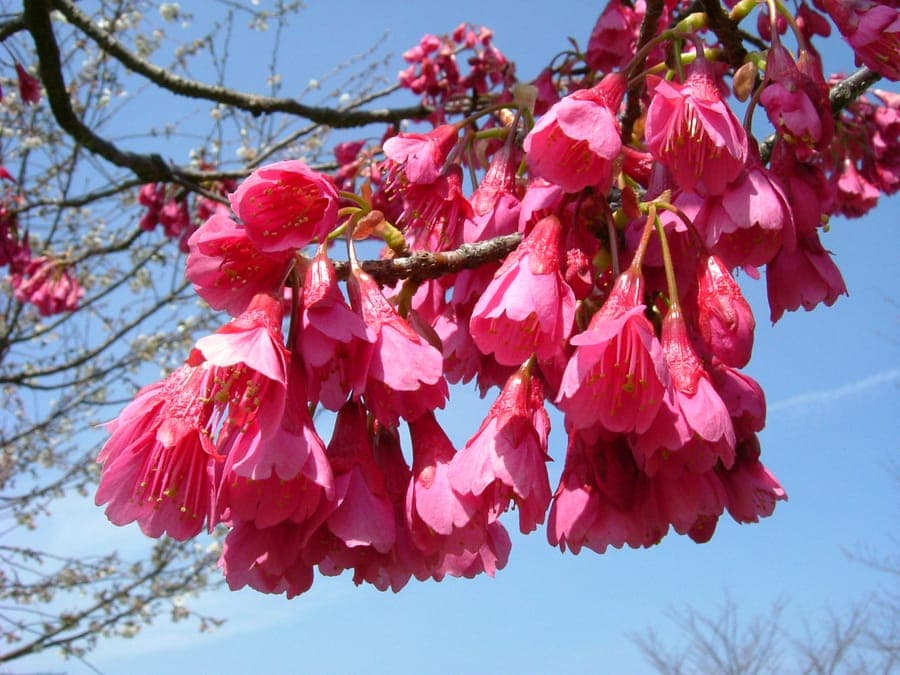
The Formosan cherry or Taiwan cherry (Prunus campanulata) is an elegant, small-growing flowering tree from Taiwan and Southeast China. This tree is highly valued for its spectacular early-season bloom with beautiful pink or red campanulate flowers. With its compact growth and elegant form, the Formosan cherry makes an excellent choice for warm gardens, orchards, and as a specimen in landscaping.
The Formosan cherry is a valuable tree for modern gardeners in warmer climate zones seeking early spring bloom and fine structure. The tree grows faster than many other Prunus species, making it attractive for young orchards.
Appearance and Bloom
The Formosan cherry is a small to medium-sized tree that typically reaches 5 to 8 meters tall, though under ideal conditions can reach 12 meters. The tree features an elegant upright to broadly spreading crown with fine green foliage. The leaves are elongated, glossy green with soft edges.
The bloom is the highlight of this tree. Flowers appear in dense, hanging clusters in early spring (March-April in southern parts of Europe), before full foliage emerges. Colors range from soft pink to deep red, depending on cultivar, with flowers that have a characteristic campanulate shape.
Flowers are approximately 1.5 to 2 centimeters in diameter and very numerous, covering the tree with bloom. Following flowering, foliage emerges, followed by small red to brown fruits that are not edible but attract birds.
Ideal Location
The Formosan cherry thrives best in full sun locations. Ideally at least 6 to 8 hours of direct sunlight daily. In complete shade it will not bloom well. This is a tree for the sunniest locations in your garden.
The tree tolerates urban environments well and is less susceptible to air pollution than many other trees. This makes it suitable for urban gardens and parks.
For location preference: plant where it receives abundant light, and where the early bloom is well visible. The tree can be used as a specimen tree.
Soil
The Formosan cherry prefers well-draining soils with neutral to slightly acidic pH (6.0 to 7.5). This is a relatively nutrient-loving tree, so rich soils give better blooming than poor ones. Heavy clay soils should be improved.
The tree tolerates dry periods reasonably well once established, but regular moisture promotes better growth and blooming. Nutrition: during the growing season, light feeding can be given, especially for young trees.
Soil acidity preference: pH between 6.0-7.5 is optimal. Very acidic soils (below 5.5) can cause zinc deficiency.
Diseño gratis
¿Quieres ver Formosan cherry: complete guide en tu jardín? Crea un diseño gratis ahora.
Watering
The Formosan cherry requires regular moisture, especially during the growing season. Water when the top 5 centimeters of soil feel dry. This is especially important for young trees in the first 2-3 years after planting.
Once established, the tree can tolerate several dry periods, but bloom and growth suffer. In very hot summers, regular watering is essential. In autumn, watering can be reduced.
In pots: watering needs increase rapidly. Check potting soil regularly and water as soon as the top centimeter feels dry. Ensure good drainage in the pot.
Pruning
The Formosan cherry responds well to pruning and can be kept in form. A gentle pruning after blooming (April-May) helps keep the tree compact and promotes better branching. This also helps stimulate next year's bloom.
Remove dead or damaged branches regularly. The tree naturally forms a neat shape, so heavy pruning is unnecessary.
In spring, before growth begins (March), more structural pruning can be done whereby excessive or crossing branches are removed. This prevents unhealthy dense situations.
Maintenance Calendar
FEBRUARY-APRIL: Peak bloom period. Toughen pruning after bloom. Regular watering. MAY-SEPTEMBER: Foliage and shoot growth. Monthly feeding during growing period. Insect control. OCTOBER-NOVEMBER: Fruit ripening. Growth slows. Feeding can be stopped. DECEMBER-JANUARY: Winter dormancy. Minimal activity. Spring preparation.
Winter Hardiness
The Formosan cherry is hardy only to approximately -8 to -10 degrees Celsius. This makes it unsuitable for most of the Netherlands and Belgium outside the mildest coastal areas. The tree is susceptible to severe frosts.
In southern Europe (USDA zones 8b to 9), it can grow outdoors. In more northern regions, it is typically unsuitable for permanent outdoor cultivation. The tree can, however, possibly overwinter in warm microclimates (against south-facing walls).
The best approach in non-warm areas: container cultivation where large pots can be moved indoors in autumn. This provides much greater assurance of continuity and recurrent bloom.
Companion Plants
The Formosan cherry pairs well with:
- Camellia - similar bloom timing, complementary colors
- Magnolia - other early bloomers
- Rhododendron - comparable moisture needs
- Lavender - textural contrast, drought-tolerant
- Forsythia - equal early-season bloom
At tree scale: this tree can be used as a specimen or in groups of 3-5 for dramatic effect.
Closing
The Formosan cherry (Prunus campanulata) is a beautiful, valuable tree for those with warmer gardens in southern Europe. The early, abundant bloom, elegant form, and relatively fast growth make it a favorite among ornamental flowering trees. In South Netherlands, coastal areas, and warming zones it may be possible to grow under protection.
For young tree material, we recommend local tree nurseries in warm climates. For more flowering tree inspiration, visit gardenworld.app and discover more fruit tree guides. Enjoy creating a garden full of spring color with gardenworld.app!
¿Quieres ver Formosan cherry: complete guide en tu jardín? Crea un diseño gratis ahora.
Sube una foto, elige un estilo y obtén un diseño fotorrealista con lista de plantas en menos de un minuto.
Más de 10.000 jardines diseñados
Sin tarjeta de crédito


Plantas similares
Siberian crab apple: complete guide
Malus x robusta
Complete guide to the Siberian crab apple (Malus x robusta): location, soil, pruning, winter hardiness and the best companion plants for your garden.
Chinese flowering crabapple (Malus x spectabilis): complete guide
Malus x spectabilis
Meet the Chinese flowering crabapple (Malus x spectabilis): a classic spring bloomer with carmine buds and pink blossom.
Potentilla crassinervia: complete guide
Potentilla crassinervia
Potentilla crassinervia, the Corsican cinquefoil, grows wild on Corsica and Sardinia's peaks. Discover how to grow this hardy alpine rock garden gem.