
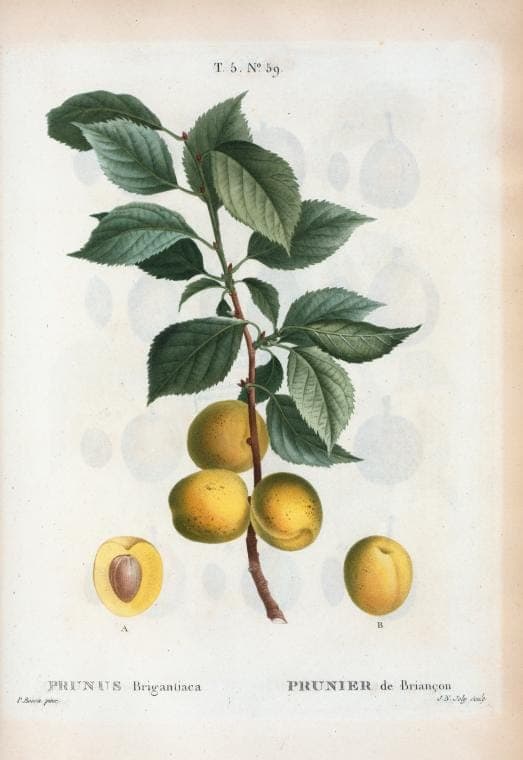
Pancrace Bessa / Public domain, via Wikimedia Commons
Brianconsabricot: complete guide
Prunus brigantina
¿Quieres ver Brianconsabricot: complete guide en tu jardín?
1 minuto, sin tarjeta de crédito
Prunus brigantina, better known as Brianconsabricot or Alpine apricot, is a rare fruit tree from the Alps. This exotic tree grows naturally only in mountain regions of France and northern Italy. With its elegant white spring flowers and aromatic summer fruit, this tree offers both ornamental and culinary value. It makes an excellent choice for gardens in temperate climates with adequate drainage.
Overview
Prunus brigantina belongs to the Rosaceae family and is recognized as one of Europe's most distinctive Prunus species. The tree grows only in small populations near the Brianconsregion of France. This is a medium-sized tree reaching 4-6 meters high, offering both aesthetic appeal and fruit production. The tree is renowned for its highly aromatic apricots that are larger and more flavorful than many commercial cultivars.
Appearance and Bloom
The Brianconsabricot grows to an open, graceful form of approximately 4-6 meters high and wide. The leaves are lanceolate with fine texture. In May, white flowers appear in small clusters along the branches before leaves fully emerge. These flowers are highly decorative and attract pollinators. The fruit ripens in July through August, measuring approximately 3-4 centimeters across, golden-yellow in color, and intensely aromatic.
Ideal Location
The Brianconsabricot thrives in locations with full sun and good air circulation. Plant this tree in a sheltered spot where it receives at least 6 hours of direct sunlight. The tree is very sensitive to spring frosts and must be protected from late night freezes. A south or southwest exposure is ideal. Avoid windy locations that may damage flowers.
Soil
This tree prefers well-drained, fertile soil with pH around 6.5-7.5. Soil should be deep and structurally sound for optimal root development. Heavy clay and waterlogged conditions must be corrected. Add organic material at planting to improve soil quality. Good drainage is essential for root health.
Diseño gratis
¿Quieres ver Brianconsabricot: complete guide en tu jardín? Crea un diseño gratis ahora.
Watering
During the first year, the Brianconsabricot requires regular watering to establish a good root system. After establishment, the tree needs moderate water, especially during dry summer periods. Water deeply but infrequently. Avoid excessive watering that may cause root rot. Regular watering in July-August improves fruit quality.
Pruning
The Brianconsabricot requires moderate pruning. Remove dead, diseased, or damaged wood annually. Prune best after flowering. Maintain the natural open form. Spreading branches may be gently removed. Excessive pruning can reduce flowering and fruiting. Pruning wounds should be carefully treated.
Maintenance Calendar
January-February: Inspect for winter damage, provide frost protection March-April: Prepare for bloom, protect against late frosts May-June: Flowering occurs, monitor pollination July-August: Fruit ripens, provide regular water September-October: Harvest fruit, clean up November-December: Winter preparation, light pruning
Winter Hardiness
Prunus brigantina offers moderate winter hardiness, tolerating temperatures to approximately -15 degrees Celsius when established. However, the flowers are sensitive to late night frosts and this may be problematic in regions with unpredictable spring weather. In very cold areas, the tree requires protection. Fruit production may be variable due to frost damage.
Companion Plants
The Brianconsabricot combines beautifully with other Alpine and Mediterranean plants. Low-growing rosemary and lavender under the open canopy create a lovely effect. Combine with white clematis that can climb upward. Additionally, low shrubs and flowering groundcovers can grow beneath the tree. Ensure adequate spacing from other trees.
Closing
Prunus brigantina is an exceptional choice for gardens seeking something different and exclusive. The combination of decorative white flowers and exceptionally tasty fruit makes this a valuable addition. This tree requires more care than standard fruit trees but rewards with a unique experience. Available from specialty nurseries. For Mediterranean or Alpine gardens, this is the ultimate fruit tree.
¿Quieres ver Brianconsabricot: complete guide en tu jardín? Crea un diseño gratis ahora.
Sube una foto, elige un estilo y obtén un diseño fotorrealista con lista de plantas en menos de un minuto.
Más de 10.000 jardines diseñados
Sin tarjeta de crédito


Plantas similares
Siberian crab apple: complete guide
Malus x robusta
Complete guide to the Siberian crab apple (Malus x robusta): location, soil, pruning, winter hardiness and the best companion plants for your garden.
Chinese flowering crabapple (Malus x spectabilis): complete guide
Malus x spectabilis
Meet the Chinese flowering crabapple (Malus x spectabilis): a classic spring bloomer with carmine buds and pink blossom.
Potentilla crassinervia: complete guide
Potentilla crassinervia
Potentilla crassinervia, the Corsican cinquefoil, grows wild on Corsica and Sardinia's peaks. Discover how to grow this hardy alpine rock garden gem.