
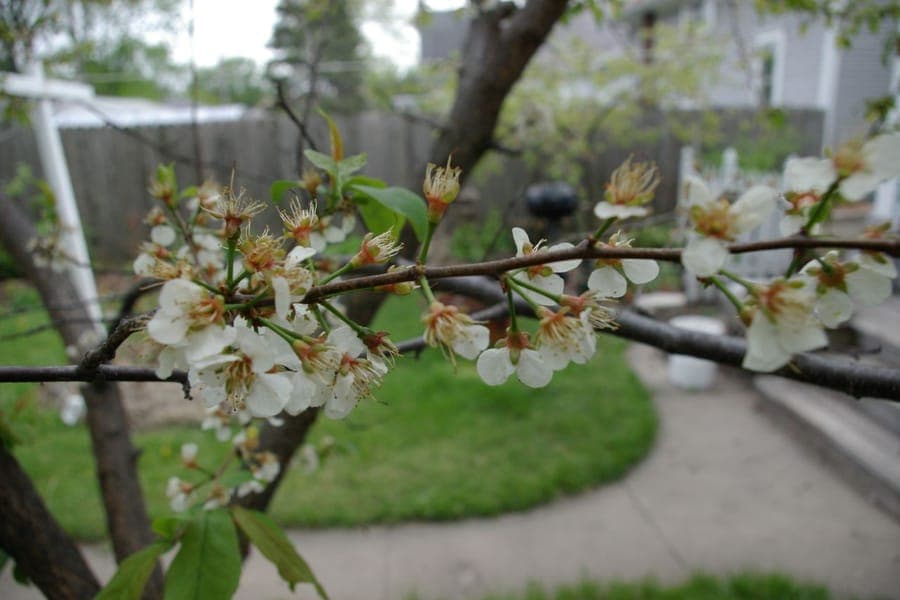
Andrew Ciscel / CC BY-SA 2.0, via Wikimedia Commons
American plum (Prunus americana): complete guide
Prunus americana
¿Quieres ver American plum (Prunus americana): complete guide en tu jardín?
1 minuto, sin tarjeta de crédito
Overview
Prunus americana, also known as American plum, wild plum, or goose plum, is a native fruit tree from North America. This tree grows wild from Canada to Mexico and forms an important part of the natural landscape.
In gardens, American plum is a versatile choice. It offers beautiful spring blossom, edible fruits in summer, and often attractive fall color. The tree attracts birds and wildlife and is very low-maintenance once established.
Appearance and Bloom
Prunus americana grows as a shrub or small tree to about 5-8 meters tall, sometimes taller. The tree forms a broad, rounded crown. The leaves are oval, dark green, and finely toothed.
Blossom appears in early spring (April-May) before leaves fully open. The flowers are white, approximately 1-1.5 cm across, and appear in clusters. They have a pleasant fragrance that attracts pollinators.
The fruits appear in summer and ripen by August-September. They are red to golden-yellow, approximately 2-3 cm in diameter. The fruits are juicy and sweet with a single stone. They are edible raw but usually used for jam, jelly, and preserves.
Ideal Location
American plum grows best in sunny locations. Plant it where it receives at least 6 hours of direct sun daily for optimal blossom and fruit production. It tolerates partial shade as well but will bear fewer fruits.
Choose a location with good air circulation to prevent fungal diseases. The tree is very hardy and grows in virtually every climate where winters are not extreme.
Soil
Prunus americana grows in practically any soil but feels most at home in well-draining, moderately fertile soil. The tree tolerates slightly acidic to neutral pH (5.0-7.0). Heavy clay soils can be used provided you add good drainage.
Add organic material when planting for better establishment. Once established, fertilizing is rarely needed.
Watering
New trees need regular water for the first year after planting. Water deeply but not too frequently to prevent root rot. Once established, American plum is very drought-tolerant.
During prolonged droughts you can water, especially when fruits are forming. Ensure good drainage, especially in winter.
Diseño gratis
¿Quieres ver American plum (Prunus americana): complete guide en tu jardín? Crea un diseño gratis ahora.
Pruning
Prune American plum in late winter (January-February) before growth begins. Remove dead, damaged, or crossing branches. Basic pruning promotes an open, healthy crown.
Prune sparingly after the first year. The tree forms a fine shape naturally. Only remove problem growth.
Maintenance Calendar
January-February: Pruning. March-April: Blossom, encourage pollination. May-June: Fruit formation. July-September: Fruits ripen, harvest. October-December: Winter preparation. The tree is virtually maintenance-free once established.
Winter Hardiness
American plum is extremely winter-hardy to zone 3 (down to -40 degrees Celsius). It grows well in cold climates and poses no problem in harsh winters. The tree was often used for windbreaks on prairies because of its hardiness.
In Southern Europe and southern parts of the UK, the tree may drop more leaves during hot, dry summers.
Companion Plants
American plum combines well with other native shrubs and trees. Plant it alongside other wildlife-friendly plants. Hazelnut, dogwood, and wild cherry are good companions.
The tree attracts many birds, so plant it where birds are welcome. It also makes a lovely backdrop for lower-growing border plants.
Fruit Growing and Harvesting
American plums are self-fertile, meaning a single tree can produce fruit. Two or more trees increase yield through cross-pollination.
Harvest fruits when fully red and give slightly to pressure. They can be cooked into jam, compote, or wine. Raw they are quite pleasant as a snack.
Final Thoughts
American plum is a versatile, native fruit tree that provides sustenance for birds and people alike. With its robustness, drought-tolerance, and low maintenance, it deserves a place in more gardens. Especially for eco-gardeners who value native plants.
Find American plum seedlings at plant nurseries specializing in native trees. Consult gardenworld.app for more inspiration on fruit trees and ecological gardens. Also read our guide at gardenworld.app for more native tree variants.
¿Quieres ver American plum (Prunus americana): complete guide en tu jardín? Crea un diseño gratis ahora.
Sube una foto, elige un estilo y obtén un diseño fotorrealista con lista de plantas en menos de un minuto.
Más de 10.000 jardines diseñados
Sin tarjeta de crédito


Plantas similares
Siberian crab apple: complete guide
Malus x robusta
Complete guide to the Siberian crab apple (Malus x robusta): location, soil, pruning, winter hardiness and the best companion plants for your garden.
Chinese flowering crabapple (Malus x spectabilis): complete guide
Malus x spectabilis
Meet the Chinese flowering crabapple (Malus x spectabilis): a classic spring bloomer with carmine buds and pink blossom.
Potentilla crassinervia: complete guide
Potentilla crassinervia
Potentilla crassinervia, the Corsican cinquefoil, grows wild on Corsica and Sardinia's peaks. Discover how to grow this hardy alpine rock garden gem.