
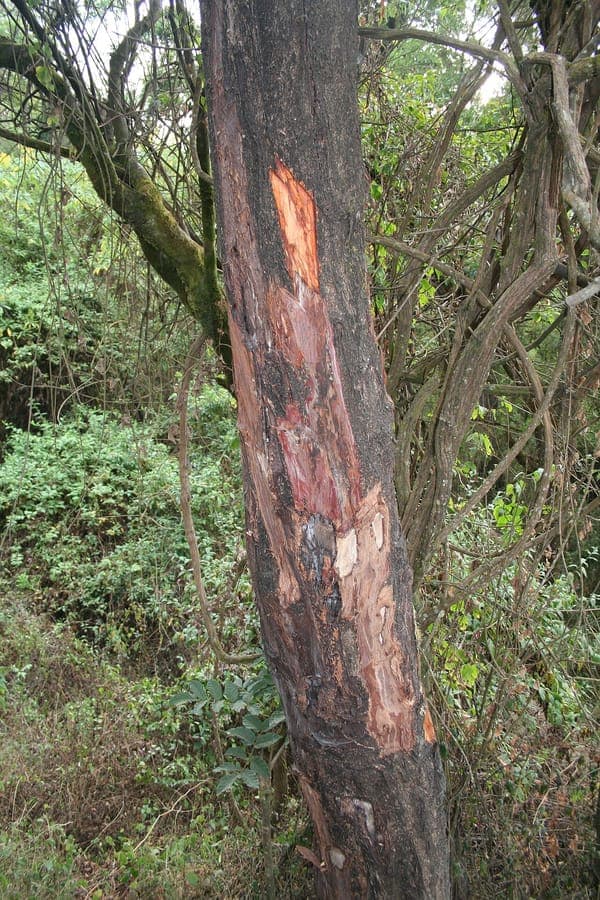
Marco Schmidt [1] / CC BY-SA 2.5, via Wikimedia Commons
African Cherry: complete guide
Prunus africana
¿Quieres ver African Cherry: complete guide en tu jardín?
1 minuto, sin tarjeta de crédito
Overview
The African cherry, scientifically known as Prunus africana, is a striking tropical tree native to warm regions across Africa, from Ghana through Ethiopia to South Africa, with additional populations in Madagascar and Comoros. This tree possesses remarkable qualities both ornamental and cultural. In temperate climates, it is typically cultivated in greenhouses or highly protected garden situations, though in milder regions it can thrive outdoors.
Appearance and Bloom
The African cherry develops into a medium to large tree with a dense, rounded crown and glossy evergreen foliage that provides year-round presence. Leaves are ovate, well-developed, and impart a lush, tropical appearance. Small, inconspicuous white flowers appear in leaf axils, followed by characteristically glossy black fruits resembling small cherries. These fruits are highly decorative and persist on the tree for extended periods, providing winter interest.
Ideal Location
The African cherry demands a very sunny, protected location, ideally against a warm south-facing wall or within a greenhouse. This tree is not frost-hardy and can only grow outdoors in very mild climates with winter minima above 5 degrees Celsius. In temperate Europe, container cultivation with winter movement to protected environments is necessary. Full sun positioning is essential for flowering and fruiting.
Soil
The African cherry thrives in well-drained, nutrient-rich soil with pH between 6.0 and 7.0. Use high-quality potting compost mixed with garden compost for container culture. In warm Mediterranean gardens, direct ground planting is possible if drainage is excellent. This tree absolutely cannot tolerate waterlogging.
Diseño gratis
¿Quieres ver African Cherry: complete guide en tu jardín? Crea un diseño gratis ahora.
Watering
Water regularly during the growing season, maintaining consistently moist but never waterlogged conditions. During winter, as growth slows, irrigation can be reduced. Container specimens require more frequent watering than ground-grown trees. Occasional foliage spray in dry environments removes dust and increases humidity.
Pruning
The African cherry naturally develops an attractive form requiring minimal intervention. Remove only dead, damaged, or obviously diseased branches in late spring. Light pruning after flowering maintains compact form if desired. Drastic pruning is unnecessary and disturbs the natural silhouette.
Maintenance Calendar
Spring: resume watering, apply balanced fertilizer, monitor for pests. Summer: regular watering, occasional foliage spray for humidity. Autumn: move containers to protected locations. Winter: minimal watering, reduce feeding.
Winter Hardiness
The African cherry is not frost-hardy and can only grow outdoors year-round in very mild, frost-free climates. Throughout most European regions, frost protection is essential. Greenhouse, conservatory, or heated shelter cultivation is standard for temperate climates.
Companion Plants
The African cherry combines well with other tropical plants in greenhouse or Mediterranean garden settings. If grown outdoors in mild regions, partner with other warm-loving species. Avoid extremely frost-sensitive associates.
Final Thoughts
The African cherry is a magnificent, exotic tree for those committed to tropical and subtropical gardening. With its glossy evergreen foliage and decorative glossy-black fruits, it adds genuine tropical character to both greenhouse gardens and warm southern gardens. Visit gardenworld.app for comprehensive information on exotic trees and greenhouse cultivation techniques. With proper placement, nutrition, and frost protection, this splendid tree provides years of ornamental satisfaction. Learn more about tropical gardening and exotic specimens on gardenworld.app.
¿Quieres ver African Cherry: complete guide en tu jardín? Crea un diseño gratis ahora.
Sube una foto, elige un estilo y obtén un diseño fotorrealista con lista de plantas en menos de un minuto.
Más de 10.000 jardines diseñados
Sin tarjeta de crédito


Plantas similares
Birchbark Cherry: complete guide
Prunus serrula Franch.
Discover the Birchbark Cherry, a tree with spectacular glossy mahogany bark. Learn everything about cultivation, ideal location, soil, pruning, and maintenance of this Asian ornamental tree.
European bird cherry: complete guide
Prunus padus
Everything you need to know about growing Prunus padus: ideal conditions, care, pruning, and companion plants for UK and European gardens.
Cherry Laurel: complete guide
Prunus laurocerasus
Everything about Cherry Laurel (Prunus laurocerasus): planting, pruning, cultivars and care. Expert tips for a fast-growing, dense evergreen hedge.