
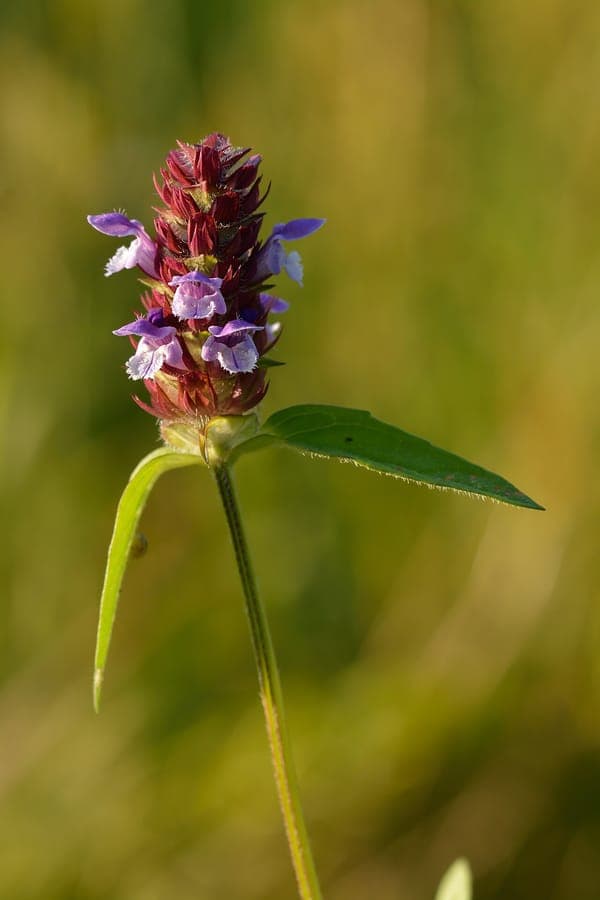
Ivar Leidus / CC BY-SA 3.0, via Wikimedia Commons
Heal-all (Prunella vulgaris): complete guide
Prunella vulgaris
¿Quieres ver Heal-all (Prunella vulgaris): complete guide en tu jardín?
1 minuto, sin tarjeta de crédito
Overview
Prunella vulgaris, also known as heal-all or self-heal, is a very common and versatile perennial found throughout Europe and Asia. This is the most common species in the Prunella genus and grows wild in meadows, along roadsides, and in partially shaded forests.
The plant is known for its traditional medicinal applications. In many cultures, it is used in teas and tinctures. Modern research suggests various health benefits. Besides health applications, self-heal also offers great ornamental value in gardens.
Appearance and Bloom
Prunella vulgaris grows to about 10-50 cm in height, which varies based on growing conditions. In rich soils it grows larger than on poor soils. The leaves are oval to lance-shaped, dark green, and rough-textured. They have toothed margins and are often tinged purple.
The flowers appear in dense flower spikes and are usually purple-violet, though white and pink variants occur. Individual flowers are approximately 1-1.5 cm long with the typical two-lipped design. Blooming runs from June to September. The plant attracts pollinators in abundance.
Ideal Location
Self-heal grows in almost all conditions, which makes it highly adaptable. It grows well in full sun to partial shade. In very shady places it blooms less well. The plant tolerates various wind conditions.
It also grows well in forest shade under deciduous trees. This makes it ideal for underplanting in mixed groupings.
Soil
Self-heal grows in virtually every soil. It thrives in poor, stony soils where many other plants cannot grow. It also tolerates heavy clay soils. It even grows in wet to waterlogged soils, though drier locations are preferred.
The plant is not fussy about pH. It grows in both acidic and alkaline soils.
Watering
Once established, self-heal is very drought-tolerant. It needs minimal water. In very wet conditions the plant can suffer leaf drop, so ensure reasonable drainage.
New plants need some water until they are well established. After that they can survive with almost no extra water.
Diseño gratis
¿Quieres ver Heal-all (Prunella vulgaris): complete guide en tu jardín? Crea un diseño gratis ahora.
Pruning
Prune after blooming (October) back to 5-10 cm height. This promotes denser growth in the following season. The plant will self-seed freely, so you can prevent unwanted spread by removing seed heads before they mature.
In early spring you can remove dead growth.
Maintenance Calendar
March: Maintenance pruning, remove dead growth. April-May: Growth begins, nothing needed. June: Blooming begins. June-October: Full bloom, remove seed heads if self-seeding is not desired. October: Prune back after blooming. November-February: Rest period.
Winter Hardiness
Self-heal is extremely winter-hardy, remains green in most winters, and easily tolerates temperatures down to -20 degrees Celsius. The plant sometimes even blooms in early winter when weather is mild. It needs no winter protection.
In very snowy winters the leaves may be hidden under snow, but the plant survives without problems.
Companion Plants
Self-heal combines well with other low-growing perennials. Try it alongside other bee- and butterfly-friendly plants like Salvia, Lavandula, and Achillea. Also lovely with yellow flowers.
In wild or cottage-style gardens, self-heal fits perfectly. It also combines well with grasses and other meadow-like plants.
Medicinal Use
Tradition and modern research suggest that Prunella vulgaris offers diverse benefits. The above-ground parts (flowers, leaves, stems) are used in teas and tinctures for supportive health use. Some studies suggest support for immune function and throat health.
Always consult a healthcare professional before using medicinal applications of plants.
Final Thoughts
Self-heal is a versatile plant equally suited to wild-looking gardens and formal border plantings. With its adaptability, winter hardiness, and appeal to pollinators, it deserves a place in almost every garden. And if you want to explore its medicinal benefits, it offers even more value.
Find seeds at plant nurseries and seed companies. Consult gardenworld.app for more information about herbal plants and garden design. Also read our guide at gardenworld.app for more traditional medicinal plants.
¿Quieres ver Heal-all (Prunella vulgaris): complete guide en tu jardín? Crea un diseño gratis ahora.
Sube una foto, elige un estilo y obtén un diseño fotorrealista con lista de plantas en menos de un minuto.
Más de 10.000 jardines diseñados
Sin tarjeta de crédito


Plantas similares
Apple mint (Mentha x villosa): complete guide
Mentha x villosa
Meet apple mint (Mentha x villosa): a fruity-scented kitchen herb with woolly leaves, perfect for tea and mojitos.
Salvia peyronii: complete guide
Salvia peyronii
Discover Salvia peyronii, a rare Lebanese mountain sage. Growing tips, hardiness, and companion planting for a Mediterranean gravel garden.
Bigleaf mint (Mentha x rotundifolia): complete guide
Mentha x rotundifolia
Discover bigleaf mint: cultivation, care tips, and garden uses. Learn how to grow this aromatic herb with soft, hairy leaves.