
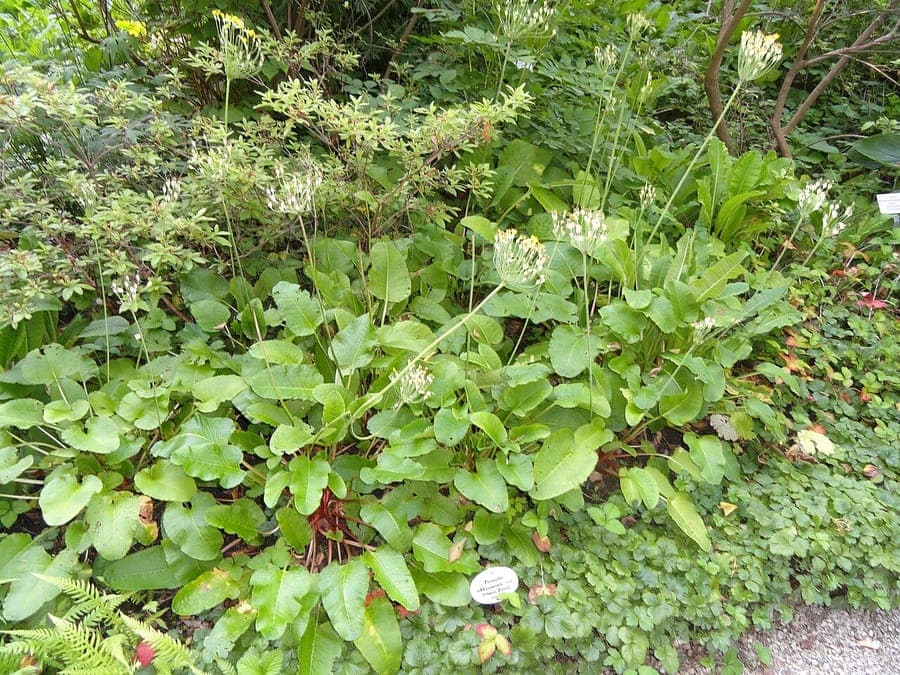
Daderot / CC0, via Wikimedia Commons
Sikkim primula: complete guide
Primula sikkimensis
¿Quieres ver Sikkim primula: complete guide en tu jardín?
1 minuto, sin tarjeta de crédito
Overview
The Sikkim primula (Primula sikkimensis) is an enchanting alpine plant native to the Himalayan region, from eastern India to China and Myanmar. Known for its golden, drooping flower clusters, this primula offers a unique opportunity for gardeners seeking to cultivate authentic alpine species. With its compact growth habit and specific moisture requirements, Sikkim primula brings authentic mountain garden charm to temperate landscapes where cool, moist conditions can be maintained year-round.
Appearance and Bloom
The Sikkim primula grows to approximately 30-50 centimeters tall, forming dense rosettes of green leaves. In June, the plant produces spectacular pendant clusters of small, fragrant yellow flowers that create a stunning visual display. Each flower cluster hangs gracefully from the plant center, creating an almost oriental elegance. The blooming period typically lasts two to four weeks, with peak display in early summer when most other garden plants are transitioning into summer growth. Each inflorescence contains between twenty and fifty tiny individual flowers, creating an impressive floral show.
Ideal Location
While native to semi-alpine terrain, Sikkim primula thrives best in partial to full shade in garden settings. Excessive direct sun can weaken the plant and fade flower colors. Morning sun combined with afternoon shade is ideal. Plant this primula in rock gardens, alpine troughs, or alongside shade-loving perennials under deciduous trees. Position it where morning moisture is retained but afternoon heat is reduced. In southern exposures, afternoon shade becomes particularly important to prevent leaf scorch.
Soil
This primula requires rich, moisture-retentive soil with excellent drainage. An ideal mixture consists of peat or leaf mold, sand, and volcanic pumice, with pH values between 5.5 and 6.5. Heavy clay soils can be amended by incorporating organic matter. Many gardeners blend one-third peat, one-third leaf mold, and one-third coarse sand into standard potting soil. This creates the moisture buffer this alpine plant requires. Regular compost additions in spring strengthen soil structure and maintain fertility.
Watering
Watering is crucial for Sikkim primula success. This plant thrives in wet environments and must never completely dry out, yet should not sit in standing water. Water regularly during the growing season, two to three times weekly in dry summers. Rainwater is preferable, as much tap water contains excessive lime. In containers, the soil should consistently feel moist without waterlogging. Reduce watering in winter when the plant is dormant. Regularly check soil moisture by feeling the soil.
Diseño gratis
¿Quieres ver Sikkim primula: complete guide en tu jardín? Crea un diseño gratis ahora.
Pruning
Pruning is generally unnecessary for Sikkim primula as it maintains a naturally compact form. However, deadheading spent flower clusters regularly encourages continued bloom and keeps the plant neat. Dead leaves can be carefully removed. After flowering, seeds can be collected for propagation, though fresh seed sown in autumn gives the best germination results. Remove only obviously damaged plant parts.
Maintenance Calendar
Spring: Check soil moisture as plants emerge from dormancy. Blend organic matter into the soil and apply mulch. May to July: Water regularly, ensuring soil doesn't dry out completely. June: Prime flowering period, enjoy the display. August to October: Harvest seeds and/or divide plants (only every 3-4 years). November to March: Reduce watering, keep soil just moist.
Winter Hardiness
The Sikkim primula is reasonably winter-hardy, tolerating temperatures down to minus 15 degrees Celsius, though this depends on growing medium and drainage. In areas with frequent freeze-thaw cycles or waterlogged winters, good drainage becomes even more important. In very harsh winters, mulch with peat or leaf mold provides protection. In warmer regions of temperate zones, this plant grows outdoors without protection. Prolonged frost periods can be problematic.
Companion Plants
Perfect companions for Sikkim primula are other alpines such as soldanella, cyclamen coum, and helleborus niger. These share the same love for semi-shade and moisture-retentive soil. Grass sedges and alpine cushion plants also work well. For added structure, low boxwood or sarcococcas serve as attractive backgrounds. In containers, small evergreen sedums or sempervivums create pleasing contrast. Combine with meconopsis and astilbes for additional bloom.
Closing
The Sikkim primula is a beautiful alpine addition for gardeners wishing to bring a piece of the Himalayas into their garden. With proper moisture management and semi-shade, this exotic primula will bloom reliably for years. Find this plant at specialized alpine nurseries and through online retailers. With care and attention, this delicate alpine treasure delivers a unique color burst each spring, transforming garden spaces into mountain meadow sanctuaries. The combination of elegant pendant flowers and compact form makes it indispensable for serious alpine gardeners.
¿Quieres ver Sikkim primula: complete guide en tu jardín? Crea un diseño gratis ahora.
Sube una foto, elige un estilo y obtén un diseño fotorrealista con lista de plantas en menos de un minuto.
Más de 10.000 jardines diseñados
Sin tarjeta de crédito


Plantas similares
Primula incana: complete guide to silvery alpine primrose
Primula incana
Silvery primrose (Primula incana), a delicate alpine flower with white blooms and powdered grey-green leaves. Growing, care, and cultivation guide.
Mealy cowslip: complete guide
Primula pulverulenta
Grow the Mealy cowslip (Primula pulverulenta): striking candelabra flowers in red and purple tones, moisture-loving and ideal for shady, damp garden corners.
Cliff dwarf-primrose: complete guide
Androsace laevigata
Full guide to growing Androsace laevigata, a rare Pacific Northwest alpine cushion plant. Planting, care, and garden design tips explained.