
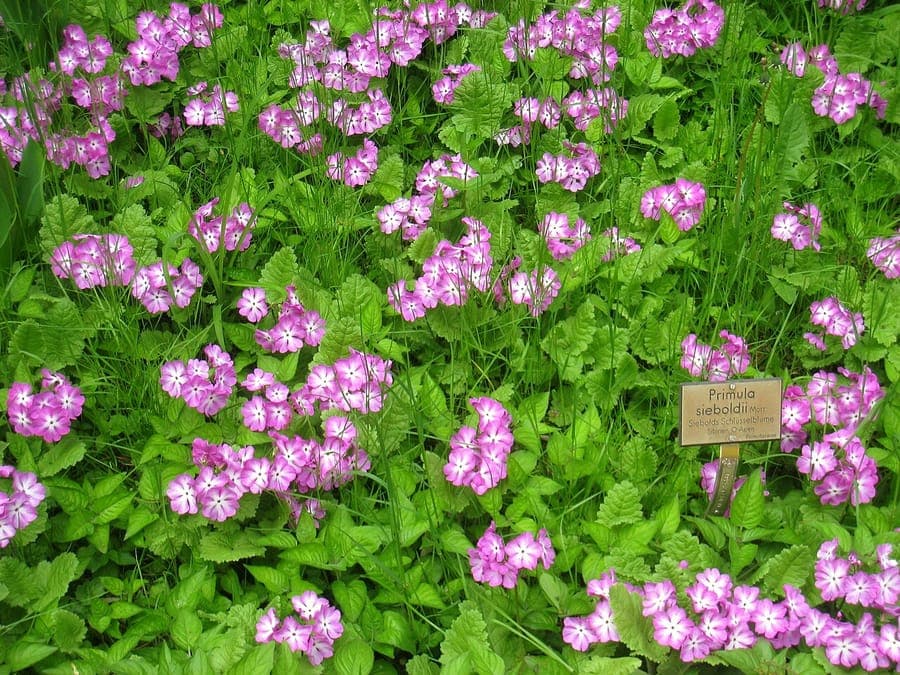
Daderot / Public domain, via Wikimedia Commons
Japanese primrose: complete guide
Primula sieboldii
¿Quieres ver Japanese primrose: complete guide en tu jardín?
1 minuto, sin tarjeta de crédito
Overview
Japanese primrose (Primula sieboldii), also known as Japanese primula or Siebold's primrose, is a captivating spring bloomer from Japan and Siberia. This elegant flower naturally grows in woodland margins and mountain meadows. With its refined, often ruffled flowers in pink, purple, white, and red tints, this primula makes a standout statement in any spring garden design.
Appearance and bloom
Japanese primrose forms compact rosette clusters of wrinkled, dark green leaves. The plant reaches 20-30 centimeters height. From April through May, spectacular, flat flowers appear in bright pink, purple, white, or bicolor varieties above the foliage. Each bloom is like a tiny crepe-paper flower, creating spectacular early-season color.
Ideal location
Japanese primrose thrives in partial shade, ideal under deciduous trees or woodland edges. Avoid full shade, but also avoid full sun (unless in cool climates). Morning sun is ideal. Plant in moist garden borders or containers.
Soil
Prepare humus-rich, well-draining soil. Mix well-rotted compost or leaf mold into garden soil. Japanese primrose prefers slightly acidic to neutral pH (6-7). Add sand for better drainage if needed.
Diseño gratis
¿Quieres ver Japanese primrose: complete guide en tu jardín? Crea un diseño gratis ahora.
Watering
Keep soil constantly but not waterlogged moist. During growing period provide ample water; summer drought can cause damage. Keep winters drier. Mulch helps with moisture regulation.
Pruning
Remove faded flower spikes promptly after blooming. This encourages longer flowering. Remove dead or diseased leaves. After blooming: prune lightly, not heavily.
Maintenance calendar
- January-February: no action needed
- March-April: growth increases; begin regular watering
- April-May: bloom period; enjoy the display
- June: remove faded flower spikes
- July-August: keep moist during dry periods
- September-October: winter preparation
- November-December: winter dormancy
Winter hardiness
Japanese primrose is hardy (zones 4-8) to minus 25 degrees Celsius. Heavy snow can damage surface growth, but plant recovers in spring. In regions with wet winters, good drainage is essential.
Companion plants
Combine with other spring bloomers: hellebores, bergenia, heuchera, ferns, and ivy-leaved cyclamen.
In conclusion
Japanese primrose is a showstopper for careful gardeners. With appropriate partial shade range and moisture maintenance, it delivers annual spring magic. Find plants at garden centers across Europe.
Want to explore more spring bloomers? Visit gardenworld.app/en for more spring ideas!
¿Quieres ver Japanese primrose: complete guide en tu jardín? Crea un diseño gratis ahora.
Sube una foto, elige un estilo y obtén un diseño fotorrealista con lista de plantas en menos de un minuto.
Más de 10.000 jardines diseñados
Sin tarjeta de crédito


Plantas similares
Primula incana: complete guide to silvery alpine primrose
Primula incana
Silvery primrose (Primula incana), a delicate alpine flower with white blooms and powdered grey-green leaves. Growing, care, and cultivation guide.
Mealy cowslip: complete guide
Primula pulverulenta
Grow the Mealy cowslip (Primula pulverulenta): striking candelabra flowers in red and purple tones, moisture-loving and ideal for shady, damp garden corners.
Cliff dwarf-primrose: complete guide
Androsace laevigata
Full guide to growing Androsace laevigata, a rare Pacific Northwest alpine cushion plant. Planting, care, and garden design tips explained.