
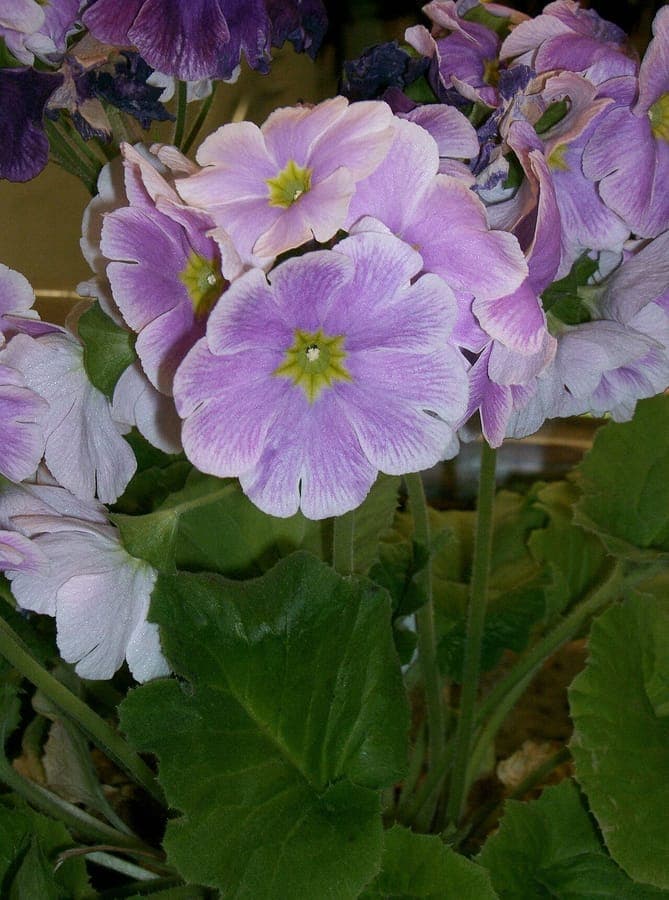
KENPEI / CC BY-SA 3.0, via Wikimedia Commons
Primula obconica: German primrose guide
Primula obconica
¿Quieres ver Primula obconica: German primrose guide en tu jardín?
1 minuto, sin tarjeta de crédito
Overview
Primula obconica, known as German primrose or poison primrose, is a charming flowering plant native to South-Central China. This compact plant is popular as both houseplant and balcony plant for its extended blooming period.
The name obconica refers to the characteristic, inverse heart-shaped leaves. This semi-evergreen plant produces flowers for months under the right conditions.
Appearance and Bloom
Primula obconica grows to about 20-30 cm and forms compact rosettes with dark green, wrinkled foliage. The flowers appear in dense clusters ranging from white to pink, purple, and red.
Blooming begins within weeks of purchase and can last nine months under favorable conditions. In living rooms, these plants typically flower from autumn through spring.
Ideal Location
Primula obconica thrives in bright locations without direct sunlight. An east or south-facing window with sheer curtains is ideal. Too much direct sun can cause leaf scorch.
Ensure good air circulation. The plant prefers temperatures between 15-20 degrees Celsius.
Soil
Use a light, well-draining potting soil. A blend of peat moss, perlite, and sand works excellently. Soil pH should be slightly acidic, between 5.5 and 6.5.
Repot annually into a slightly larger container in early spring.
Diseño gratis
¿Quieres ver Primula obconica: German primrose guide en tu jardín? Crea un diseño gratis ahora.
Watering
Water regularly, but ensure soil never completely dries or becomes waterlogged. Watering from below is best.
During growth period (autumn-winter), the plant needs more water. Check daily if soil feels moist.
Pruning
No pruning required, but remove spent flowers to encourage blooming. After flowering period (around May), cut back to about 10 cm height.
Maintenance Calendar
January-March: Fertilize every two weeks. April-May: Reduce watering, repot, cut back. June-August: Water minimally. September-December: Blooming begins.
Winter Hardiness
Not winter-hardy and cannot tolerate frost. Temperature-sensitive plant needing protection below 10 degrees Celsius. In mild regions, can stay outside in sheltered spots.
Bring indoors before first frost.
Companion Plants
Grows well with other houseplants. Cymbidium orchids, Anthemis and Campanula are good companions.
Final Thoughts
Reliable flowering plant for patient indoor gardeners. With regular watering, shade and moderate temperatures, enjoy blooms for years.
Find best plants at garden centers. Visit gardenworld.app for more plant care inspiration.
¿Quieres ver Primula obconica: German primrose guide en tu jardín? Crea un diseño gratis ahora.
Sube una foto, elige un estilo y obtén un diseño fotorrealista con lista de plantas en menos de un minuto.
Más de 10.000 jardines diseñados
Sin tarjeta de crédito


Plantas similares
Primula incana: complete guide to silvery alpine primrose
Primula incana
Silvery primrose (Primula incana), a delicate alpine flower with white blooms and powdered grey-green leaves. Growing, care, and cultivation guide.
Mealy cowslip: complete guide
Primula pulverulenta
Grow the Mealy cowslip (Primula pulverulenta): striking candelabra flowers in red and purple tones, moisture-loving and ideal for shady, damp garden corners.
Cliff dwarf-primrose: complete guide
Androsace laevigata
Full guide to growing Androsace laevigata, a rare Pacific Northwest alpine cushion plant. Planting, care, and garden design tips explained.