
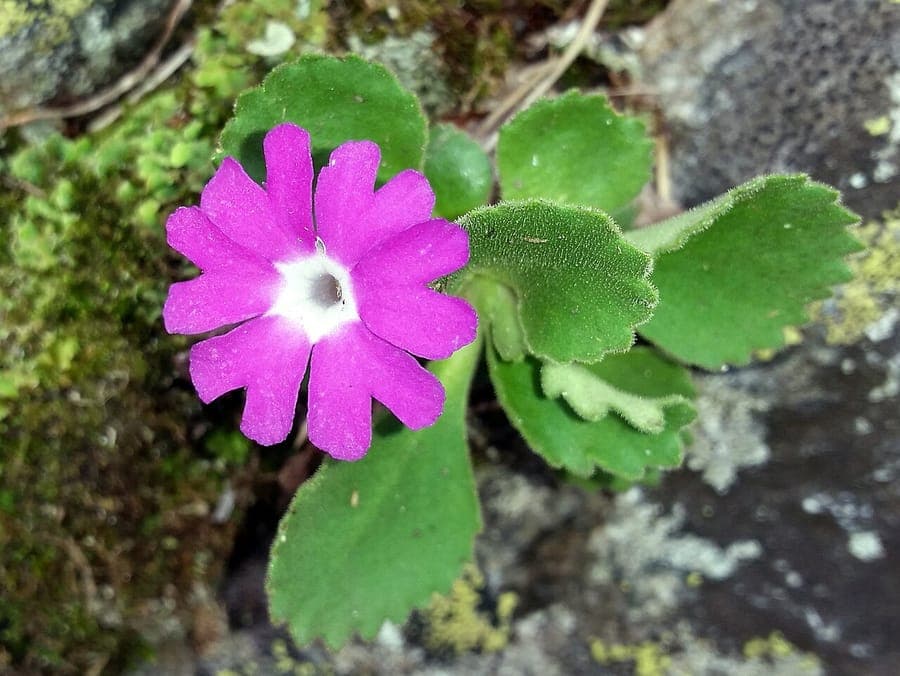
Joan Simon from Barcelona, España / CC BY-SA 2.0, via Wikimedia Commons
Hairy Primrose: complete guide
Primula hirsuta
¿Quieres ver Hairy Primrose: complete guide en tu jardín?
1 minuto, sin tarjeta de crédito
Overview
The Hairy Primrose (Primula hirsuta) is a fascinating alpine primrose from the Primulaceae family, native to the Central Alps. This rare but beautiful plant is renowned for its purple to pink blooms and characteristic hairy foliage and stems. At mere 5-15 cm tall, it's a rewarding miniature bloom for alpine troughs, xeric gardens, and growers understanding drainage and delicate plants.
Appearance and Bloom
The Hairy Primrose forms compact rosettes of stiff foliage, thickly covered with glandular hairs giving it a rough texture - hence the name 'hirsuta'. From April through May, countless small flowers appear ranging from purple to pink-red, with yellow centers. The flowers are two-lipped and highly attractive to honeybees. The glandular hairs prevent moisture accumulation around the plant, critical in wet alpine conditions.
Ideal Location
This primrose thrives optimally in full to moderate sun in alpine rock gardens. 4-6 hours direct daily sunlight is ideal. A position on a north-facing rock or trough receiving some protection from intense sun is beneficial. A windy position with air circulation helps. Avoid dark corners and still, damp zones.
Soil
Excellent drainage is absolutely critical. Alpine soil mix with minimum 50% gravel or coarse sand is needed. Pure gravel or sand with minimal organic matter is better than standard garden soil. pH neutral to slightly acidic (6.0-7.0) is ideal. Regardless of drainage efforts, this primrose can be difficult without perfect drainage.
Diseño gratis
¿Quieres ver Hairy Primrose: complete guide en tu jardín? Crea un diseño gratis ahora.
Watering
Minimal watering once established. The plant replaces regular water in alpine environment and rainfall. In dry periods water very carefully between stems. Never spray; avoid wetting foliage. In winter, when the plant is largely dormant, wariness against wet soil is essential.
Pruning
No pruning required. Carefully remove faded flowers to promote neatness. Gently remove dead foliage from rosettes to prevent browning. This plant is so compact and small that pruning is rarely needed.
Maintenance Calendar
MARCH-APRIL: No action needed, await bloom. APRIL-MAY: Bloom begins, watch for wet soil, carefully deadhead. MAY-JUNE: Bloom declines. JUNE-SEPTEMBER: Growth slows, minimal watering. SEPTEMBER-MARCH: Winter dormancy, minimal maintenance, wet protection.
Winter Hardiness
The Hairy Primrose is extremely cold-hardy, suitable for zones 5-6. It tolerates winters to -15 degrees Celsius. However, wet winters are far more dangerous than cold winters. Good winter drainage is essential.
Companion Plants
Combine only with other alpine specialists requiring perfect drainage: Alpine Saxifrage (Saxifraga aizoides), Red Alpine Forget-me-not (Eritrichium nanum), Grey Stonerop (Sedum album ssp. micranthum). Keep this collection in pots or special alpine troughs for optimal control.
Conclusion
The Hairy Primrose is for growers appreciating small, delicate alpine plants. With its purple blooms and hairy foliage, it's a tiny jewel of the Alps. Source this through specialized alpine plant nurseries, as it's rarely available at standard garden centers. Find more at gardenworld.app/en for alpine sourcing.
¿Quieres ver Hairy Primrose: complete guide en tu jardín? Crea un diseño gratis ahora.
Sube una foto, elige un estilo y obtén un diseño fotorrealista con lista de plantas en menos de un minuto.
Más de 10.000 jardines diseñados
Sin tarjeta de crédito


Plantas similares
Primula incana: complete guide to silvery alpine primrose
Primula incana
Silvery primrose (Primula incana), a delicate alpine flower with white blooms and powdered grey-green leaves. Growing, care, and cultivation guide.
Mealy cowslip: complete guide
Primula pulverulenta
Grow the Mealy cowslip (Primula pulverulenta): striking candelabra flowers in red and purple tones, moisture-loving and ideal for shady, damp garden corners.
Cliff dwarf-primrose: complete guide
Androsace laevigata
Full guide to growing Androsace laevigata, a rare Pacific Northwest alpine cushion plant. Planting, care, and garden design tips explained.