
Stan Shebs / CC BY-SA 3.0, via Wikimedia Commons
Himalayan cowslip: complete guide
Primula florindae
¿Quieres ver Himalayan cowslip: complete guide en tu jardín?
1 minuto, sin tarjeta de crédito
Overview
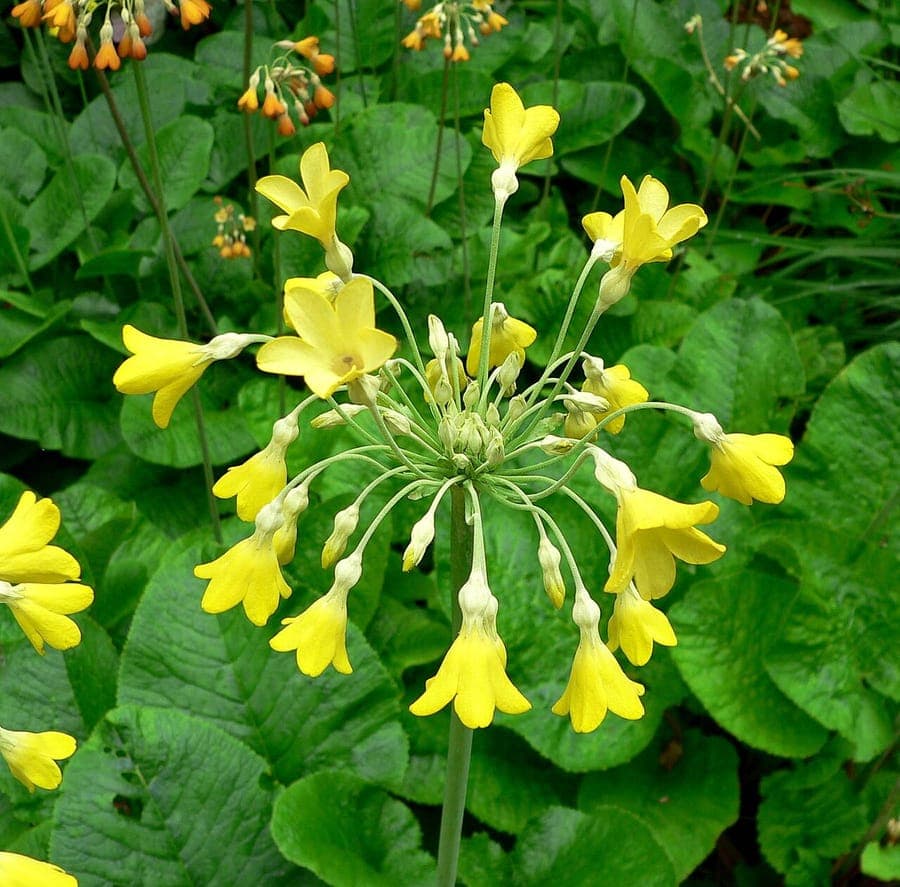
Himalayan cowslip (Primula florindae) is a striking summer-blooming primula from eastern Tibet. This alpine plant is renowned for its large, yellow, drooping flowers that hang elegantly above the foliage. The plant naturally grows along mountain streams in moist environments, making it ideal for damper garden corners. With its unique flower form and late bloom time, Himalayan cowslip provides refreshing summer interest.
Appearance and bloom
Himalayan cowslip reaches 60 to 90 centimeters tall. The most striking feature is the long, slender flower stems bearing yellow, sweetly scented drooping flowers. These flowers hang gracefully in drooping clusters 10 to 20 centimeters long. Individual flowers are approximately 1.5 to 2 centimeters wide with characteristic sweet fragrance. Leaves are large, rough-textured oval leaves clustering at ground level. Blooming occurs June to August, at higher elevations often August to September.
Ideal location
Himalayan cowslip grows optimally in partial to full shade. Position this plant in sheltered locations where harsh afternoon sun is avoided. The plant prefers cool, moist places, ideally near ponds or in wet soil. This plant thrives in high or semi-shaded locations under deciduous trees. Avoid warm, dry places completely. The plant performs better in regions with greater moisture and lower temperatures.
Soil
Himalayan cowslip prefers nutrient-rich, moisture-retentive soil. The ideal soil is rich with organic material and consistently moist but never waterlogged. A mixture of garden soil with additional peat moss, leaf mold, or compost is perfect. Add extra sand to heavy clay for improved drainage. Slightly acidic to neutral soil (pH 5.5 to 6.5) is best. The plant grows contentedly with regular rainwater and humidity greater than most primulas need.
Diseño gratis
¿Quieres ver Himalayan cowslip: complete guide en tu jardín? Crea un diseño gratis ahora.
Watering
Himalayan cowslip requires regular, generous watering especially during growth and bloom. Ensure soil never dries completely. During warm periods water frequently. Mulching helps retain moisture and moderate temperature. You can place this plant very near water edges where natural moisture gradient supports growth. Water from soil, not over foliage.
Maintenance
Maintenance is minimal but important. Remove spent flower clusters for neatness. After blooming, plants may remain moisture-laden through winter. Dividing after blooming or in early spring increases plant quantities. Little pruning needed except removal of dead parts. Ensure soil remains moisture-retaining year-round. The plant does not die down in winter like other primulas.
Maintenance calendar
May-June: Preparation; ensure consistent moisture. June-August: Bloom period; remove spent flowers; support watering. August-September: Late bloom and seed ripening in montane zones. October-April: Rest period with moisture retention; avoid extreme dryness.
Winter hardiness
Himalayan cowslip is hardy in temperate to subalpine zones. The plant tolerates temperatures below -15 degrees Celsius. The plant overwinters in its native Tibet under extremely cold conditions. In moderate zones it has frost protection in very harsh winters. Ensure plants do not sit in dry soil full winter. Thick mulch layer provides extra protection.
Companion plants
Himalayan cowslip pairs nicely with other alpine plants preferring moist soil. Plant alongside hostas and other shade plants. Add moisture lovers like iris and astilbe. This plant provides summer interest in moist borders. Group plants together for maximum impact of yellow flowers.
Closing thoughts
Himalayan cowslip is essential for gardeners with moist, shaded locations. With its unique yellow, drooping flowers, it provides summer color when many gardens tire. Visit gardenworld.app for guides on moisture-loving plants and alpine gardens. Gardenworld.app helps you transform challenging locations into flower-rich gardens.
¿Quieres ver Himalayan cowslip: complete guide en tu jardín? Crea un diseño gratis ahora.
Sube una foto, elige un estilo y obtén un diseño fotorrealista con lista de plantas en menos de un minuto.
Más de 10.000 jardines diseñados
Sin tarjeta de crédito


Plantas similares
Primula incana: complete guide to silvery alpine primrose
Primula incana
Silvery primrose (Primula incana), a delicate alpine flower with white blooms and powdered grey-green leaves. Growing, care, and cultivation guide.
Mealy cowslip: complete guide
Primula pulverulenta
Grow the Mealy cowslip (Primula pulverulenta): striking candelabra flowers in red and purple tones, moisture-loving and ideal for shady, damp garden corners.
Cliff dwarf-primrose: complete guide
Androsace laevigata
Full guide to growing Androsace laevigata, a rare Pacific Northwest alpine cushion plant. Planting, care, and garden design tips explained.