
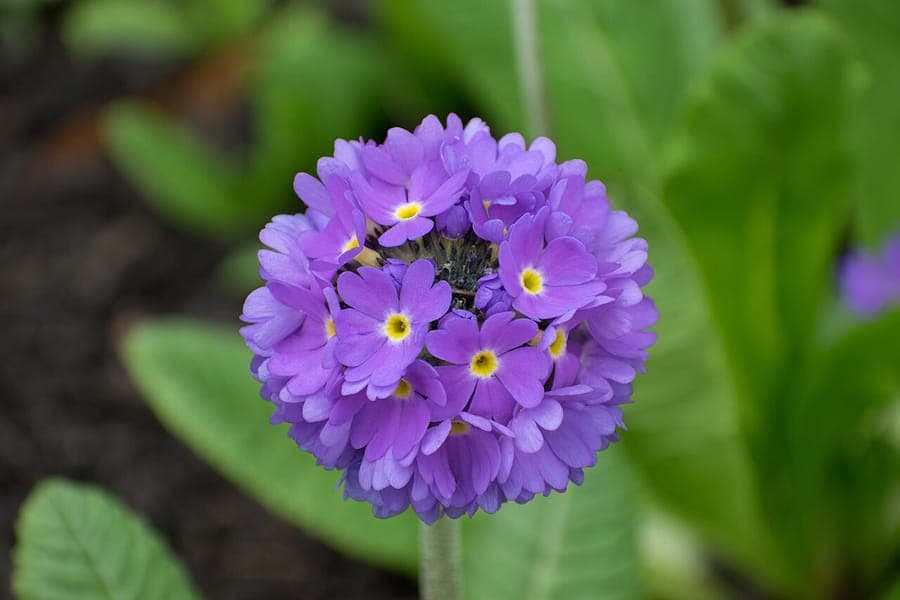
Thomas888b / CC BY-SA 4.0, via Wikimedia Commons
Drumstick primula: complete guide
Primula denticulata
¿Quieres ver Drumstick primula: complete guide en tu jardín?
1 minuto, sin tarjeta de crédito
Overview
Drumstick primula (Primula denticulata) is a striking spring bloomer from the Himalayan region, from Afghanistan to China. This alpine plant is renowned for its characteristic spherical flower clusters appearing in bright pink, purple, or white. The plant blooms early in the season, providing welcome color when other flowers still sleep. With its compact growth and abundant blooms, drumstick primula is essential for gardeners seeking spring harbingers.
Appearance and bloom
Drumstick primula reaches 30 to 50 centimeters tall. The characteristic flowers grow in dense, spherical clusters atop sturdy stems. Individual flowers are approximately 1 centimeter wide, varying from pale pink, fuchsia-purple to white, sometimes with yellow centers. Leaves are elongated, green, and rough-textured with fine teeth along margins. Blooming occurs March to May, depending on local climate and elevation.
Ideal location
Drumstick primula thrives in full sun to partial shade. Choose positions receiving morning sun with afternoon shade. This plant prefers cooler, slightly elevated locations. Avoid hot, dry spots with intense afternoon sun. The plant grows well beneath deciduous trees still leafless at bloom time. Plants in protected locations have better success rates. Morning sun and afternoon dappled shade is optimal.
Soil
Drumstick primula prefers nutrient-rich, moist but well-draining soil. A base of garden soil with additional organic matter such as peat moss or composted leaves works optimally. The plant grows better in somewhat moist (but not wet) soil. Heavy clay can be improved with sand and organic matter. Slightly acidic to neutral soil (pH 5.5 to 7) is ideal. Avoid waterlogging in winter months, which causes rot.
Diseño gratis
¿Quieres ver Drumstick primula: complete guide en tu jardín? Crea un diseño gratis ahora.
Watering
Drumstick primula requires regular moisture, especially during dry spring periods. Water when soil feels dry to several centimeters depth. Excess water must drain away to prevent root rot. During very hot periods (July-August), provide groundwater relief through mulching. Avoid spraying leaves, which promotes fungal issues. After blooming, watering can be reduced.
Maintenance
Maintenance is minimal. Remove spent flowers regularly for neatness. Leave seed sources if you desire seed collection. After blooming, plants may gradually fade during warm summers, which is normal. Mulch around plants helps retain moisture. Dividing plants after blooming can increase quantities.
Maintenance calendar
January-March: Preparation; ensure adequate moisture. March-May: Bloom period; support watering; remove spent flowers. June-July: Seed ripening; collect seed if desired. August-December: Summer dormancy; minimal watering; prepare for next bloom.
Winter hardiness
Drumstick primula is fully hardy in temperate to subalpine zones. The plant tolerates temperatures below -20 degrees Celsius. Overwintering in cold may actually benefit plants, as cold stimulates flowering. Ensure plants do not sit in collected water during winter. Extra mulch provides protection in severe winters, though usually unnecessary in moderate zones.
Companion plants
Drumstick primula pairs beautifully with other early bloomers. Group them together for impact, or plant alongside winter-blooming hellebores. Add snowdrops and crocuses for early color layers. This plant stands out in natural groupings with small-flowered ground covers. Combine in borders with late bloomers like hostas.
Closing thoughts
Drumstick primula is essential for gardeners desiring early spring color. With its striking spherical flowers and robust nature, it is a reliable alpine bloomer. Visit gardenworld.app for guides on spring bloomers and seasonal planting. Gardenworld.app helps you create gradual color development throughout seasons.
¿Quieres ver Drumstick primula: complete guide en tu jardín? Crea un diseño gratis ahora.
Sube una foto, elige un estilo y obtén un diseño fotorrealista con lista de plantas en menos de un minuto.
Más de 10.000 jardines diseñados
Sin tarjeta de crédito


Plantas similares
Primula incana: complete guide to silvery alpine primrose
Primula incana
Silvery primrose (Primula incana), a delicate alpine flower with white blooms and powdered grey-green leaves. Growing, care, and cultivation guide.
Mealy cowslip: complete guide
Primula pulverulenta
Grow the Mealy cowslip (Primula pulverulenta): striking candelabra flowers in red and purple tones, moisture-loving and ideal for shady, damp garden corners.
Cliff dwarf-primrose: complete guide
Androsace laevigata
Full guide to growing Androsace laevigata, a rare Pacific Northwest alpine cushion plant. Planting, care, and garden design tips explained.