
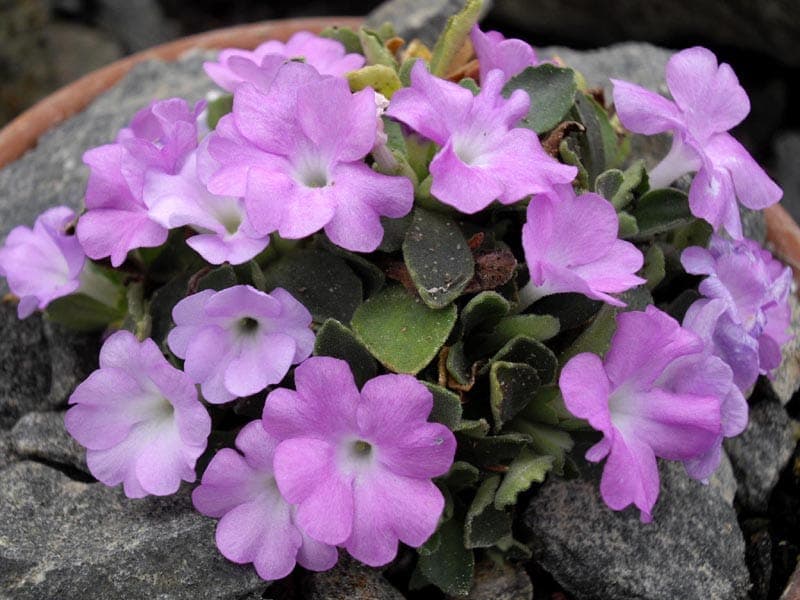
Ghislain118 http://www.fleurs-des-montagnes.net / CC BY-SA 3.0, via Wikimedia Commons
Allioni's primrose: complete guide
Primula allionii
¿Quieres ver Allioni's primrose: complete guide en tu jardín?
1 minuto, sin tarjeta de crédito
Overview
Allioni's primrose, scientifically known as Primula allionii, is a rare and precious alpine wildflower native to the southwestern Alps. This plant grows naturally on rocky slopes on the border between France and Italy, where it thrives in scree and rocky habitats. Formally described in 1809, it remains a treasure for alpine plant collectors worldwide.
This diminutive, compact plant offers exquisite pink-purple flowers in early spring. In gardens, it is a challenging but rewarding plant for dedicated gardeners who can create the specific growing conditions it demands.
Appearance & bloom cycle
Allioni's primrose is extremely compact, typically reaching only 5-10 cm in height. The leaves form tight, green rosettes pressed close to the ground. Individual leaves are small, linear, and subtly hairy.
The flowers are the true treasure: they emerge in early spring (March-May) in clusters of small, round blossoms ranging from pink to violet-purple tones. Each plant produces only a few flowers simultaneously, yet each bloom is precious in its delicate beauty.
After flowering, seed capsules develop. The plant largely enters dormancy during summer as temperatures warm and conditions dry.
Ideal location
Allioni's primrose requires a sunny to dappled shade position, with preference for morning sun. The plant naturally grows on steep, snowy mountain slopes where soil drains excellently.
Place the plant in an alpine trough, rock garden, or between stones in a wall. It thrives where air circulation is good and moisture stagnation is avoided.
In warmer climates (southern Europe), afternoon shade may be beneficial. It is crucial that the plant never sits in stagnant moisture. In cold alpine regions, full sun is acceptable.
Soil requirements
Allioni's primrose demands excellently draining, nutrient-poor soil. The plant naturally grows on stone and scree with minimal organic matter. You must create a growing medium that is very loose and free-draining.
Ideal soil mix:
- 50% sand and gravel
- 30% small stone chips
- 20% leaf mould or very lean garden compost
Soil pH should be neutral to slightly acidic (pH 6.5-7.0). Heavy clay must be absolutely avoided. If you live in heavy soil, grow the plant in an alpine trough with special mix.
Watering
Allioni's primrose needs regular water during the growing and flowering season (March-May). Water when the soil surface feels dry, typically once or twice weekly depending on weather. Always ensure perfect drainage.
Once flowering ends (May-June) and temperatures warm, the plant naturally dries out. This is normal and desirable; do not try to prevent it. In summer, water very sparingly or not at all.
In autumn, cautious watering can resume if you wish the plant to revive for the next season. This is optional and not always necessary.
Rainwater is preferable to tap water, especially in hard-water areas.
Diseño gratis
¿Quieres ver Allioni's primrose: complete guide en tu jardín? Crea un diseño gratis ahora.
Pruning
Allioni's primrose requires no traditional pruning. Gently remove dead leaves as you spot them, especially during the dormant summer period. This prevents moisture buildup and fungal issues.
Remove spent flowers optionally to maintain neat appearance and prevent seed set if you prefer.
The plant is too small and delicate for conventional pruning. Gentle handling is essential.
Maintenance calendar
January-February: Winter dormancy. Minimal maintenance required. Plant rests.
March-April: Growth resumes. Water with care. First flowers appear.
May: Peak flowering. Regular watering. Enjoy the precious blooms.
June: Flowering ends. Plant dries out naturally. This is normal, not alarming.
July-August: Summer dormancy. Plant largely dormant. Minimal or no watering.
September: Plant may be watered carefully for renewed growth.
October-November: Autumn growth possible. Prepare for winter.
December: Winter dormancy. Plant enters rest.
Winter hardiness
Allioni's primrose is exceptionally hardy, tolerating temperatures down to approximately -25 degrees Celsius. This makes it suitable for European gardens, even in mountainous regions with harsh winters.
Snow actually provides protection for the plant. It enters winter dormancy and largely disappears, but roots survive readily in the soil.
The real winter risk is not frost but moisture accumulation. In very wet winters, root rot can become problematic. Ensure excellent drainage to prevent this.
Companion plants
Allioni's primrose pairs well with other small alpine flora:
- Other Primula species: Primula auricula and Primula marginata form beautiful groupings.
- Saxifraga: Small saxifrages fit perfectly alongside.
- Sedum: Sedums like Sedum sarmentosum add contrast.
- Sempervivum tectorum: Mountain houseleek creates attractive foil.
- Armeria caespitosa: Tuft-forming sea pink thrives in identical conditions.
Combine these in alpine troughs or small rock gardens.
Conclusion
Allioni's primrose is a plant for the true alpine enthusiast, someone willing to work out the specific growing conditions. With precise drainage, careful water management, and the right soil mix, it is possible to grow and enjoy this rare jewel and its delightful spring flowers.
Seek this plant from specialized alpine nurseries. With proper care, it is a rewarding and satisfying addition to the alpine garden.
Discover more plant guides and design tips at gardenworld.app, where you can also find advice about building complete alpine gardens. This rare treasure deserves your attention!
¿Quieres ver Allioni's primrose: complete guide en tu jardín? Crea un diseño gratis ahora.
Sube una foto, elige un estilo y obtén un diseño fotorrealista con lista de plantas en menos de un minuto.
Más de 10.000 jardines diseñados
Sin tarjeta de crédito


Plantas similares
Primula incana: complete guide to silvery alpine primrose
Primula incana
Silvery primrose (Primula incana), a delicate alpine flower with white blooms and powdered grey-green leaves. Growing, care, and cultivation guide.
Mealy cowslip: complete guide
Primula pulverulenta
Grow the Mealy cowslip (Primula pulverulenta): striking candelabra flowers in red and purple tones, moisture-loving and ideal for shady, damp garden corners.
Cliff dwarf-primrose: complete guide
Androsace laevigata
Full guide to growing Androsace laevigata, a rare Pacific Northwest alpine cushion plant. Planting, care, and garden design tips explained.