
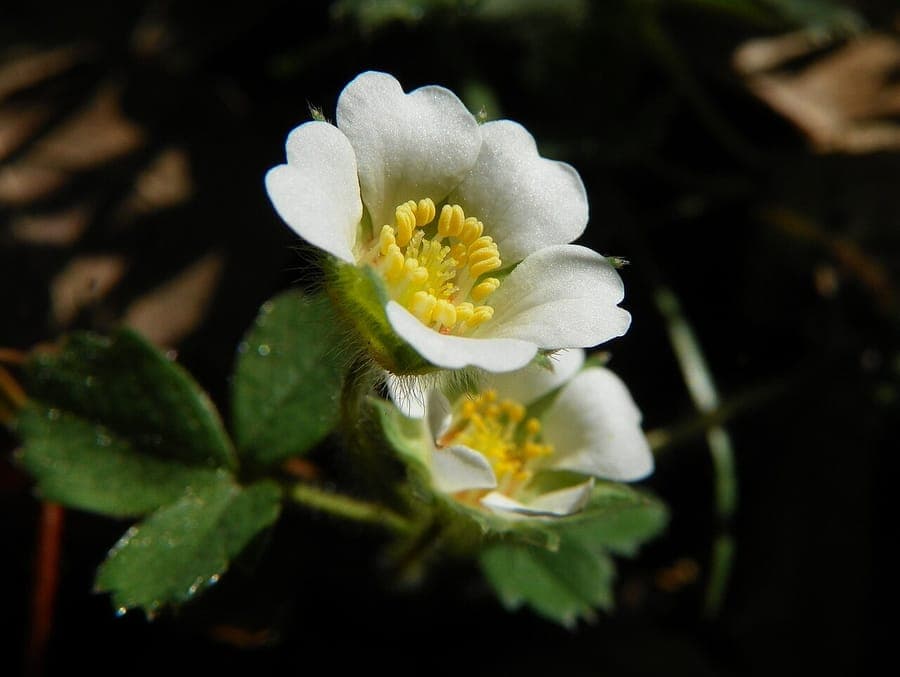
AnemoneProjectors (talk) / CC BY-SA 2.0, via Wikimedia Commons
Strawberryleaf Cinquefoil: complete guide to shade-tolerant groundcover
Potentilla sterilis
¿Quieres ver Strawberryleaf Cinquefoil: complete guide to shade-tolerant groundcover en tu jardín?
1 minuto, sin tarjeta de crédito
Overview
Strawberryleaf Cinquefoil, scientifically termed Potentilla sterilis, presents an elegant low-growing perennial resembling strawberries minus fruiting benefits. This Rosaceae family member forms attractive groundcover for shadier foretuin positions where many Potentilla species falter. Reaching merely 10-20 cm height with 45 cm spread, this plant excels in crevices, pathways, and awkward corners. Originally native to Eastern Canada and Europe, it thrives particularly in partial-shade scenarios where competing Potentilla-types show preference limitations.
Appearance & bloom cycle
Strawberry-resemblance proves defining: foliage comprises three crinkled leaflets roughly 2-3 cm long, deep green with textural roughness. Between these appear numerous diminutive yellow flowers (approximately 10 mm across) from April through June on delicate stems. Flowers appear less conspicuous than other Potentilla species, rendering this plant suitable for naturalistic garden designs. Post-bloom, characteristic "sterile" seedheads form (explaining nomenclature), producing non-viable seeds. Autumn often brings reddish-brown foliage colouration, providing seasonal interest.
Ideal location
Strawberryleaf Cinquefoil distinguishes itself through preference for partial shade. Whilst tolerating full sun, this plant feels most at home with 2-4 hours direct sun supplemented by dappled shade. This renders it ideal beneath deciduous trees, adjacent north-facing walls, or those persistently problematic corners where most plants struggle. It accepts full shade better than fellow Potentilla species, though flowering becomes minimal. Even in windswept locations, growth persists albeit slowly.
Soil requirements
Strawberryleaf Cinquefoil proves reasonably flexible regarding soil composition. It flourishes in clay, sand, and intermediary types, provided minimum acceptable drainage exists. Optimal pH spans 5.5 to 7.5. Notably: this plant accepts greater moisture variation than sibling Potentilla species, proving suitable for problematic shaded zones exhibiting higher water retention. Not bound to impoverished soils like certain Potentilla types: this specimen actually performs better in moderately fertile earth. Leaf mould or compost amendment promotes plant wellbeing.
Diseño gratis
¿Quieres ver Strawberryleaf Cinquefoil: complete guide to shade-tolerant groundcover en tu jardín? Crea un diseño gratis ahora.
Watering
During inaugural growing season, provide regular moisture preventing complete desiccation. After two years establishment, Strawberryleaf Cinquefoil accepts dry periods reasonably well, though consistent moisture yields optimal results. In shaded locations featuring reduced evaporation, water requirements decrease. Waterlogged winter conditions present problems, necessitating adequate drainage. This plant tolerates greater moisture than typical Potentilla whilst remaining non-aquatic.
Pruning
Pruning proves optional for form refinement. In March, trim congested sections with sharp pruners. Spent flowers require no removal. For fuller specimens, pinching emerging growth tips in late spring encourages branching. The plant self-seeds moderately, with occasional seedlings appearing for removal or relocation.
Maintenance calendar
March: inspect for dead material, optionally trim back. April-May: flowering period - enjoy it. June-September: minimal intervention, water during extreme dryness. October-February: no specific requirements. This represents genuinely hands-off horticulture.
Winter hardiness
Strawberryleaf Cinquefoil proves hardy to minimum -15°C, likely substantially colder. This presents no challenges throughout Britain or Northern Europe. Post-frost foliage may appear damaged but the plant survives intact.
Companion plants
Strawberryleaf Cinquefoil pairs attractively with shade-tolerant groundcovers including low Ferns or Creeping Bugle. For vertical variation in shadowy corners, consider Heart-leafed Saxifrage or dwarf Cyclamen. It grows admirably beneath rose shrubs or overhanging woodland canopy. Caution with aggressive groundcovers potentially overwhelming this species.
Conclusion
Strawberryleaf Cinquefoil solves a widespread problem: what establishes in those persistent shaded corners where standard Potentilla-types withdraw? This plant precisely excels there. With minimal maintenance demands and attractive seasonal appearance, it merits serious consideration. When designing shaded foretuin schemes using resources like gardenworld.app, you'll discover this plant repeatedly appearing in design suggestions. I number this amongst most useful low groundcovers for temperate European gardens. Source specimens from local suppliers - they typically stock it alongside shade-garden recommendations.
¿Quieres ver Strawberryleaf Cinquefoil: complete guide to shade-tolerant groundcover en tu jardín? Crea un diseño gratis ahora.
Sube una foto, elige un estilo y obtén un diseño fotorrealista con lista de plantas en menos de un minuto.
Sin tarjeta de crédito


Plantas similares
Siberian crab apple: complete guide
Malus x robusta
Complete guide to the Siberian crab apple (Malus x robusta): location, soil, pruning, winter hardiness and the best companion plants for your garden.
Chinese flowering crabapple (Malus x spectabilis): complete guide
Malus x spectabilis
Meet the Chinese flowering crabapple (Malus x spectabilis): a classic spring bloomer with carmine buds and pink blossom.
Potentilla crassinervia: complete guide
Potentilla crassinervia
Potentilla crassinervia, the Corsican cinquefoil, grows wild on Corsica and Sardinia's peaks. Discover how to grow this hardy alpine rock garden gem.