
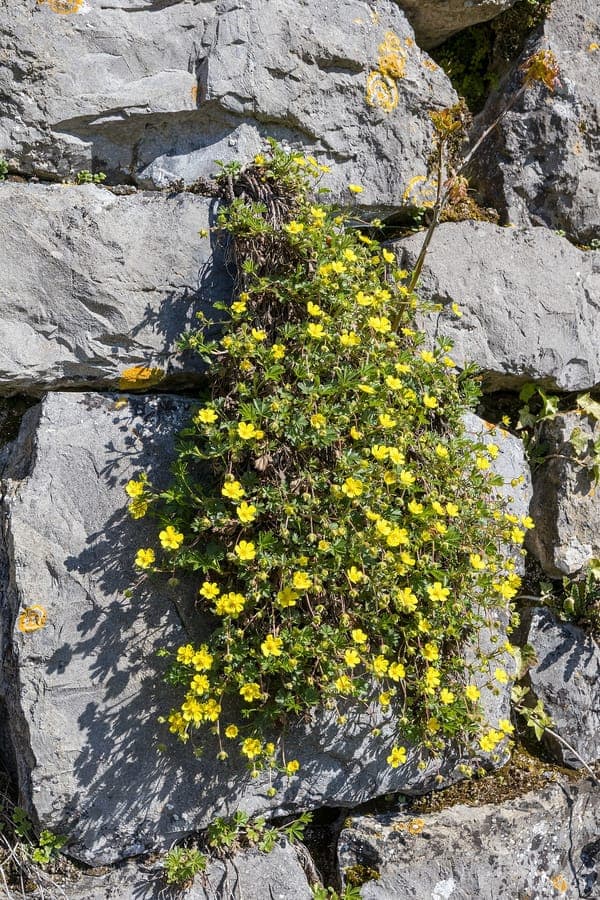
JackyM59 / CC BY-SA 4.0, via Wikimedia Commons
Spring cinquefoil: complete guide
Potentilla neumanniana
¿Quieres ver Spring cinquefoil: complete guide en tu jardín?
1 minuto, sin tarjeta de crédito
Overview
Spring cinquefoil (Potentilla neumanniana) is an early-blooming perennial from the rose family, distributed across Europe. This compact ground cover is perfect for rock gardens, edges, and alpine borders, where it provides an explosion of bright yellow flowers in early spring.
Appearance and bloom cycle
This low-growing Potentilla forms dense green mats to approximately 10-15 cm tall. Fine leaves are three-lobed (three sections per leaf), providing very delicate texture. From March through May, numerous small, bright yellow flowers emerge in rich clusters. The bloom is spectacular and prolific. After blooming, the plant remains attractive with its fine foliage.
Ideal location
Spring cinquefoil thrives best in full sun. At least 6 hours of direct sunlight daily is ideal. In full sun, blooming is most abundant. The plant also grows reasonably well in half-shade, but flowering becomes sparse. Excellent for sunny edges, roof gardens and rocky areas with abundant light.
Soil requirements
Well-draining soil is essential. Poor to moderately nutrient-rich soils work well; this plant actually prefers moderate growth. For heavy clay: mix in sand or gravel. pH 6.0-7.5 is ideal. This plant thrives even in very poor, rocky soils. No extra feeding needed.
Watering
Once established, Spring cinquefoil is extremely drought-tolerant. Water only during prolonged dry periods or in container culture. Normal rainfall suffices in open ground. Excessive water is harmful; avoid water pooling. During peak growth (March-May), supplemental water can help, but is not essential.
Diseño gratis
¿Quieres ver Spring cinquefoil: complete guide en tu jardín? Crea un diseño gratis ahora.
Pruning and maintenance
Minimal care needed. After blooming (June), light shearing or cutting can promote compactness. This also encourages denser growth. Fading plant parts can be gently removed from the mat. No fertilizing needed; plant maintains its own shape.
Maintenance calendar
- February: Check for winter damage; remove old foliage
- March-May: Enjoy blooms; minimal water during dry periods
- June: After blooming, light prune for form
- July-October: Minimal care; enjoy foliage
- November-January: Plant rests; keep dry
Winter hardiness
Spring cinquefoil is excellently winter-hardy to approximately -25°C (USDA zone 4-5). Winter protection is not needed in temperate regions. Remains evergreen year-round and is extremely frost-hardy.
Companion plants
Spring cinquefoil combines beautifully with:
- Other alpine Potentilla species for staggered seasons
- Pulsatilla for purple contrast
- Dianthus alpinus for supplementary blooms
- Sedum for textural contrast
- Arabis alpina for white flowers
GardenWorld tip: Plant in dense groups of 5-7 for maximum effect. Combine in rock gardens with other spring-blooming alpines.
Closing thoughts
Spring cinquefoil proves that small does not mean inconspicuous - these tiny yellow artists fill every rock garden and alpine border with early-season drama. Once established, this plant requires virtually no maintenance and blooms year after year. Try this European beauty for guaranteed spring joy.
GardenWorld can help design alpine gardens filled with spring color. Visit gardenworld.app for additional rock garden planting combinations and design inspiration.
¿Quieres ver Spring cinquefoil: complete guide en tu jardín? Crea un diseño gratis ahora.
Sube una foto, elige un estilo y obtén un diseño fotorrealista con lista de plantas en menos de un minuto.
Sin tarjeta de crédito


Plantas similares
Siberian crab apple: complete guide
Malus x robusta
Complete guide to the Siberian crab apple (Malus x robusta): location, soil, pruning, winter hardiness and the best companion plants for your garden.
Chinese flowering crabapple (Malus x spectabilis): complete guide
Malus x spectabilis
Meet the Chinese flowering crabapple (Malus x spectabilis): a classic spring bloomer with carmine buds and pink blossom.
Potentilla crassinervia: complete guide
Potentilla crassinervia
Potentilla crassinervia, the Corsican cinquefoil, grows wild on Corsica and Sardinia's peaks. Discover how to grow this hardy alpine rock garden gem.