
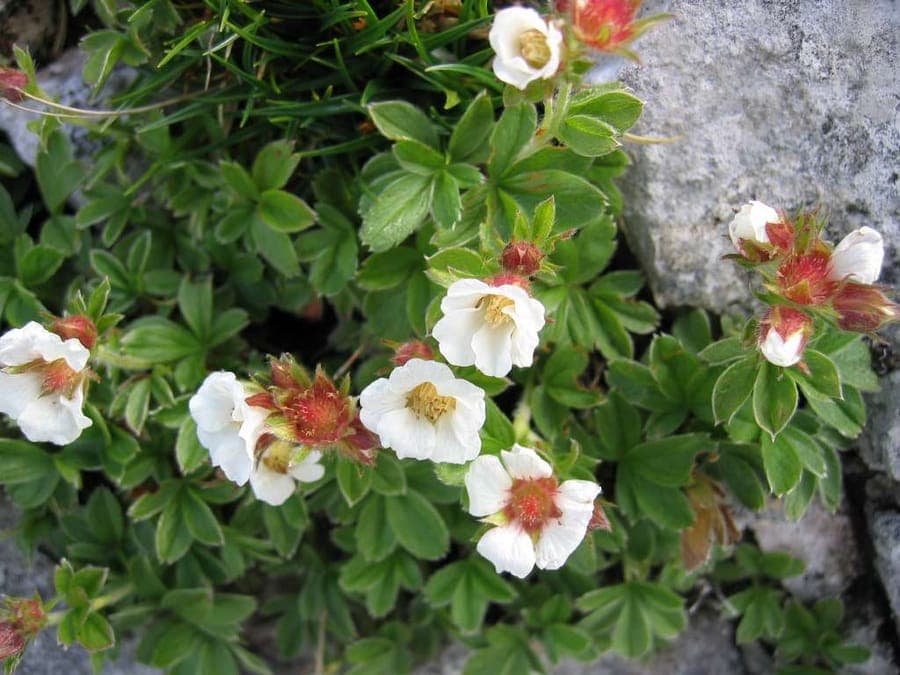
Tigerente / CC BY-SA 3.0, via Wikimedia Commons
Potentilla clusiana: complete guide to Clusius fingerkraut
Potentilla clusiana
¿Quieres ver Potentilla clusiana: complete guide to Clusius fingerkraut en tu jardín?
1 minuto, sin tarjeta de crédito
Overview
Potentilla clusiana, commonly known as Clusius fingerkraut or alpine Potentilla, is an elegant, low-growing alpine plant originating from central Europe, particularly from the Alps. This member of the Rosaceae family (rose family) is a favorite among alpine gardeners because of its compact growth, bright yellow flowers, and preference for chalky soil. For gardeners with steep slopes, rock gardens, or alpine troughs, Potentilla clusiana is a prime candidate.
This plant grows as a tight, low-growing mat typically reaching only 5-15 cm in height. It is widely used in alpine collections and scree gardens. Potentilla clusiana offers both botanical interest (as an alpine specialist) and practical benefits (ground coverage, bird food).
Appearance and Bloom
Potentilla clusiana possesses characteristic Potentilla leaves arranged in rosettes. The leaves are small, approximately 0.5-2 cm long, and typically have five fingers (hence 'fingerkraut'). Each leaf segment is purplish to glaucous colored with silvery-gray hairiness, particularly striking in spring.
The leaves form very dense, compact growing mats that rise little above ground level. This growth pattern makes it perfect for scree gardens and troughs where height is limited.
Blooming occurs during summer (June-September) with bright yellow flowers approximately 1-2 cm in diameter. These flowers are produced in considerable numbers above the leafy mat, providing a spectacular yellow display. The flowers are five-petaled (typical for Potentilla) with orange-yellow stamens in the center.
Following bloom, small seeds form. These are not particularly showy but aid in self-seed dispersal.
Ideal Location
Potentilla clusiana thrives in full sun to light half-shade, preferring minimum 6 hours of direct sunlight. In too much shade, the plant becomes more open in growth and blooming is less prolific.
Wind tolerance is excellent; the plant is originally an alpine specialist accustomed to windy mountain environments. This makes it suitable for windy garden situations.
Altitude simulation: The plant grows best in cool environments. In warm, low-elevation areas, the plant may grow less vigorously, though it still thrives.
Soil
Potentilla clusiana strongly prefers alkaline soil. This is non-negotiable; in acidic soils, the plant performs much less well. Soil pH should ideally be 7.5-8.0, though pH to 7.2 is still acceptable.
Grain size: Excellent drainage is critical. The plant CANNOT grow in waterlogged conditions; good drainage is essential. Scree, gravel, sand, and small stone mixes are perfect. Heavy clay is unsuitable without significant drainage improvement.
Fertility: Poor soils are actually beneficial; very nutrient-rich soils can cause excessive growth without flowering.
Diseño gratis
¿Quieres ver Potentilla clusiana: complete guide to Clusius fingerkraut en tu jardín? Crea un diseño gratis ahora.
Watering
Once established, Potentilla clusiana requires minimal to moderate water. The plant tolerates dry conditions excellently. Overwatering is the chief cause of failure; wet feet lead to root rot.
Watering must be minimal, especially during normal rainfall seasons. In very dry periods, some water can help, but overall dry conditions should be aimed for.
Mulching: No organic mulch is recommended due to rot risk. Instead, use gravel mulch around the plant.
Pruning
Potentilla clusiana requires no pruning for healthy growth. The plant naturally develops an attractive, compact form. Deadheading (removal of spent flower heads) can be done to extend flowering.
Old plant material can be gently removed if it appears dead, though care is needed not to damage healthy parts.
Maintenance Calendar
Spring (March-May): Inspection for winter damage. Very light pruning of dead material. No watering usually needed.
Summer (June-September): Enjoy blooming. Deadhead spent flowers. Monitor for drought stress (rarely needed). Inspect for rot problems.
Fall (September-October): No feeding. Prepare for winter. Mulch inspection.
Winter (November-February): Minimal activity. Drainage inspection. Frost damage check.
Winter Hardiness
Potentilla clusiana is extremely winter hardy, thriving in USDA hardiness zones 3B through 7. This means it grows in very cold areas. The plant hails from the alpine region and is accustomed to severe winter conditions.
Frost damage is usually not a problem; the plant is innately frost-resistant. However, wet feet in winter can be more dangerous than frost.
Companion Plants
Potentilla clusiana combines well with other alpine Potentilla species such as Potentilla nitida and Potentilla crantzii. Complementary alpine partners include Saxifraga paniculata (Livelong saxifrage) for white contrast, Dianthus alpinus (Alpine carnation) for red flowers, and Sempervivum species (Houseleeks) for structure.
Groundcovers such as Achillea tomentosa (Woolly yarrow) grow well in similar conditions. For spring interest, Adonis vernalis combines well.
Closing
Potentilla clusiana deserves recognition as a valuable, easy-to-grow alpine plant for alkaline soil and well-drained situations. With its dense, compact growth, bright yellow flowers, and minimal maintenance requirements, it offers years of beauty. Seek inspiration on gardenworld.app for alpine gardening solutions. Visit your local alpine plant specialist or garden center for quality plant material and expert advice.
Whether you're filling an alpine trough or establishing an alpine scree garden, Potentilla clusiana delivers annual bloom and visual charm. Start your alpine garden transformation today on gardenworld.app.
¿Quieres ver Potentilla clusiana: complete guide to Clusius fingerkraut en tu jardín? Crea un diseño gratis ahora.
Sube una foto, elige un estilo y obtén un diseño fotorrealista con lista de plantas en menos de un minuto.
Más de 10.000 jardines diseñados
Sin tarjeta de crédito


Plantas similares
Siberian crab apple: complete guide
Malus x robusta
Complete guide to the Siberian crab apple (Malus x robusta): location, soil, pruning, winter hardiness and the best companion plants for your garden.
Chinese flowering crabapple (Malus x spectabilis): complete guide
Malus x spectabilis
Meet the Chinese flowering crabapple (Malus x spectabilis): a classic spring bloomer with carmine buds and pink blossom.
Potentilla crassinervia: complete guide
Potentilla crassinervia
Potentilla crassinervia, the Corsican cinquefoil, grows wild on Corsica and Sardinia's peaks. Discover how to grow this hardy alpine rock garden gem.