
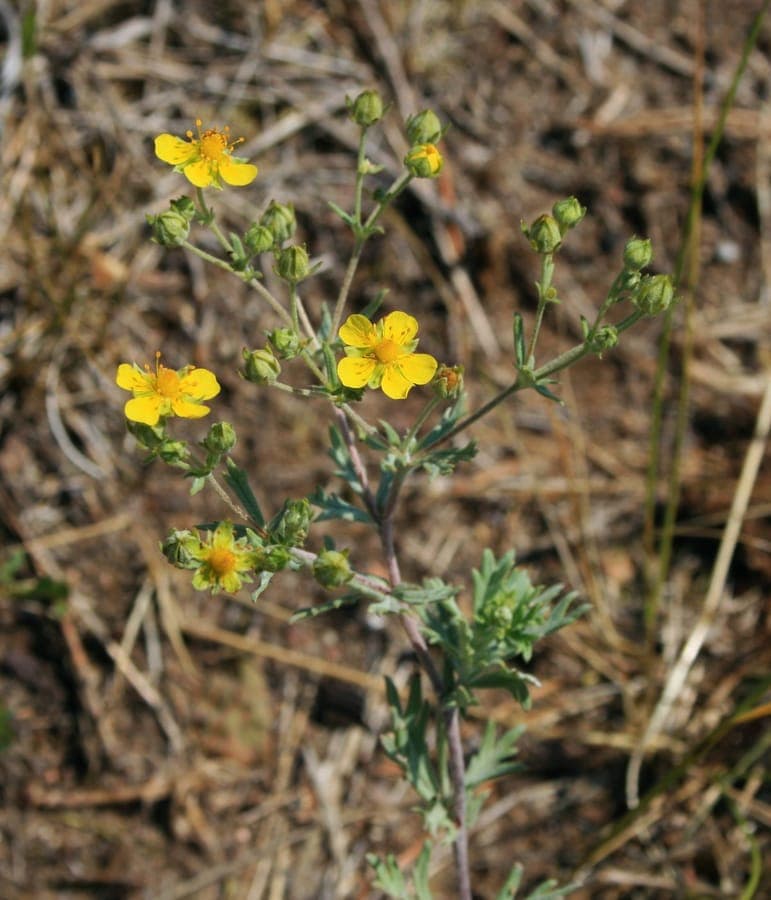
Franz Xaver / CC BY-SA 3.0, via Wikimedia Commons
Hoary Cinquefoil: complete guide to silver-leaved groundcover
Potentilla argentea
¿Quieres ver Hoary Cinquefoil: complete guide to silver-leaved groundcover en tu jardín?
1 minuto, sin tarjeta de crédito
Overview
Hoary Cinquefoil, botanically Potentilla argentea, is a remarkably low-growing perennial distinguished primarily by its characteristic silvery-grey foliage. This Rosaceae family member likely represents the most drought-tolerant of commonly cultivated Potentilla species and thrives specifically in poor, dry soils. Reaching 15-30 cm height with 45-60 cm spread, this plant develops a pleasing form requiring minimal intervention. Wide distribution across Europe and Asia affirms its status as a champion in difficult conditions.
Appearance & bloom cycle
Hoary Cinquefoil earns its name justifiably: the foliage displays pronounced silver-grey colouration from fine hairiness, especially evident during dry conditions. During wetter periods, leaves take on greenish tones whilst retaining characteristic silvering. Flowers appear yellow, small (12-15 mm), and abundant in groupings from June through September. Leaves comprise 5-7 leaflets arranged densely, creating compact, water-conserving growth. Arguably the most attractive aspect involves persistent silvery foliage throughout winter dormancy, contributing valuable colour to the winter garden.
Ideal location
Sunlight proves absolutely critical for Hoary Cinquefoil. This plant performs poorly with fewer than 6 hours direct sun daily. Full sun exposure (8+ hours) remains preferable, where silvery effects optimise perfectly. Partially shaded positions yield greyed foliage rather than true silver, whilst full shade prevents meaningful growth. South to southwest exposures prove ideal. The plant tolerates substantial wind, rendering it suitable for exposed front gardens.
Soil requirements
Here Hoary Cinquefoil truly excels: thriving optimally in impoverished, dry, extremely well-draining soil. Rich soils yield inferior growth and potential disease susceptibility. Ideal soil comprises sandy to gravelly compositions with minimal organic matter. pH between 6.5 and 7.5 suits perfectly, though alkaline soils also work acceptably. Within conventional garden loam it performs disappointingly unless maintained deliberately poor and dry. Many gardeners establish this Potentilla in paving crevices or rocky settings.
Diseño gratis
¿Quieres ver Hoary Cinquefoil: complete guide to silver-leaved groundcover en tu jardín? Crea un diseño gratis ahora.
Watering
Once established, supplemental watering proves nearly pointless. During the inaugural growing season, water only when soil becomes completely desiccated. After two years, moisture becomes largely unnecessary even during summers with restricted rainfall. Excessive watering proves detrimental, causing rot or subnormal development. Wet years present challenges, making excellent drainage management essential. This genuinely represents a plant for sparse, difficult situations.
Pruning
Pruning remains virtually unnecessary. The plant grows slowly and naturally maintains neat form. Remove only dead or damaged material during spring. Spent flowers require no removal, as the plant self-seeds readily. Essentially: allow this plant complete autonomy.
Maintenance calendar
April: verify sustained drainage. May-August: observe for pests (rare). September: no specific interventions. October-March: complete dormancy. This represents genuinely minimal-maintenance gardening.
Winter hardiness
Hoary Cinquefoil proves extremely cold-hardy to -20°C or beyond. This poses no concern throughout Britain or Northern Europe. Even in severe Scandinavian winters this plant thrives unharmed. Hairy foliage provides some frost protection.
Companion plants
Hoary Cinquefoil pairs attractively with fellow drought-lovers occupying similar niches, including Stonecrop, Geranium, and other silver-foliaged groundcovers. Caution advisable combining species with standard moisture requirements: mutual interference results. Preference leans toward monocultural schemes or associations with equally drought-tolerant companions.
Conclusion
Where you possess genuinely dry, poor, intensely sunny locations, Hoary Cinquefoil probably represents your finest option. This plant demands virtually no maintenance, accepts adversity that would defeat other species, whilst providing attractive silvery character. For garden design challenges featuring truly scorching and desiccated zones, tools like gardenworld.app demonstrate this plant as standard solution. I unreservedly recommend this specimen. Source from your local garden centre where knowledgeable staff can confirm soil suitability before purchase.
¿Quieres ver Hoary Cinquefoil: complete guide to silver-leaved groundcover en tu jardín? Crea un diseño gratis ahora.
Sube una foto, elige un estilo y obtén un diseño fotorrealista con lista de plantas en menos de un minuto.
Más de 10.000 jardines diseñados
Sin tarjeta de crédito


Plantas similares
Siberian crab apple: complete guide
Malus x robusta
Complete guide to the Siberian crab apple (Malus x robusta): location, soil, pruning, winter hardiness and the best companion plants for your garden.
Chinese flowering crabapple (Malus x spectabilis): complete guide
Malus x spectabilis
Meet the Chinese flowering crabapple (Malus x spectabilis): a classic spring bloomer with carmine buds and pink blossom.
Potentilla crassinervia: complete guide
Potentilla crassinervia
Potentilla crassinervia, the Corsican cinquefoil, grows wild on Corsica and Sardinia's peaks. Discover how to grow this hardy alpine rock garden gem.