
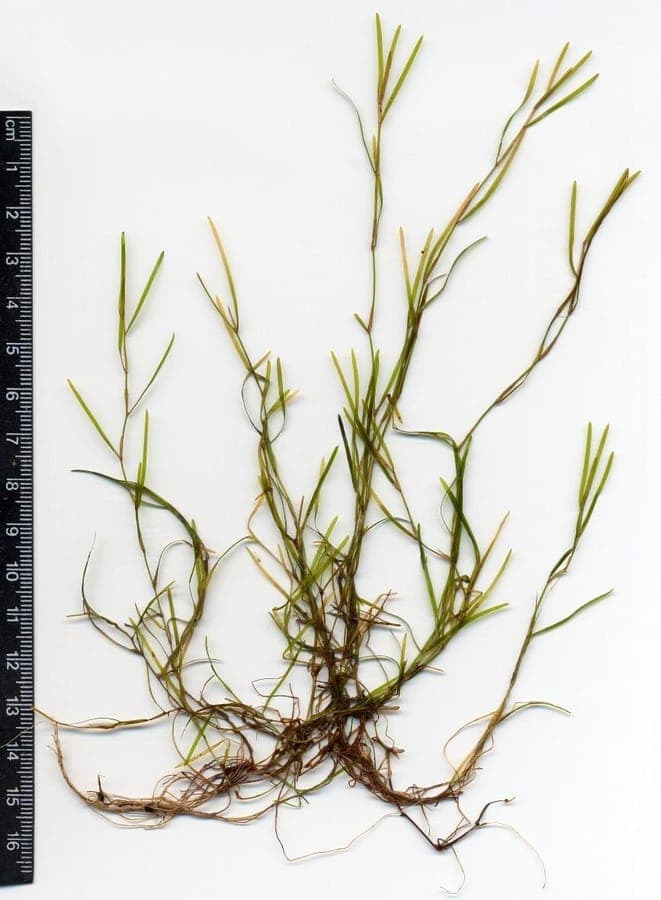
Christian Fischer / CC BY-SA 3.0, via Wikimedia Commons
Lesser pondweed: complete guide
Potamogeton pusillus
¿Quieres ver Lesser pondweed: complete guide en tu jardín?
1 minuto, sin tarjeta de crédito
Overview
Lesser pondweed (Potamogeton pusillus) is a compact submerged plant found worldwide. This highly adaptable plant thrives in diverse water environments, from small ponds to large water systems. With its delicate, slender leaves and low growth profile, it is ideal for gardeners seeking clean, balanced water environments. The plant plays a crucial role in oxygen production and algae control while creating a soothing underwater landscape for aquatic life.
Appearance and bloom
Lesser pondweed features thin, ribbon-like leaves measuring only 2 to 6 millimeters wide and up to 5 centimeters long. The leaves are finer than most pondweeds, giving the plant an elegant, airy appearance. Growth occurs entirely underwater, with occasional tiny flowers reaching the surface. These flowers are extremely small and inconspicuous but essential for seed production. The plant forms no dense mass and remains visibly transparent, creating a natural pond aesthetic.
Ideal location
Lesser pondweed grows optimally in clean water with good visibility year-round. Position the plant in zones with moderate light, as excessive shade inhibits growth. This submerged plant thrives in still or slowly flowing water. Anchor it firmly to soft substrate where water circulation is good. For smaller ponds and aquariums, this is an excellent choice due to its compact size and minimal space requirements.
Soil
Lesser pondweed is undemanding regarding soil quality. A basic mixture of garden soil and sand suffices completely. For improved growth, add nutrient-rich silt that slowly releases nutrients. The plant can grow directly in pond bottoms or in small pots for easy relocation. Organic material stimulates root development without excessive nutrient loading. The plant itself contributes to improving water nutrients.
Diseño gratis
¿Quieres ver Lesser pondweed: complete guide en tu jardín? Crea un diseño gratis ahora.
Watering
As a submerged plant, lesser pondweed requires consistently clean water. Perform regular water changes of 15 to 25 percent monthly depending on contamination. Maintain pH between 6 and 7. The plant tolerates soft and hard water without issues. Ensure water currents remain gentle, as strong flows can damage young leaves. Supplemental feeding promotes growth, especially in nutrient-poor systems.
Maintenance
Maintenance of lesser pondweed is very minimal. Regularly remove dead or brown leaves. Check the plant weekly for algae growth blocking light. In aquariums, monitor monthly for debris accumulation. Pruning is rarely required, though you can gently trim overgrown sections. This plant requires no hibernation and grows year-round.
Maintenance calendar
Year-round: Weekly check for algae growth and leaf health. Remove dead parts immediately. Monthly water quality testing. Quarterly feeding for optimal growth. During warm seasons, increase water changes due to faster decomposition. During cold seasons, reduce feeding due to lower metabolism.
Winter hardiness
Lesser pondweed is hardy in temperate zones. If the pond freezes, the plant survives protected under ice. In very cold regions (below -15 degrees Celsius), prolonged ice can be harmful. In areas with harsh winters, move pots indoors where water does not freeze. The plant can survive extended periods without light during overwintering, though some light helps maintain health.
Companion plants
Lesser pondweed pairs ideally with other small submerged plants. Combine with water pest for dense foliage. Add oxygen producers for aquatic health. Position alongside floating plants like water lilies for layered design. This plant produces oxygen and keeps water pure for all aquatic life.
Closing thoughts
Lesser pondweed is essential for every pond or aquarium because it produces oxygen and controls algae naturally. With its fine texture, it creates a natural, elegant underwater environment. Visit gardenworld.app for more guides on submerged aquatic plants and water garden planning. Gardenworld.app provides complete instructions for water gardens of all sizes and complexity levels.
¿Quieres ver Lesser pondweed: complete guide en tu jardín? Crea un diseño gratis ahora.
Sube una foto, elige un estilo y obtén un diseño fotorrealista con lista de plantas en menos de un minuto.
Más de 10.000 jardines diseñados
Sin tarjeta de crédito


Plantas similares
Robbins' pondweed: complete guide
Potamogeton robbinsii
Complete care guide for Potamogeton robbinsii, the submerged aquatic plant perfect for wildlife ponds and natural water gardens.
Flatstem pondweed: complete guide
Potamogeton zosteriformis
Complete care guide for Potamogeton zosteriformis, the flatstem pondweed perfect for clear freshwater ponds and naturalistic water gardens.
Largeleaf pondweed: complete guide
Potamogeton amplifolius
Everything about largeleaf pondweed (Potamogeton amplifolius): pond cultivation, water depth, substrate, care calendar and ecological role in garden ponds.