
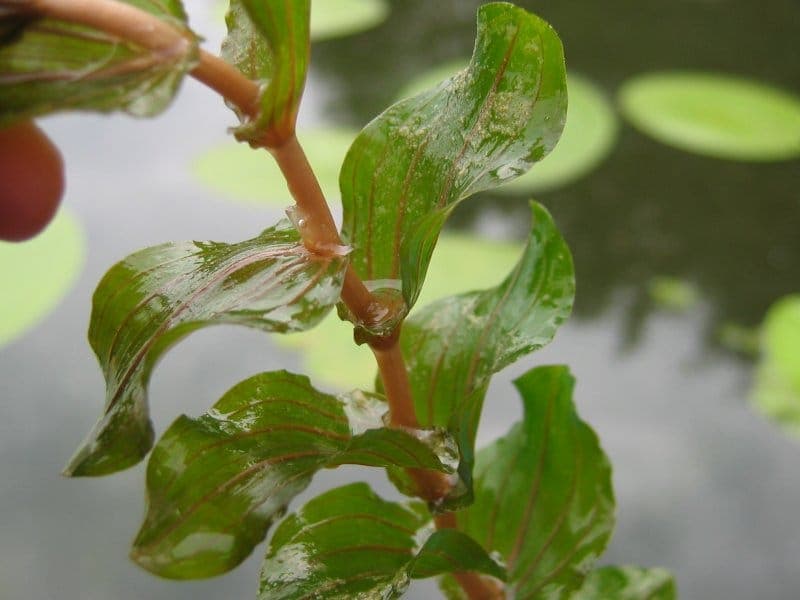
Kristian Peters -- Fabelfroh 08:58, 11 October 2006 (UTC) / CC BY-SA 3.0, via Wikimedia Commons
Perfoliate Pondweed: complete guide
Potamogeton perfoliatus
¿Quieres ver Perfoliate Pondweed: complete guide en tu jardín?
1 minuto, sin tarjeta de crédito
Overview
Perfoliate Pondweed (Potamogeton perfoliatus) is a submerged aquatic plant with a vast distribution extending from temperate Europe to South and Southeast Asia. This species is distinguished by its characteristic leaves that clasp around the stem, making it a visually interesting addition to water garden designs. The plant plays a significant role in aquatic ecosystems by producing oxygen and providing food for aquatic wildlife.
Appearance and Flowering
The most striking feature of Perfoliate Pondweed is the leaves that clasp around the stem, with the stem perforating the leaf base - hence the name. The leaves are sessile (without petioles), ovate to heart-shaped, averaging 1-4 cm in length. The plant reaches heights of 30-100 cm in aquatic conditions.
The plant produces small greenish flowers in dense spikes emerging above water from July through October. These modest flowers support numerous insect species.
Ideal Location
This plant thrives in larger water bodies ranging from 0.5 to 3 meters in depth. It grows under diverse conditions, from clear alpine lakes to turbid rivers. Perfoliate Pondweed tolerates full sun to partial shade, though light-rich conditions optimize growth.
The plant is widely used in aquaria due to its elegant appearance and easy cultivation.
Substrate Requirements
Perfoliate Pondweed grows in sandy, silty, and gravelly substrates. Plant directly in pond-bottom substrate without specialized potting. The plant is highly adaptable to varying nutrient levels, from oligotrophic (nutrient-poor) to eutrophic (nutrient-rich) waters.
The plant assists water improvement by absorbing excess nutrients from the water column.
Diseño gratis
¿Quieres ver Perfoliate Pondweed: complete guide en tu jardín? Crea un diseño gratis ahora.
Water Management
As a fully submerged plant, no traditional watering is required. In artificial water environments, ensure regular water circulation and aeration. The plant thrives with moderate water movement.
Water parameters: pH 6.0-7.5, dissolved oxygen at least 5 mg/liter, optimal water temperature 10-20 degrees Celsius.
Pruning
Minimal pruning needed in natural conditions. Occasionally remove old or damaged leaves and stems. In aquaria, pruning maintains compact growth form.
Guideline: trim no more than one-third of the plant monthly to minimize stress.
Maintenance Calendar
April-May: Check growth and nutrient levels. Encourage new shoots. June-August: Monitor water conditions and oxygen production. September-October: Enjoy flowering and waterfowl activity. November-March: Minimal activity; verify water temperature and pH.
Winter Hardiness
Perfoliate Pondweed is hardy in temperate zones (USDA 5-9) and thrives to temperatures of -10 degrees Celsius. Reduced winter growth is a normal survival strategy.
Companion Plants
Combine in water gardens with:
Water Mint (Mentha aquatica) for margin softening Duckweed (Lemna) for microhabitats Common reed (Phragmites) at margins Filamentous algae for oxygen generation Aquatic snails for biological control
This combination creates complete aquatic habitat architecture.
Closing Thoughts
Perfoliate Pondweed is a versatile, attractive aquatic plant highly suitable for larger water features and aquarium environments. Its elegant foliage and ecological benefits make it an excellent choice for sustainable water garden designs.
Obtain from aquatic plant suppliers. For additional water gardening ideas, visit gardenworld.app.
¿Quieres ver Perfoliate Pondweed: complete guide en tu jardín? Crea un diseño gratis ahora.
Sube una foto, elige un estilo y obtén un diseño fotorrealista con lista de plantas en menos de un minuto.
Más de 10.000 jardines diseñados
Sin tarjeta de crédito


Plantas similares
Robbins' pondweed: complete guide
Potamogeton robbinsii
Complete care guide for Potamogeton robbinsii, the submerged aquatic plant perfect for wildlife ponds and natural water gardens.
Flatstem pondweed: complete guide
Potamogeton zosteriformis
Complete care guide for Potamogeton zosteriformis, the flatstem pondweed perfect for clear freshwater ponds and naturalistic water gardens.
Largeleaf pondweed: complete guide
Potamogeton amplifolius
Everything about largeleaf pondweed (Potamogeton amplifolius): pond cultivation, water depth, substrate, care calendar and ecological role in garden ponds.