
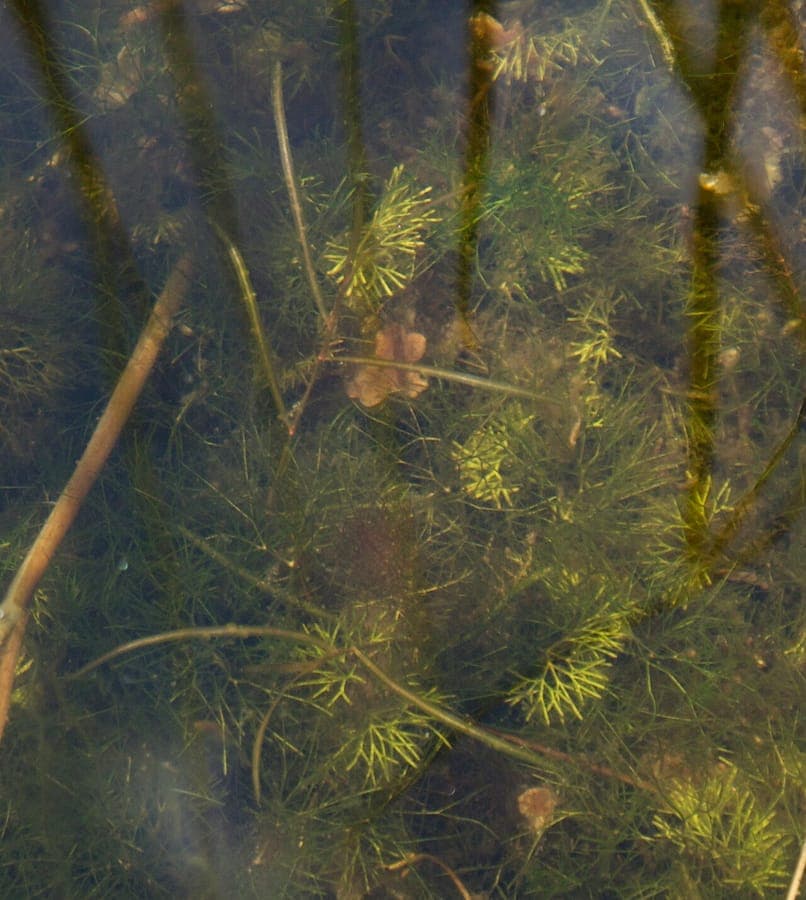
Tristan He / CC BY-SA 4.0, via Wikimedia Commons
Small pondweed: complete guide
Potamogeton berchtoldii
¿Quieres ver Small pondweed: complete guide en tu jardín?
1 minuto, sin tarjeta de crédito
Overview
Small pondweed, scientifically Potamogeton berchtoldii, is a compact submerged plant offering considerable value for ponds and aquatic habitats. This small species features delicate, densely-packed leaves creating a silky appearance beneath water. Despite modest size, it plays an important role in water purification and nourishing aquatic fauna.
This species is closely related to other pondweeds yet distinguished by particularly small leaves. Small pondweed is hardy, non-invasive, and perfect for gardeners wanting a delicate underwater landscape without rapid growth concerns.
Appearance and bloom
Small pondweed grows as dense, fine vegetation featuring very narrow, thread-like leaves typically 1-2 millimetres wide. Plants rarely exceed 30-60 centimetres height. Dark green leaves are stiff and spirally arranged around the stem.
Bloom occurs subtly during June-August with tiny, green flower spikes emerging above water. Following pollination, minute fruits develop. The delicate, fine texture makes this plant aesthetically attractive in aquatic landscapes.
Ideal location
Small pondweed thrives in moderately deep water, 30-100 centimetres depth. The plant grows well in clean water with abundant light, though it functions in partial shade. Avoid very deep water where insufficient light penetrates.
In garden ponds, position small pondweed on intermediate shelves, not at maximum depths. The plant performs better in clean, gently moving water. Four to six hours of light daily is optimal.
Soil requirements
Small pondweed grows in clean, nutrient-poor substrates. Sand and gravel are ideal. In garden ponds, plant specimens in aquatic planting baskets with fine sand or aquatic potting mix.
The plant functions entirely submerged without substrate in open water. In still ponds, some anchorage provides useful stability.
Diseño gratis
¿Quieres ver Small pondweed: complete guide en tu jardín? Crea un diseño gratis ahora.
Watering
As an aquatic plant, small pondweed requires no traditional watering. The aquatic environment provides constant moisture. However, water quality remains critical. Ensure regular water changes or filtration for healthy nutrient levels. Maintain sufficient oxygen - avoid positioning in dead water corners. Prevent algal growth that would shade the plant.
In aquaria, regular water maintenance is essential. In natural ponds, ensure water remains clear and free from stagnation.
Pruning
Small pondweed requires no pruning, though you may remove old or damaged portions. The plant grows compact and rarely becomes excessive. Remove only damaged leaves.
The plant is generally very low-maintenance.
Maintenance calendar
May-June: Install plants at appropriate depth.
July-August: Flowering period. Active growth continues.
September-October: Growth slows with cooling. Monitor water quality.
November-March: Dormancy period. Minimal maintenance needed.
Winter hardiness
Small pondweed is extremely hardy. In temperate European climates, it survives winters without difficulty. The plant functions well beneath ice.
Companion plants
Small pondweed pairs well with other fine aquatic plants. Plant alongside other aquatic grasses like water crowfoot. Combine with larger plants for textural variety.
Closing
Small pondweed deserves a place in every pond. Delicate, hardy, and low-maintenance: this plant merits greater attention. Begin with a few specimens. For water garden design inspiration, visit gardenworld.app.
¿Quieres ver Small pondweed: complete guide en tu jardín? Crea un diseño gratis ahora.
Sube una foto, elige un estilo y obtén un diseño fotorrealista con lista de plantas en menos de un minuto.
Más de 10.000 jardines diseñados
Sin tarjeta de crédito


Plantas similares
Robbins' pondweed: complete guide
Potamogeton robbinsii
Complete care guide for Potamogeton robbinsii, the submerged aquatic plant perfect for wildlife ponds and natural water gardens.
Flatstem pondweed: complete guide
Potamogeton zosteriformis
Complete care guide for Potamogeton zosteriformis, the flatstem pondweed perfect for clear freshwater ponds and naturalistic water gardens.
Largeleaf pondweed: complete guide
Potamogeton amplifolius
Everything about largeleaf pondweed (Potamogeton amplifolius): pond cultivation, water depth, substrate, care calendar and ecological role in garden ponds.