
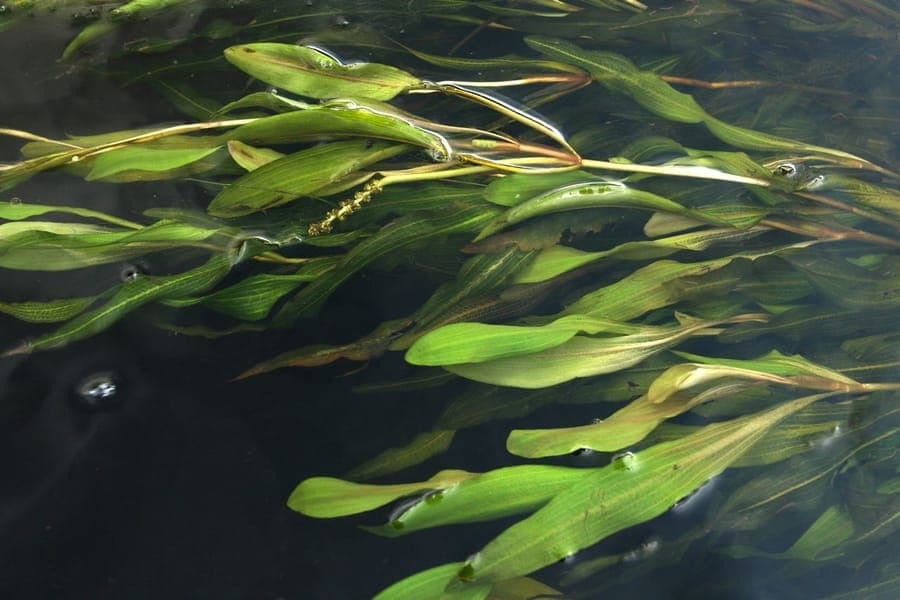
Alexander Bobrov / CC BY 3.0, via Wikimedia Commons
Alpine Pondweed: complete guide
Potamogeton alpinus
¿Quieres ver Alpine Pondweed: complete guide en tu jardín?
1 minuto, sin tarjeta de crédito
Overview
Alpine Pondweed (Potamogeton alpinus) is a submerged aquatic plant native to cold European lakes and alpine water bodies. This distinctive plant with reddish-brown foliage plays a vital ecological role in nutrient-poor mountain waters. For gardeners with naturalistic bird ponds or small water features, Alpine Pondweed provides invaluable services as food and shelter for waterfowl.
Appearance and Flowering
Alpine Pondweed grows entirely submerged, its long, slender stems reaching up to 1 meter in suitable conditions. The alternately-arranged leaves are linear to lanceolate with distinctive reddish-brown coloration. This red pigmentation helps the plant absorb light more efficiently in deeper water layers where it naturally occurs.
Small greenish flowers emerge above water in compact spikes from June through August. These modest blooms are followed by tiny seed capsules dispersed by waterfowl.
Ideal Location
This plant thrives in cold, clear waters ranging from 0.5 to 2 meters deep. It prefers lakes and ponds with low nutrient levels and abundant dissolved oxygen. In garden pond settings, select locations where wind creates water movement, facilitating oxygen transfer.
Full to partial shade is acceptable, though some light availability enhances growth rates.
Substrate Requirements
Alpine Pondweed grows naturally in sandy, gravelly substrates with minimal sediment accumulation. In artificial water gardens, a mixture of sand and gravel works well. Plant this species directly into pond-bottom substrate without pots.
The plant tolerates oligotrophic to mesotrophic waters (nutrient-poor to moderately nutrient-rich). Avoid artificial fertilizers, which promote algal blooms.
Diseño gratis
¿Quieres ver Alpine Pondweed: complete guide en tu jardín? Crea un diseño gratis ahora.
Water Management
As a submerged plant, Alpine Pondweed requires no traditional watering. In bird ponds, ensure adequate water circulation and oxygenation through gentle water movement or small fountains. Water must remain clear and free of excessive sediment.
Monitor water parameters monthly: pH should range 6.5-7.5, and dissolved oxygen concentration must exceed 5 mg/liter.
Pruning
Minimal pruning is necessary. In autumn, occasionally remove large plant fragments or dead material that rises. This prevents suffocation of underlying aquatic flora and waterfowl.
During growing season, thin excessive growth by carefully removing a few older stems.
Maintenance Calendar
April-May: Plant new specimens; verify water depth. June-August: Monitor flowering. Enjoy waterfowl activity. September-October: Remove senescent leaves and branches. November-March: Minimal activity; check water levels during dry periods.
Winter Hardiness
Alpine Pondweed is extremely hardy to -20 degrees Celsius, thriving in USDA zones 3-6. In warmer southern regions, excessive summer heat can cause decline, so cool waters remain essential.
Companion Plants
In water gardens, combine with complementary aquatic species:
Water Starwort (Callitriche) for similar habitat preference Duckweed (Lemna) as microhabitat supplement Thread Moss for oxygen generation Reed (Phragmites) at margins for nesting opportunities Water Snails for biological water filtration
This combination creates a complete aquatic biotope.
Closing Thoughts
Alpine Pondweed offers invaluable ecological services in cold water gardens and is ideal for nature enthusiasts supporting waterfowl populations. Despite its preference for alpine conditions, it grows successfully in many European pond settings.
Obtain from specialized aquatic plant suppliers. For additional water gardening inspiration, visit gardenworld.app.
¿Quieres ver Alpine Pondweed: complete guide en tu jardín? Crea un diseño gratis ahora.
Sube una foto, elige un estilo y obtén un diseño fotorrealista con lista de plantas en menos de un minuto.
Más de 10.000 jardines diseñados
Sin tarjeta de crédito


Plantas similares
Robbins' pondweed: complete guide
Potamogeton robbinsii
Complete care guide for Potamogeton robbinsii, the submerged aquatic plant perfect for wildlife ponds and natural water gardens.
Flatstem pondweed: complete guide
Potamogeton zosteriformis
Complete care guide for Potamogeton zosteriformis, the flatstem pondweed perfect for clear freshwater ponds and naturalistic water gardens.
Largeleaf pondweed: complete guide
Potamogeton amplifolius
Everything about largeleaf pondweed (Potamogeton amplifolius): pond cultivation, water depth, substrate, care calendar and ecological role in garden ponds.