
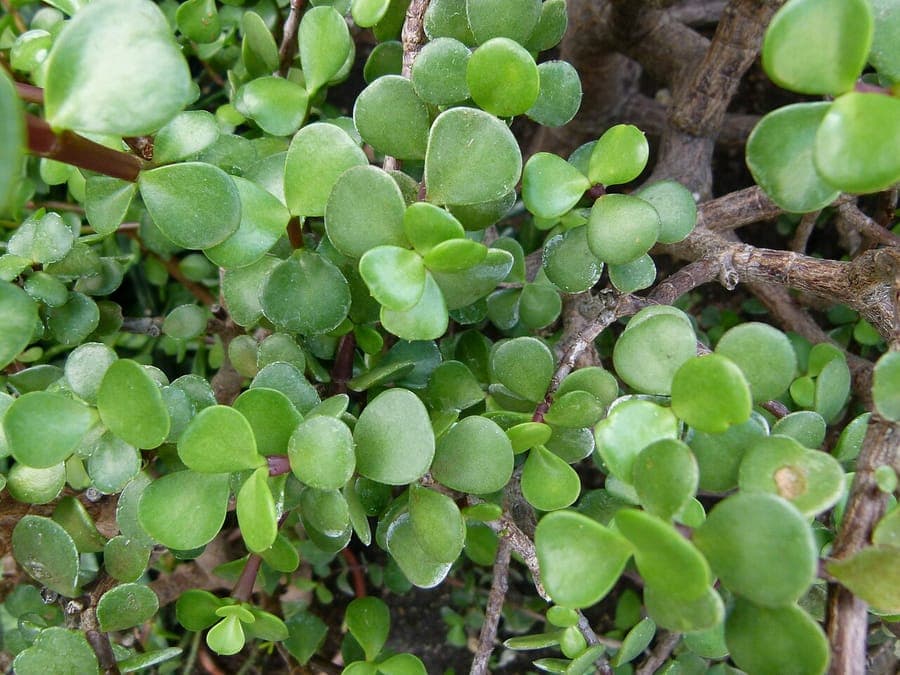
Dinkum / CC0, via Wikimedia Commons
Portulacaria afra: complete guide
Portulacaria afra
¿Quieres ver Portulacaria afra: complete guide en tu jardín?
1 minuto, sin tarjeta de crédito
Overview
Portulacaria afra, also known as Elephant bush or Spekboom, is a striking South African succulent prized for its dense leafy growth pattern and nutritious appearance. This fat plant typically reaches 1.5-2 meters in natural environments but remains much more compact in containers. With its glossy, light green leaves and brownish, fleshy stems, Portulacaria afra forms an interesting addition to xeric gardens and houseplant collections.
Originally from arid regions of South Africa and Kenya, this plant is extremely drought-tolerant and can be maintained without water for long periods. It's becoming increasingly popular in contemporary garden designs due to its low maintenance requirements and architectural appeal.
Appearance and bloom
Portulacaria afra has a compact, bushy growth pattern with dense branches clothed in small, oval leaves about 1 cm long. The leaves are glossy green with subtle yellow or white margins depending on sunlight and temperature. The stems are fleshier and reddish to brown in color, providing contrast.
In warm seasons (spring through summer), mature plants produce small, rose to red flowers that appear in small clusters. While these flowers aren't particularly showy, they contribute to visual interest and attract pollinators.
The plant grows slowly and maintains a compact form without much pruning, making it ideal for small spaces and container planting.
Ideal location
Portulacaria afra flourishes in full sun to light shade environments. Position the plant in a bright, warm location with at least 4-6 hours of direct sunlight daily for optimal growth. Though the plant tolerates some shade, underlight conditions can lead to leaf drop and leggy growth.
Indoors, the plant can be placed near bright windows. In very warm climates, afternoon shade provides protection from leaf scorch.
Soil
Elephant bush thrives in well-draining, sandy soil types with minimal organic content. A quality cactus and succulent mix is ideal. Poor-draining soil leads to root rot, one of the most common problems.
Soil amendment is unnecessary - in fact, excess nutrients can lead to weak, watery growth. Heavy clay soils must be avoided.
Diseño gratis
¿Quieres ver Portulacaria afra: complete guide en tu jardín? Crea un diseño gratis ahora.
Watering
Elephant bush is extremely drought-tolerant and has minimal water needs. During the growing season (May to September), water only when the top 5 cm of soil feels dry. In winter (October to April), reduce watering to monthly or less.
Overwatering is the most common problem - when in doubt, underwater. The plant can survive long without water but cannot handle wet feet. Container plants should never sit in water.
Pruning
Portulacaria afra requires minimal pruning. Dead or damaged branches can be removed at any time. For formative pruning to encourage bushiness, lightly pinch back growth tips during the growing season.
Wilted leaves naturally drop off - remove them for neatness.
Maintenance calendar
May-June: Growing season begins, light watering. July-September: Summer growth, water only when dry. October-April: Winter dormancy, minimal watering. April: Preparation for growing season.
The plant is highly maintenance-friendly and tolerates neglect better than intensive care.
Winter hardiness
Portulacaria afra is not winter hardy and cannot tolerate frost below 5C. The plant must be kept indoors in cold climates. Outdoor growth is only possible in very warm, dry regions.
Protect against strong winds, which can cause leaf drop.
Companion planting
Elephant bush combines well with other succulents such as echeveria, crassula, and sempervivum in succulent borders. It also works well in modern container arrangements.
Indoors, it can be grown as a solitary specimen plant or in mixed succulent displays.
Closing
Portulacaria afra offers a unique combination of drought tolerance, low maintenance requirements, and architectural appeal. Whether you grow it outdoors in arid gardens or indoors as an interesting potted plant, it's a valuable choice for any landscape.
At GardenWorld, we help with design of succulent gardens and indoor plantscapes. Visit gardenworld.app for more ideas on how to integrate Portulacaria afra and other interesting plants into your space.
Check your local availability at garden centers and nurseries in your region.
¿Quieres ver Portulacaria afra: complete guide en tu jardín? Crea un diseño gratis ahora.
Sube una foto, elige un estilo y obtén un diseño fotorrealista con lista de plantas en menos de un minuto.
Sin tarjeta de crédito


Plantas similares
Acer pycnanthum: complete guide
Acer pycnanthum
Acer pycnanthum, the Japanese swamp maple, is a fast-growing tree with early red flowers and brilliant autumn color, ideal for damp garden settings.
Freeman maple: complete guide
Acer × freemanii
Everything about the Freeman maple (Acer x freemanii): a fast-growing shade tree with spectacular autumn colour for large gardens.
Silver vine: complete guide
Actinidia polygama
Discover silver vine (Actinidia polygama): a hardy climbing plant with silvery foliage, loved by gardeners and cats alike.