
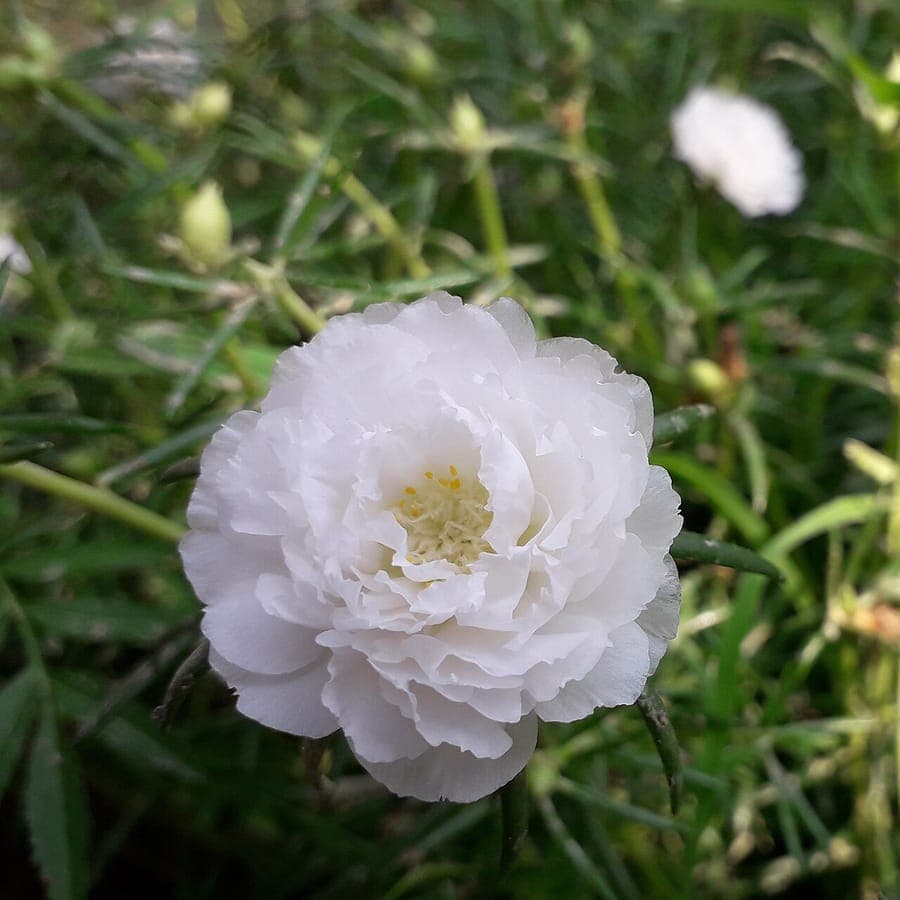
Anshik Kumar Tiwari / CC BY-SA 4.0, via Wikimedia Commons
Moss-rose: complete guide
Portulaca grandiflora
¿Quieres ver Moss-rose: complete guide en tu jardín?
1 minuto, sin tarjeta de crédito
Overview
Moss-rose (Portulaca grandiflora), also known as eleven o'clock flower, is an exotic, low-growing succulent from South America. This beautiful flowering plant is known for its glossy, large flowers in bright pink, orange, yellow, red and white shades. Moss-rose is extremely drought-tolerant and grows excellently in full sun on dry, sandy soil. With minimal maintenance and maximum flower production, it is a perfect choice for sunny gardens, patios and containers.
Appearance and bloom
Moss-rose reaches 10-15 cm in height and forms compact, densely clothed shrublets. The stems are red-colored and usually prostrate to ascending. The leaf is small, linear to obovate, fleshy and glossy green. The leaves serve as water storage, which helps during drought.
The flowers are large and showy, 2-3 cm in diameter, usually with five petals. They appear from May to October and bloom especially when sunny (hence the name eleven o'clock flower). The flowers close in cloudy weather and fade. A plant produces hundreds of flowers over the season.
The color range is impressive: bright pink, deep magenta, bright red, orange, yellow, white and bicolor combinations.
Ideal location
Moss-rose demands full sun. Plant in a location with at least 6-8 hours of direct sunlight daily - the more sun, the better. In partial shade, moss-rose grows poorly and barely flowers. A sunny patio, rockery or front border is ideal. The plant tolerates warm heat reflection from walls and stones.
Ensure the location has good drainage - waterlogging is fatal.
Soil
Moss-rose thrives in poor, dry, sandy soil. The plant grows best in sand, gravel or light loam with minimal organic matter. The flowering result is better on poorer soils! Heavy clay soil must be heavily amended with sand. A pH between 6.0 and 7.0 is ideal, although the plant tolerates pH down to 4.5.
Add sand or perlite at planting time for better drainage. For containers: use cactus or succulent mix.
Diseño gratis
¿Quieres ver Moss-rose: complete guide en tu jardín? Crea un diseño gratis ahora.
Watering
Moss-rose is a succulent and stores water in its leaves. Once established, it is very drought-tolerant. Water moderately in first 2-3 weeks. After that, water sparingly - only when soil is completely dry (1-2x per week in warm weather). More water = fewer flowers.
Water at the base, not on foliage. Excessive water leads to leaf rot and stem rot. In rainy periods no extra water is needed.
Pruning and maintenance
Moss-rose requires minimal maintenance. Remove faded flowers for continued blooming. Cut back in August to promote bushy form. In autumn, past-flowering parts can be pruned. Plants usually regulate their own growth based on available sunlight.
On containers: give gentle pruning to maintain compact shape.
Maintenance calendar
APRIL-MAY: Sow seed or plant from containers after last frost JUNE-JULY: First flowers appear; minimal water AUGUST: Prune back for further flowering SEPTEMBER-OCTOBER: Peak bloom; prepare for autumn NOVEMBER: Remove plants or protect from frost DECEMBER-MARCH: Winter rest; save seed for next season
Winter hardiness
Moss-rose is not winter hardy in temperate climates. The plant is frost-sensitive and dies at temperatures below 0 degrees Celsius. For the UK, Belgium and Germany, moss-rose is an annual flowering plant. By late October, the plant dies back.
Tip: Collect seed from best specimens in September for next season.
Companion plants
Moss-rose combines well with:
- Osteospermum (African daisy) - same sunny needs
- Sanvitalia (Mexican sunflower) - similar requirements
- Gazania (gazania) - flowering partner
- Sempervivum (houseleek) - succulent pure
- Verbena - drought-tolerant flowers
Portulaca combines beautifully in borders with other drought-tolerant flowers or as a solo accent in gravel gardens.
Final thoughts
Moss-rose is a striking flowering plant for dry, sunny locations. With its stunning flowers, drought tolerance and minimal care, it is ideal for Mediterranean gardens, rooftops, patios and dry borders. The plant grows easily from seed and can be easily cultivated outdoors. For color in warm months without effort, moss-rose is perfect.
Seed is available at garden centers. Sow seed in April and enjoy months of flowers effortlessly. With gardenworld.app you can get advice on sunny spots in your garden.
¿Quieres ver Moss-rose: complete guide en tu jardín? Crea un diseño gratis ahora.
Sube una foto, elige un estilo y obtén un diseño fotorrealista con lista de plantas en menos de un minuto.
Más de 10.000 jardines diseñados
Sin tarjeta de crédito


Plantas similares
Acer pycnanthum: complete guide
Acer pycnanthum
Acer pycnanthum, the Japanese swamp maple, is a fast-growing tree with early red flowers and brilliant autumn color, ideal for damp garden settings.
Freeman maple: complete guide
Acer × freemanii
Everything about the Freeman maple (Acer x freemanii): a fast-growing shade tree with spectacular autumn colour for large gardens.
Silver vine: complete guide
Actinidia polygama
Discover silver vine (Actinidia polygama): a hardy climbing plant with silvery foliage, loved by gardeners and cats alike.