
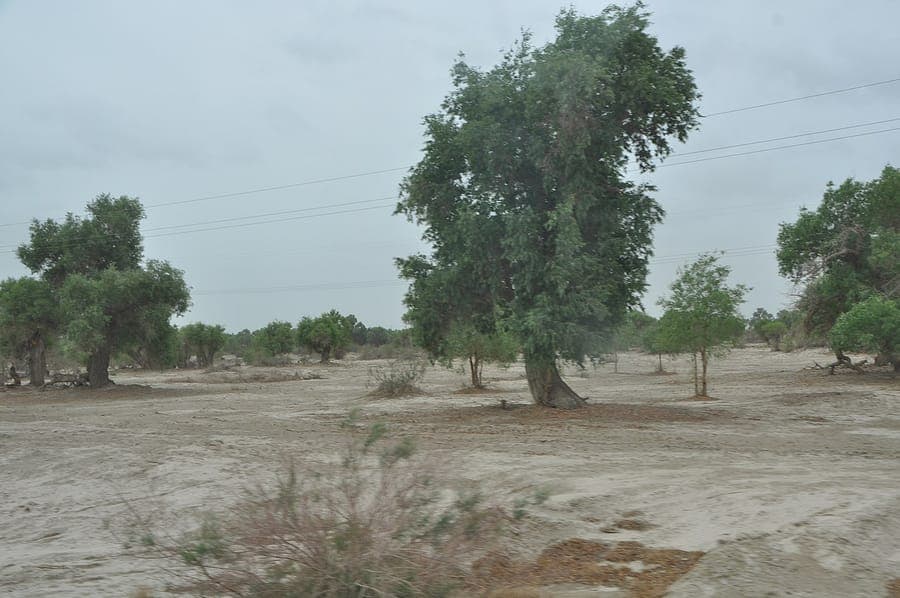
Yoshi Canopus / CC BY-SA 4.0, via Wikimedia Commons
Populus euphratica: complete guide
Populus euphratica
¿Quieres ver Populus euphratica: complete guide en tu jardín?
1 minuto, sin tarjeta de crédito
Overview
Populus euphratica, commonly called the Euphrates poplar, is a remarkable tree distributed from North Africa to Mongolia. This species is particularly well-suited to extreme climates and arid environments due to its exceptional adaptation to salt and dry soil. The tree can reach 25-30 meters in height and forms a picturesque crown with character.
Appearance & Bloom
The Euphrates poplar is characterized by its distinctive whitish-gray bark and elliptical leaves that turn green in summer. The leaves are relatively small and lanceolate, which is beneficial for water efficiency. In spring, the tree bears inconspicuous catkins with reddish flowers. The tree typically reaches 20-30 meters in height and grows fairly quickly during its establishment phase.
Ideal Location
This tree thrives in full sun and tolerates extreme heat exceptionally well. Euphrates poplars grow best in open, fully sunny locations receiving 8+ hours of direct sunlight daily. The tree is highly frost-resistant, withstanding temperatures down to -20 degrees Celsius. This makes it suitable for intense solar exposure as well as moderate climates.
Soil
The Euphrates poplar can grow in virtually any soil type, including heavy clay and sandy soils. The tree is particularly valuable because it is extremely salt-tolerant and can thrive even in saline environments. This simplifies maintenance as drainage requirements are not strict. Well-draining soil is still recommended for optimal growth, but not essential.
Watering
Once established, the Euphrates poplar is highly drought-tolerant while enjoying moisture. During the growing season, water regularly, especially in the first year. Thereafter, the tree requires less water and can endure dry periods. Overwatering can be harmful as it causes root rot. The tree tolerates both dry and wet soil reasonably well.
Diseño gratis
¿Quieres ver Populus euphratica: complete guide en tu jardín? Crea un diseño gratis ahora.
Pruning
The tree requires minimal pruning and grows naturally into an attractive form. Remove dead branches or weak growth in early spring. Heavy pruning is unnecessary unless you want a compact shape. Pruning is best done during winter months when the tree is dormant.
Maintenance Calendar
- March-April: Growing season begins, water during dry spells
- May-June: Peak growth phase, water regularly
- July-August: Heat tolerance phase, water during extreme heat
- September-October: Reduced water requirements
- November-February: Winter dormancy, minimal care
Winter Hardiness
The Euphrates poplar is extremely frost-resistant, surviving temperatures to -20 degrees Celsius. This makes it suitable for nearly all temperate and continental climates. Young trees may require extra protection in their first winter, but once established, winter protection is typically unnecessary.
Companion Plants
The Euphrates poplar combines well with other drought-tolerant plants such as:
- Lavender and other aromatic shrubs
- Sea buckthorn and shrubby specimens
- Tamarisks and thorny shrubs
- Ornamental grasses and sedges
Avoid pairing with moisture-loving plants like willows or maples that prefer wetter sites.
Closing Thoughts
Populus euphratica is an excellent choice for difficult growing locations where other trees struggle. With its extreme tolerance, rapid growth, and elegant appearance, it is a valuable addition to any landscape. The tree requires minimal maintenance once established and provides years of visual benefit.
Truly a specialist for extreme conditions!
¿Quieres ver Populus euphratica: complete guide en tu jardín? Crea un diseño gratis ahora.
Sube una foto, elige un estilo y obtén un diseño fotorrealista con lista de plantas en menos de un minuto.
Más de 10.000 jardines diseñados
Sin tarjeta de crédito


Plantas similares
Grey poplar: complete guide
Populus x canescens
Everything about Populus x canescens - a fast-growing hybrid poplar with silver-grey foliage, ideal as a windbreak or specimen tree in large gardens.
Populus adenopoda: complete guide
Populus adenopoda
Chinese aspen: a fast-growing tree for large gardens. Cultivation tips, pruning, and use as windbreak or shade tree.
Populus fremontii: complete guide
Populus fremontii
Fremont's cottonwood is a majestic American tree with rapid growth and drought tolerance. Read our guide for cultivation tips and garden integration.