
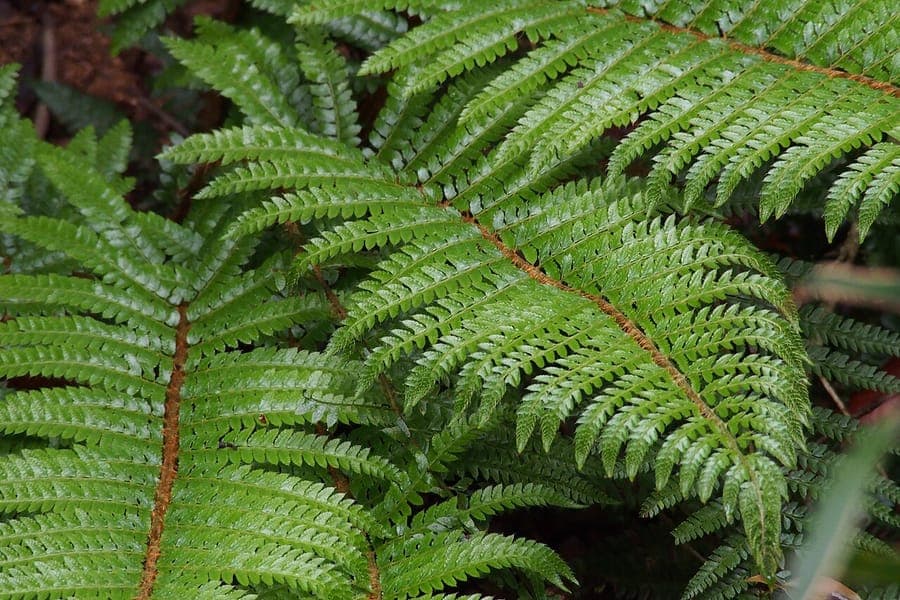
harum.koh from Kobe city, Japan / CC BY-SA 2.0, via Wikimedia Commons
Korean tasselfern: complete guide
Polystichum polyblepharum
¿Quieres ver Korean tasselfern: complete guide en tu jardín?
1 minuto, sin tarjeta de crédito
Overview
The Korean tasselfern (Polystichum polyblepharum) is a neat, elegant fern from East Asia. This unique plant distinguishes itself through its unusually glossy, almost lacquered appearance. The foliage shines in a way that other ferns cannot achieve, making it a special choice for difficult shade spots.
Not metallic or murky for many gardeners, this plant is known for its exotic appearance while still feeling supremely elegant. Perfect for those seeking something other than common garden ferns.
Appearance & Bloom
The tasselfern forms neat, upright clumps of 50 to 70 centimeters in height. The fronds are more finely divided than many shield ferns, with a dark green base color and characteristic gloss. The underside displays brown, neat spore formations.
In late spring, young plants may show light red tinting during growth, giving them extra visual importance. The plant grows neatly and maintains its elegance year-round.
Ideal Location
This delicate plant grows best in dense shade to partial shade under deciduous trees. Sunny spots will cause the foliage to become pale and dull, so avoid full sun absolutely.
Humus-rich, sheltered spots along forest edges or under tree canopies are ideal. The plant appreciates windless conditions so its fine texture comes fully into its own.
Soil
As an Asian plant, it loves lush, nutrient-rich soil with plenty of organic matter. Compost, leaf mold, or coconut coir significantly improve water retention. Soil pH around 6.0-7.0 is optimal.
Moisture capacity is important, so add plenty of humus before planting. Avoid compacted soils where roots cannot easily penetrate.
Diseño gratis
¿Quieres ver Korean tasselfern: complete guide en tu jardín? Crea un diseño gratis ahora.
Watering
This fern is a moisture lover but cannot tolerate stagnation. Keep the soil consistently moist, not soggy. Water regularly in summer, somewhat less in winter.
Misting the foliage helps well in dry air indoors. In pots, check daily if the soil is drying out, especially in warm seasons.
Pruning
Remove yellowed or damaged fronds as they appear. In late winter (February-March), you can remove all dead foliage. Cut at the base, just above the ground.
The plant forms its own neat shape and does not need drastic pruning. For regular cleanliness, simply remove dried fronds.
Maintenance Calendar
February: Remove winter damage. March: Add shell limestone or slow-release fertilizer. April-September: Water regularly. June-July: Check for pests. October: Reduce water gradually. November: Protect against frost if night temperatures fall below 5 degrees.
Winter Hardiness
The Korean tasselfern is reasonably hardy to around -8 degrees Celsius. In warm regions it survives outdoors without issues. In harsh regions, plant it in pots that can be moved indoors for winter.
USDA zone 6-9, suitable for temperate climates and mild coastal regions.
Companion Plants
Combine with other aesthetic shade plants like coral bells, hostas, and sculptural evergreens. White bloomers like snowberries provide nice contrast with glossy foliage. Yellow-based climbers fill spaces neatly.
Japanese maples in miniature cultivars form ideal neighboring plants with similar requirements.
Closing
The Korean tasselfern brings elegant appearance and exotic appeal to shade gardens. For those seeking something special that remains sophisticated, an uncommon choice offering plenty of advantages.
Available at Intratuin and Gamma. For more inspiration, check gardenworld.app/nl and gardenworld.app/en.
¿Quieres ver Korean tasselfern: complete guide en tu jardín? Crea un diseño gratis ahora.
Sube una foto, elige un estilo y obtén un diseño fotorrealista con lista de plantas en menos de un minuto.
Más de 10.000 jardines diseñados
Sin tarjeta de crédito


Plantas similares
Dryopteris sieboldii: complete guide
Dryopteris sieboldii
Discover Dryopteris sieboldii (Siebold's Buckler Fern), an elegant evergreen fern from Asia. Growing tips, care, and uses in shade gardens.
Dryopteris tyrrhena: complete guide
Dryopteris tyrrhena
Discover Dryopteris tyrrhena (Mediterranean Buckler-fern), a rare and exquisite fern species. Growing tips, care, and shade garden design.
Dryopteris villarii: complete guide
Dryopteris villarii
Dryopteris villarii, known as rigid buckler fern, is a shade-loving fern form from the Alps. Discover how to grow and maintain this elegant alpine fern in your garden.