
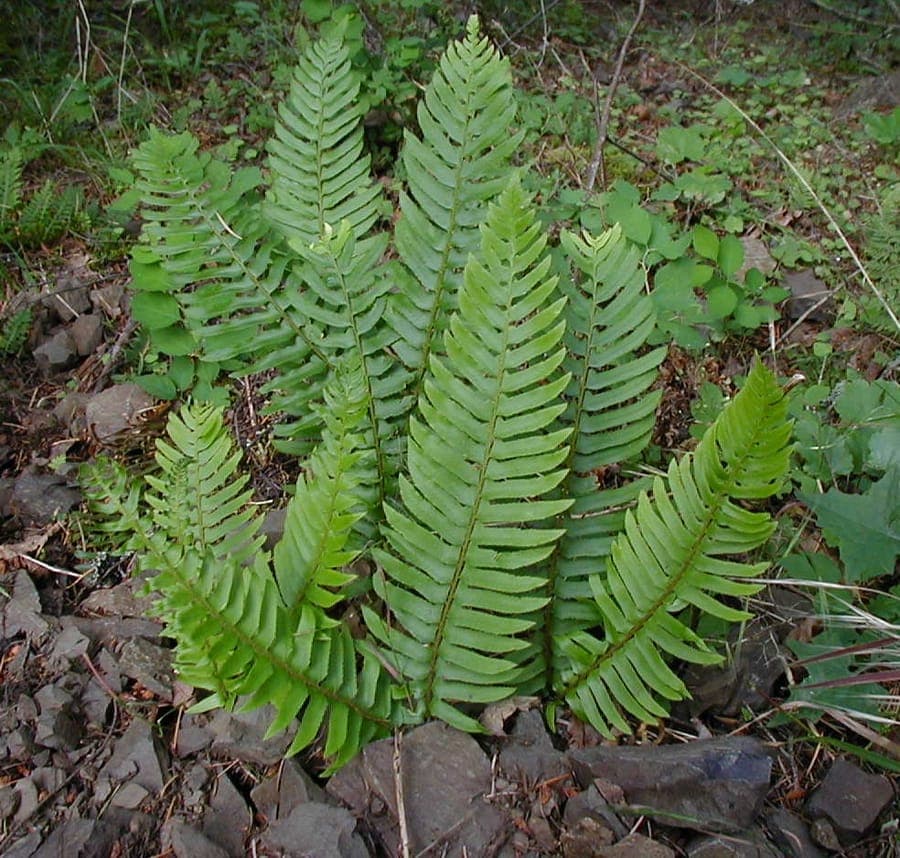
Jami Dwyer / CC BY-SA 2.0, via Wikimedia Commons
Common sword fern: complete guide
Polystichum munitum
¿Quieres ver Common sword fern: complete guide en tu jardín?
1 minuto, sin tarjeta de crédito
Overview
The Common sword fern or Western Sword Fern (Polystichum munitum) is an impressive evergreen fern from the Pacific Northwest of North America, ranging from Alaska to Mexico. This robust fern was highly valued by indigenous peoples for nutritional and medicinal purposes. With its lush green, architecturally interesting foliage, this fern makes an excellent choice for shaded garden areas, woodland edges, and moist habitats.
The Common sword fern is particularly valuable for modern gardeners seeking long-lived, low-maintenance solutions for dark corners. Its resistance to dry damage and insects makes it a reliable contributor to native woodland gardens.
Appearance
The Common sword fern grows from a creeping rhizome, maintaining permanent green year-round. The plant typically reaches 0.6 to 1.2 meters in height, with fronds (leaves) forming a beautiful geometric pattern. Each frond consists of numerous elongated pinnae (leaflets) that are sharply pointed - hence "sword fern".
The color is a deep forest green maintained year-round. The plant forms dense clusters of overlapping fronds, creating a lush effect. In spring, new fronds appear as small spiral-shaped fiddleheads that gradually unfurl into complete fronds.
The underside of the fronds bears sporangia (spore containers) in regular rows - this is how ferns reproduce without seeds. Spore production peaks in summer and autumn.
Ideal Location
The Common sword fern thrives best in shade to partial shade. This is a plant for the darkest corners of your garden where many other plants refuse to grow. Ideally it receives indirect light, but it can also thrive in deep forest shade, though growth will be slower there.
The plant tolerates very moist sites well - along streams, in wooded areas and other boggy environments. This makes it excellent for stabilizing erosion-prone banks.
For wind tolerance: in very open, wind-exposed situations with strong gusts, fronds can be damaged. Protective woodland surroundings are ideal.
Soil
The Common sword fern prefers moist, humus-rich soils. In its natural habitat, it grows in forest floor rich in leaf litter, providing constant moisture and nutrition. Similar soil in your garden is ideal.
The pH can range from acidic to neutral (5.0 to 7.5) - the plant is flexible on this point. Heavy clay soils can work well as long as drainage exists (no complete waterlogging).
Excessive nutrition can be harmful. This is a plant from nutrient-poor forest soil, so fertilizers are usually unnecessary. Annual application of compost in spring is sufficient.
Diseño gratis
¿Quieres ver Common sword fern: complete guide en tu jardín? Crea un diseño gratis ahora.
Watering
The Common sword fern must remain evenly moist, especially in growing areas. Water when the top few centimeters of soil feel dry. This is flexible: the plant can tolerate some drought (unlike many tropical ferns).
During active growth (spring-summer), regular moisture is essential. In autumn-winter, moisture can gradually decrease, though even then you should prevent the soil from drying completely.
In pots: use very well-draining fern potting mix and check moisture levels regularly. Pots dry out faster than open ground.
Pruning
The Common sword fern requires very little pruning. The plant grows naturally into a neat form. You can remove dead or damaged fronds year-round to keep the plant tidy.
When fronds emerge in spring (March-April), you can carefully remove old fronds from the previous year to make room for new ones. This also promotes healthy cycles.
Avoid removing healthy green fronds. Unlike many perennials, ferns need their fronds year-round.
Maintenance Calendar
MAY-AUGUST: Active growing season. Regular watering as needed. Spores mature on frond undersides. SEPTEMBER-OCTOBER: Growth slows. Old fronds can be removed. Spore dispersal peaks. NOVEMBER-FEBRUARY: Winter dormancy. Minimal activity. Keep moisture somewhat lower but not completely dry. MARCH-APRIL: New fronds emerge. Old fronds can be removed. Growth resumes.
Winter Hardiness
The Common sword fern is hardy to approximately -15 to -20 degrees Celsius and can therefore be cultivated outdoors in virtually all of the Netherlands and Belgium. This is a USDA zone 5-9 plant, so extremely winter-hardy.
Even in severe winters in Northern Netherlands, it can survive with extra mulch around the base. The plant is highly resilient against frost.
Mulching: a layer of 5-10 centimeters of leaves or compost in autumn helps protect the root zone and optimize frost preparation.
Companion Plants
The Common sword fern pairs well with:
- Hostas - similar shade and moisture needs
- Pulmonaria - other shade-lovers
- Helleborus - winter-blooming, shade-tolerant
- Dryopteris - other ferns, complementary forms
- Fuchsia - fine textural contrast
The plant forms a perfect mat-work background for smaller shade-growing plants.
Closing
The Common sword fern (Polystichum munitum) is a valuable, winter-hardy fern for shaded gardens throughout the Netherlands and Belgium. With its adapted growth, strong seasonal progression, and architecturally interesting foliage, it deserves more attention in modern garden designs.
For young ferns, we recommend local tree nurseries. For more shade plant inspiration and fern-specific guides, visit gardenworld.app. Enjoy creating your dream woodland garden with gardenworld.app!
¿Quieres ver Common sword fern: complete guide en tu jardín? Crea un diseño gratis ahora.
Sube una foto, elige un estilo y obtén un diseño fotorrealista con lista de plantas en menos de un minuto.
Más de 10.000 jardines diseñados
Sin tarjeta de crédito


Plantas similares
Dryopteris sieboldii: complete guide
Dryopteris sieboldii
Discover Dryopteris sieboldii (Siebold's Buckler Fern), an elegant evergreen fern from Asia. Growing tips, care, and uses in shade gardens.
Dryopteris tyrrhena: complete guide
Dryopteris tyrrhena
Discover Dryopteris tyrrhena (Mediterranean Buckler-fern), a rare and exquisite fern species. Growing tips, care, and shade garden design.
Dryopteris villarii: complete guide
Dryopteris villarii
Dryopteris villarii, known as rigid buckler fern, is a shade-loving fern form from the Alps. Discover how to grow and maintain this elegant alpine fern in your garden.