
Wasp32 / CC BY 4.0, via Wikimedia Commons
Christmas fern: complete guide
Polystichum acrostichoides
¿Quieres ver Christmas fern: complete guide en tu jardín?
1 minuto, sin tarjeta de crédito
Overview
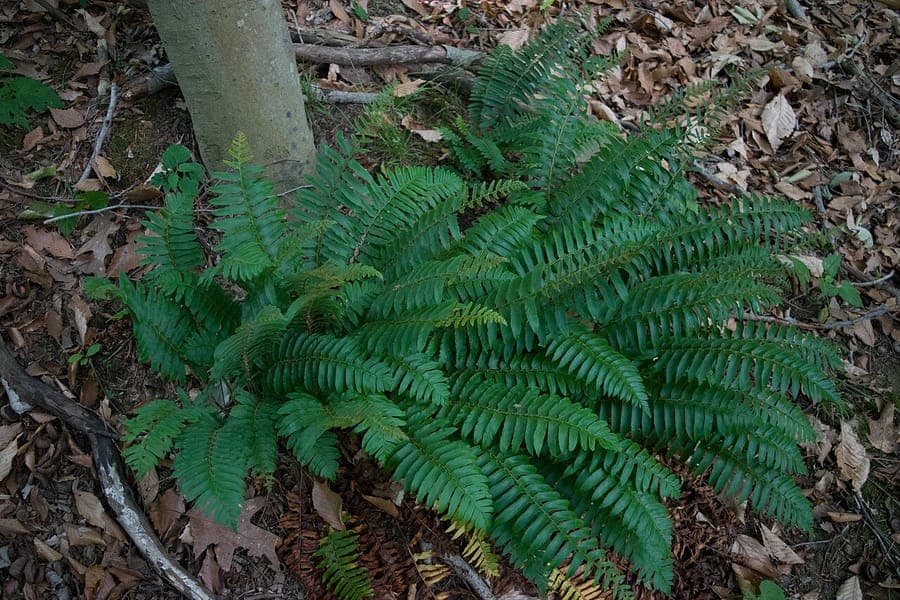
The Christmas fern (Polystichum acrostichoides) is an evergreen fern native to North America, ranging from Canada to Mexico. This impressive plant is a true treasure for dark, moist corners of your garden. With its glossy green fronds that brighten the garden year-round, it is a reliable plant choice for landscapes with more shade.
Thanks to its resilience and minimal care requirements, the Christmas fern is perfect for those wanting a low-maintenance garden design without sacrificing green beauty.
Appearance & Bloom
The Christmas fern reaches a height of 30 to 90 centimeters and forms neat, compact clumps. The fronds are divided into numerous fine leaflets with a dark green, leathery texture. The plant grows exclusively via spores on the undersides of leaves, not through visible flowers.
Its name "Christmas fern" comes from the tradition of using this plant as Christmas decoration. The shape remains beautifully green even in winter, making it a popular choice for winter arrangements.
Ideal Location
This fern performs best in partial shade to full shade. Under tree canopies, against north-facing walls, or in shaded planters, the Christmas fern thrives. Full sun can dry out the fronds and discolor them.
Choose a sheltered spot where wind is limited, as dry wind can damage the fronds. Under trees or against hardy shrubs offers natural protection.
Soil
The Christmas fern loves nutrient-rich, humus-rich soil. Amend heavy soils with compost or leaf mold before planting. A pH between 6.0 and 7.5 is ideal. Well-draining soil is essential, as waterlogging can cause root rot.
Mix 30 percent compost into the soil when planting and add extra leaf mold to retain moisture without stagnation.
Diseño gratis
¿Quieres ver Christmas fern: complete guide en tu jardín? Crea un diseño gratis ahora.
Watering
This fern requires regular moisture, especially during growing seasons. Water when the top layer of soil feels dry, but avoid stagnation. In dry periods, spray extra water on the fronds.
Ensure water drains well. In container growing, the plant performs better if watered 2-3 times weekly during dry summers.
Pruning
Dead or damaged fronds can be removed year-round. In spring (March-April), you can remove all old fronds to make room for fresh growth. Cut just above the base.
For a more compact form, you can interrupt growth in May by cutting all fronds halfway, but this is optional.
Maintenance Calendar
March: Remove dead fronds and spray for any pests. April: Add compost around the plant. June-August: Water regularly during drought. October: Check for insects hiding under fronds. December: Enjoy the lasting winter growth.
Winter Hardiness
The Christmas fern is exceptionally hardy to -15 degrees Celsius. In average winters, it survives outdoors without protection. In harsh winters, mulch the soil and protect the plant with dry leaves.
In-ground, generally hardy in USDA zones 4-8.
Companion Plants
Combine Christmas fern with other shade lovers like hostas, ivy, boxwoods, and ornamental grasses. Ground covers like ivy fill empty spaces well. Architectural evergreens provide nice contrast.
With decorative stones around the growth point, a minimalist Japanese effect is created.
Closing
The Christmas fern is for those who value beauty in simplicity. An evergreen, robust plant that flourishes in difficult corners where other plants give up. Plant it in nutrient-rich, moist soil in a partial shade spot, and you'll have a reliable green partner for years.
Available at Intratuin and Gamma in the Netherlands. For more garden ideas, visit gardenworld.app/nl and gardenworld.app/en.
¿Quieres ver Christmas fern: complete guide en tu jardín? Crea un diseño gratis ahora.
Sube una foto, elige un estilo y obtén un diseño fotorrealista con lista de plantas en menos de un minuto.
Más de 10.000 jardines diseñados
Sin tarjeta de crédito


Plantas similares
Dryopteris sieboldii: complete guide
Dryopteris sieboldii
Discover Dryopteris sieboldii (Siebold's Buckler Fern), an elegant evergreen fern from Asia. Growing tips, care, and uses in shade gardens.
Dryopteris tyrrhena: complete guide
Dryopteris tyrrhena
Discover Dryopteris tyrrhena (Mediterranean Buckler-fern), a rare and exquisite fern species. Growing tips, care, and shade garden design.
Dryopteris villarii: complete guide
Dryopteris villarii
Dryopteris villarii, known as rigid buckler fern, is a shade-loving fern form from the Alps. Discover how to grow and maintain this elegant alpine fern in your garden.